
Science
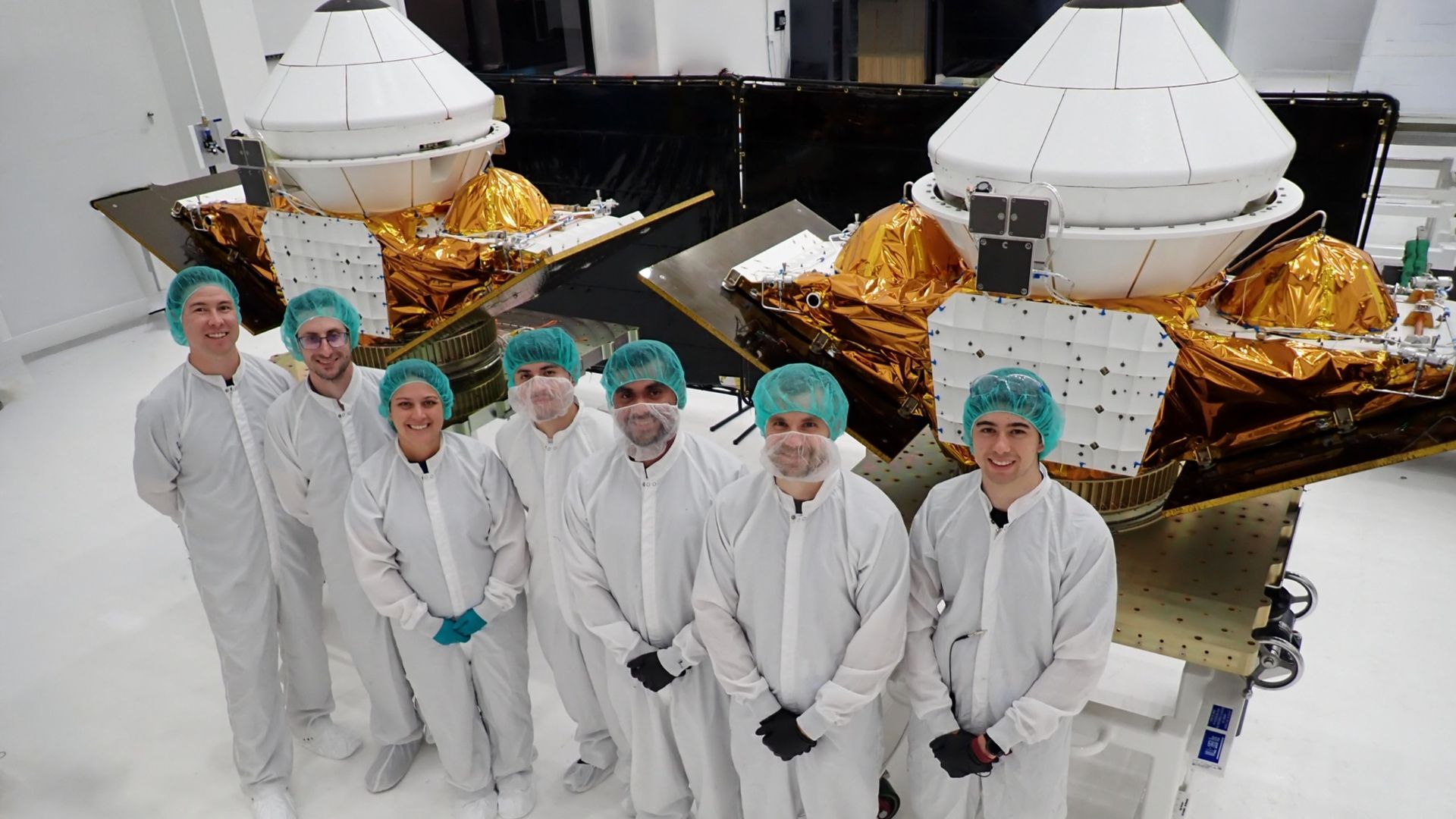
2 spacecraft in orbit and 8 more coming soon: Varda has big plans for in-space manufacturing
Key Points
2 spacecraft in orbit and 8 more coming soon: Varda has big plans for in-space manufacturing "It's humanity's first time launching multiple commercial reentry vehicles simultaneously." Reentry and orbital-manufacturing provider Varda Space Industries is operating two spacecraft in orbit right now, with another expected to launch "in the coming days" and seven more next year. The Los Angeles-area startup, which bills itself as one of just two companies that can currently do commercial reentry...
2 spacecraft in orbit and 8 more coming soon: Varda has big plans for in-space manufacturing
"It's humanity's first time launching multiple commercial reentry vehicles simultaneously."
Reentry and orbital-manufacturing provider Varda Space Industries is operating two spacecraft in orbit right now, with another expected to launch "in the coming days" and seven more next year.
The Los Angeles-area startup, which bills itself as one of just two companies that can currently do commercial reentry from space, successfully launched its latest two refrigerator-sized spacecraft aboard SpaceX's Transporter-18 rideshare mission on Oct. 1.
"It's humanity's first time launching multiple commercial reentry vehicles simultaneously," Varda CEO Will Bruey told Space.com on Tuesday (Oct. 7) of the Transporter-18 launch.
The payloads on the Transporter-18 Varda craft ranged from pharmaceuticals to demo navigation systems to exterior thermal-protection materials. The company bills its spacecraft as mini-factories, which can host the orbital production of valuable goods such as pharmaceuticals and then bring them safely down to Earth.
Another Varda vehicle is scheduled to follow them into space later this month. Assuming the third spacecraft launches nominally, all three will come down before Christmas in the Koonibba Test Range in the South Australian Outback, through coordination with Varda's long-time space-mission service provider, Southern Launch. And things are scheduled to ramp up quickly: Varda aims to fly seven more missions in 2027: two in Quarter 1 (Q1), two in Q2 and three in Q3 (the latter three being all on the same rocket).
"As we scale up, we care about our ability to fly and fly regularly," Bruey said, emphasizing that the company is now treating its missions less as one-offs and more as a series. "It is, first and foremost, taking that unique [spacecraft] technology and moving into a fleet mentality, rather than a space mission mentality."
Like any startup finding its footing, Varda's challenges in the coming months will be scaling safely and efficiently. But the company says it is well-capitalized to do so, and has a big hiring campaign underway. It also has been spending money on slight upgrades and improvements to its vehicles, as well as mission operations and other infrastructure to run several missions at the same time, with more funds having just arrived.
In September, Varda announced it had raised $251 million in "Series D" investment funding and will be hiring 100 people by the end of 2027, boosting its current 286-employee base by more than a third. Most of the employees work out of El Segundo, California, with a few in sales offices in Washington, D.C. and Huntsville, Alabama (where U.S. Space Command is gradually moving, along with some defense contractors, from Colorado Springs).
In the further future, Bruey said, the goal is to fly Varda vehicles into space daily, using a "standardized product" that would be put together on an assembly line. But to get to that point, like other companies in the industry, Varda will need to get through an anticipated rocket shortage beginning in about 2029.
SpaceX is by far the most active launcher these days, and it has been the dominant provider for companies like Varda via its Transporter and Bandwagon rideshare programs. But SpaceX is readying to retire its Falcon 9 rocket as it transitions more resources into Starship, the fully reusable megarocket the company sees as its workhorse of the future. Media reports suggest that SpaceX is pretty much out of capacity for Falcon 9 rockets flying through the end of service in 2028 or 2029, although slots are still available through third-party bookers.
There are a slew of newer rockets under production (such as Blue Origin's New Glenn and Relativity Space's Terran R), though they are far less mature and in some cases, even unflown. This is creating uncertainty about how much capacity there will be in the industry in the short term, but Varda said it is planning well ahead for that moment — and so too are its customers.
"We're stacked with launches from now through that 2029 time frame," Bruey said. The company's current generation of vehicles is "launch-agnostic," although the next generation is aiming to be even more so to nab opportunities from small rockets up to Starship.
The company said that, as long as Varda and its customers have access to microgravity, the shipping methodology — much like shipping on Earth — should not matter, and Varda aims to make the experience that seamless for its customers. But in the meantime, the company says it will fly as much as possible and (like everyone else) do what it can to secure slots on launching rockets after Falcon 9 retires.
Elizabeth Howell (she/her), Ph.D., was a staff writer in the spaceflight channel between 2022 and 2024 specializing in Canadian space news. She was contributing writer for Space.com for 10 years from 2012 to 2024. Elizabeth's reporting includes multiple exclusives with the White House, leading world coverage about a lost-and-found space tomato on the International Space Station, witnessing five human spaceflight launches on two continents, flying parabolic, working inside a spacesuit, and participating in a simulated Mars mission. Her latest book, "Why Am I Taller?" (ECW Press, 2022) is co-written with astronaut Dave Williams.
You must confirm your public display name before commenting
Please logout and then login again, you will then be prompted to enter your display name.
Varda (PERSON)
Varda Space Industries (ORG)
Los Angeles (LOCATION)
SpaceX (ORG)
Will Bruey (PERSON)
Space.com (ORG)
Earth (LOCATION)
the Koonibba Test Range (LOCATION)
the South Australian Outback (LOCATION)
Southern Launch (ORG)
Q2 (ORG)
Q3 (LOCATION)
Bruey (PERSON)
El Segundo (LOCATION)
California (LOCATION)