
World News
Ukraine says new Starlink restrictions disrupt military as it reels from intel gaps and Trump clash
Key Points
Ukraine has accused Elon Musk’s SpaceX of disrupting its military operations by limiting Starlink internet services, as the country reeled from a pair of intense Russian missile attacks that it said came without the usual advance warning from allies. Facing pressure from President Donald Trump to halt strikes on Russia’s energy industry, Kyiv and its backers have worried Washington could cut off battlefield support to try and force it into concessions at the negotiating table. Ukrainian...
Ukraine has accused Elon Musk’s SpaceX of disrupting its military operations by limiting Starlink internet services, as the country reeled from a pair of intense Russian missile attacks that it said came without the usual advance warning from allies.
Facing pressure from President Donald Trump to halt strikes on Russia’s energy industry, Kyiv and its backers have worried Washington could cut off battlefield support to try and force it into concessions at the negotiating table.
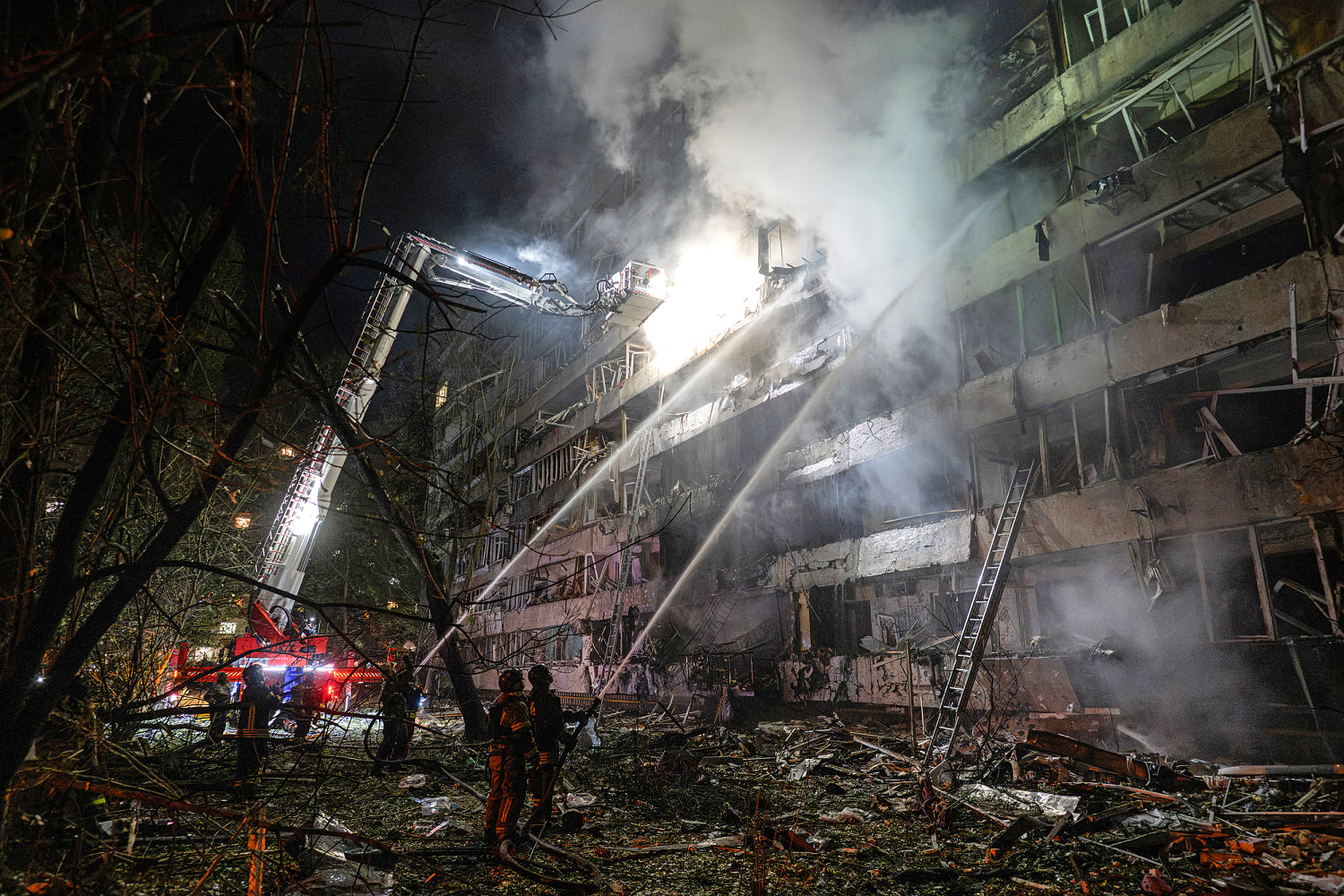
Ukrainian officials and their European partners were already scrambling to understand the status of U.S. intelligence sharing after the lack of alert ahead of two Russian ballistic missile strikes on Kyiv this week caused confusion, two Ukrainian and two European officials told NBC News.
Trump insisted the U.S. was still sharing intel, but with relations spiraling Ukrainian officials and military units were on Wednesday accusing SpaceX of throttling a technology essential to their battlefield communications and drone operations.
It was not immediately clear what might be behind the Starlink interruptions, though some Ukrainian officials said the timing could not be a coincidence given that Musk is a close Trump ally.
Drone disruptions
SpaceX had introduced speed limits on the operation of its Starlink satellite internet terminals overnight, according to Ukrainian President Volodymyr Zelenskyy’s defense tech adviser, Serhii Beskrestnov.
“Our defence forces received no warning of such a restriction, and this led to the failure of a number of missions,” Beskrestnov said on Telegram. “It is obvious that this action cannot be a coincidence and is connected to the current political situation,” he added.
An army unit fighting in the southeastern Zaporizhzhia region said Wednesday it had been forced to cancel some planned operations.
The 7th Rapid Reaction Corps of the Ukrainian air assault forces said it began “noticing Starlink connectivity problems caused by data transfer speed limits” overnight, adding that the changes directly affected drones that use the service for in-flight control.
“The drones kept flying, but the interruptions made them harder to control,” it said in a statement.
Beskrestnov said that restrictions were specifically put on the operation of the military-grade version of Starlink at speeds above 100 mph.
Starlink was also key for Ukraine’s aerial defenses as it was used to intercept the jet-powered drones that Moscow has unleashed on Ukrainian cities in recent months, he added.
Ukraine has reached out to the U.S. government and SpaceX for clarification on the rationale for the new restrictions but has yet to receive a response, according to a Ukrainian official.
Ukraine’s armed forces learned about the limitations from customer support after filing a complaint regarding operational issues, the official said, adding that SpaceX had not warned of the move.
FOR SUBSCRIBERSKimberly Guilfoyle’s swift exit
FOR SUBSCRIBERSThe Data Dive: Steve Kornacki on why 2026 isn’t like 2018
FOR SUBSCRIBERSAttack on Saudi airport dials up pressure on D.C.
FOR SUBSCRIBERSKimberly Guilfoyle’s swift exit
FOR SUBSCRIBERSThe Data Dive: Steve Kornacki on why 2026 isn’t like 2018
FOR SUBSCRIBERSAttack on Saudi airport dials up pressure on D.C.
Ukrainian military units were already reporting issues with drone performance at even lower speeds, the official added.
The White House and SpaceX did not immediately respond to requests for comment from NBC News.
The disruption follows days of mounting tensions between Kyiv and Washington, as Trump pushes to lower gas prices ahead of the midterm elections. Trump’s latest reversal in his bid to settle the war saw him stun Kyiv by striking a diesel deal with Russia that upended years of U.S. sanctions.
He then demanded that Ukraine stop attacking Russian oil refineries and called for Zelenskyy to be replaced. Trump also announced an “energy ceasefire” that neither warring side appears to have agreed to.
Kyiv said it had refrained from striking Russian energy targets to respect Trump’s wishes, but the Kremlin has continued to hit Ukrainian energy infrastructure in its annual effort to leave its neighbor in the freezing dark as winter sets in.
Intel uncertainty
Zelenskyy said Tuesday that Ukraine had not received any early warning from its partners about “a particularly vile ballistic missile strike on Kyiv” a day earlier. Explosions rang out before an alert was issued, according to an NBC News producer in the capital.
“Intelligence on Russian ballistic missile launches helps save lives, and this is one of the most critical issues,” Zelenskyy said, without singling out the U.S.
Later Tuesday, he reported another strike on Kyiv was “the second time Ukraine was not warned.”
Since Russia invaded Ukraine more than four years ago, the U.S. has provided significant satellite and eavesdropping intelligence to Kyiv. European partners also share intelligence with Kyiv, but Ukrainian officials see the U.S. intelligence assistance as crucial to their fight against Russia.
Trump denied withholding information critical to Ukraine’s defense, despite reported threats to cut off U.S. intelligence if Kyiv failed to stop its attacks on Russian refineries.
“We are helping them and we are sharing intel,” the president told reporters Tuesday.
After the first Russian attack Monday, when five ballistic missiles were able to strike civilian infrastructure without advance notice from the U.S., two Ukrainian officials told NBC News it was the result of a technical issue, or glitch, in U.S. intelligence sharing.
Speaking at the Warsaw Security Forum, Ukrainian Foreign Minister Andrii Sybiha also reassured the audience that U.S. intelligence sharing continued, blaming the delayed alert on a “special type of the weaponry” used by Russia.
But after the second attack Tuesday, Ukrainian and European officials said the reason was less clear.
“We didn’t receive warning for a second time, and this doesn’t look like a coincidence,” one of the Ukrainian officials said.
The second Ukrainian official attributed the issue to bad weather. Two European officials told NBC News they were still trying to understand why there was no advance notice.
Ukrainian air force spokesman Col. Yurii Ihnat said Wednesday that after the second ballistic strike on Kyiv without a warning, “in the next three waves of attacks, notifications from partners about the use of ballistic weapons did come through.”
The Kremlin noted the confusion Wednesday, but said it was “too early to draw any systemic conclusions.”
Zelenskyy said that at least 600,000 people across Ukraine were without power Wednesday after the latest wave of Russian attacks, adding that President Vladimir Putin was in clear violation of the energy truce announced by Trump. “Russia has never before shown such ostentatious disrespect toward the United States,” he added.
Like Trump, Musk has repeatedly oscillated in his stance on the war.
The billionaire turned on the Starlink satellite internet service over Ukraine shortly after Russia’s full-scale invasion in 2022.
It has become a lifeline for war-torn parts of the country, but has also facilitated battlefield communications and enabled the use of longer-range drones, given its resistance to signal jamming.
Musk agreed to turn off thousands of Russian-used Starlinks in Ukraine this year, causing problems for the Kremlin’s forces. But in recent days, Musk has echoed Trump’s criticism.
The suggestion that his company might have deliberately limited Ukraine’s battlefield operations drew criticism in Europe.
“Hey, @elonmusk, big man, are you playing politics with your products again?” Polish Foreign Minister Radosław Sikorski wrote in a post on X, referencing a past clash over Starlink in which Musk called him a “small man.”
Sikorski continued; “As your European customers, we are watching you.”