
Politics
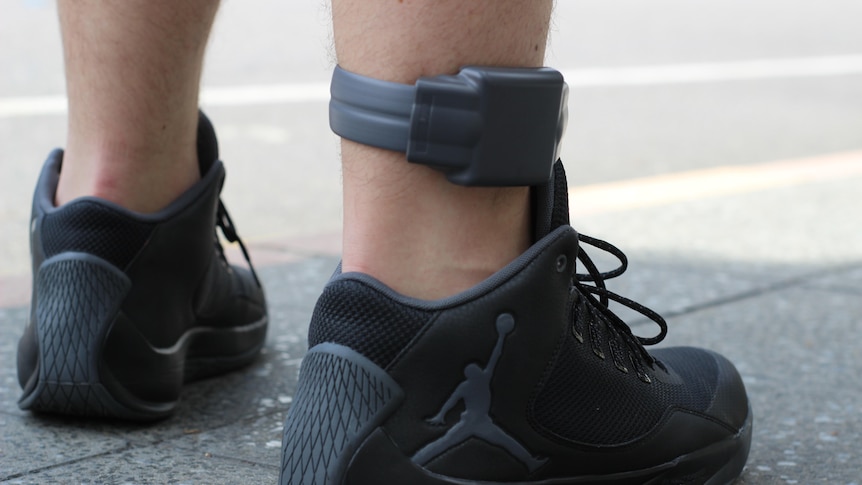
Cost forces ACT government to scrap pledge to tag DV perpetrators
Key Points
ACT government walks back pledge to make DV perpetrators wear ankle bracelets In short: The ACT government has abandoned its promise to electronically monitor some Canberra offenders in the community. It says the scheme would be too costly. A prominent ACT domestic violence support service says it had reservations about the technology and was unconvinced it would improve safety if implemented.
ACT government walks back pledge to make DV perpetrators wear ankle bracelets
In short:
The ACT government has abandoned its promise to electronically monitor some Canberra offenders in the community.
It says the scheme would be too costly.
A prominent ACT domestic violence support service says it had reservations about the technology and was unconvinced it would improve safety if implemented.
The ACT government has scrapped its pledge to subject domestic and family violence perpetrators to electronic monitoring bracelets despite its corrections minister saying it was a "good idea".
ACT Chief Minister Andrew Barr had announced the scheme in 2024 after a national summit aimed at addressing the domestic and family violence crisis.
But two years later it has been parked.
The Justice and Community Safety (JACS) directorate said it had explored the use of ankle bracelets for the monitoring of domestic and family violence perpetrators, as well as offenders on intensive correction orders, parole, bail, and other conditions.
But in a statement, a JACS spokesperson said monitoring a "relatively small number" of offenders in the community could cost more than $4 million a year, increasing to $18 million annually for DFV monitoring.
"The ACT government has made the decision not to proceed with the implementation of an electronic monitoring scheme in this term of government," the JACS spokesperson said.
'Horrendous what's happening'
When asked how the cost of the abandoned scheme compared with incarcerating people who could otherwise be monitored in the community, ACT Corrections Minister Caitlin Tough said she did not have costs on hand, but it was being examined.
"Look, it is definitely one way that we could free up space in the [Alexander Maconochie Centre] and allow people to transition into the community,"Ms Tough said.
"It's just the size of the ACT; the cost of operating a system at this time is just not a feasible way of monitoring.
"I know the whole ACT government and ACT community are so appalled at the continuing escalation in family domestic violence across our country.
"It's horrendous what's been happening recently,"she said.
Safety versus illusion of safety
Domestic Violence Crisis Service (DVCS) ACT chief executive Sue Webeck said her organisation had not been consulted and had no "line of sight" about any early scoping the government might have done before it walked back its promise.
"In many ways, we are part of the service system and we hold the least amount of power in that service system," Ms Webeck said.
But she said she expected that if the scheme had progressed, DVCS's expertise eventually would have been sought, in which case Ms Webeck would have shared her reservations about the technology.
"Electronic monitoring can never and will never replace the responsiveness of the services and systems that are built of people to respond in the moment when risk is evident,"Ms Webeck said.
She said she was aware of interstate victim-survivors who "still struggled to get the system to respond to their safety needs" despite their perpetrators being electronically monitored.
Ms Webeck said she feared the technology might merely provide an illusion of safety.
Police disappointed
The Australian Federal Police Association's Troy Roberts said ACT police were "quite disappointed" the scheme had been parked.
"It's something that we were looking forward to seeing introduced," Mr Roberts said.
"The electronic monitoring would assist ACT Policing to monitor serious offenders, domestic violence offenders, but also people out on bail.
"So, this initiative could've actually stopped people being on remand and in custody and it could've helped with rehabilitation,"Mr Roberts said.
He said there was evidence recidivism was low among offenders subject to electronic monitoring in NSW and South Australia.
Mr Roberts said the GPS technology in the bracelets would have been helpful in cases where perpetrators' bail conditions sought to prevent them from leaving the house at night.