
Education
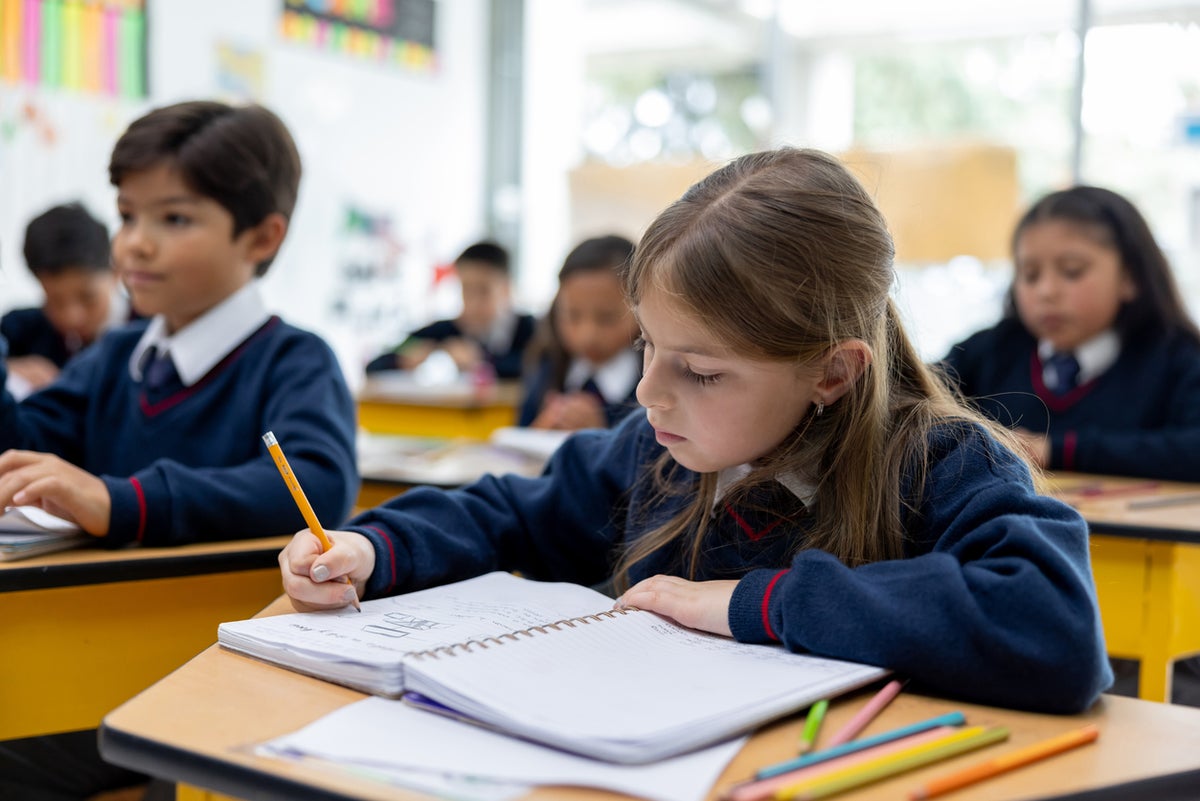
School 'severe absences' at highest rate since Covid-19 pandemic
Key Points
School 'severe absences' at highest rate since Covid-19 pandemic Department for Education (DfE) figures show the increase was driven by primary and special schools - Bookmark - CommentsGo to comments Become an Independent member to bookmark this article Already a member? Log in The percentage of English school pupils missing at least half their classes rose again last year, Government data suggests. Around 168,000, some 2.32 per cent of pupils, were recorded as being "severely absent" across...
School 'severe absences' at highest rate since Covid-19 pandemic
Department for Education (DfE) figures show the increase was driven by primary and special schools
- Bookmark
- CommentsGo to comments
Become an Independent member to bookmark this article
Already a member? Log in
The percentage of English school pupils missing at least half their classes rose again last year, Government data suggests.
Around 168,000, some 2.32 per cent of pupils, were recorded as being "severely absent" across the autumn and spring terms of 2025/26, compared with 2.26 per cent in 2024/25.
Department for Education (DfE) figures show the increase was driven by primary and special schools, both of which saw a rise in the proportion of children missing at least half of their lessons, while secondary schools saw a decrease.
Severe absence rates in primary schools hit 1.05 per cent over the autumn and spring terms, up from 0.92 per cent a year earlier to mark a decade high.
The rate for severe absence across all schools of 2.32 per cent is also the highest since the Covid-19 pandemic.
However, the overall level of pupil absence from schools has fallen slightly. This figure stood at 6.60 per cent in the 2025/26 autumn and spring terms, down from 6.63 per cent over the same period in 2024/25 – though it is still higher than pre-pandemic levels, which were under 5 per cent, the DfE said.
The percentage of pupils who were persistently absent, which means they missed at least 10 per cent of their sessions, has also dropped slightly, from 17.63 per cent to 17.50 per cent.
The authorised absence rate decreased by 0.06 percentage points, while the unauthorised absence rate increased by 0.02 percentage points.
Pepe Di’Iasio, general secretary of the Association of School and College Leaders (ASCL), said: “Despite the huge amount of time and resources which schools devote to improving attendance, it is clearly proving challenging to bring absence rates down to pre-pandemic levels.
“It is time to realise that many of the factors driving these figures are beyond the control of schools, and no amount of attendance targets or Ofsted inspections is going to change that.
“A fresh approach is required, particularly to support children who are severely absent from school.”
He added: “Unless additional support is made available, it’s hard to see how significant improvement in attendance rates can be achieved.”
Paul Whiteman, general secretary at school leaders’ union the NAHT, said it is “clear that challenges remain” with rises in unauthorised absence and severe absence in primary and special schools.
He said: “When children are absent for a large proportion of the school term, this usually reflects really fundamental issues, including difficulties ensuring pupils with special educational needs (Send) are getting the support they need to attend school and thrive.”
Mr Whiteman added: “It is crucial that the Government ensures its much-needed reforms to the ailing Send system are properly funded and supported.
“More targeted support is also needed for children with other issues deterring attendance, from mental ill-health, to poverty, insecure housing and challenges at home.”
Emma Moore, senior research manager at the National Foundation for Educational Research (NFER), said: “We know from our research that schools are working incredibly hard on attendance.
“They are building strong relationships between schools and families, understanding the barriers to attendance, and providing flexible support that reflects individual needs.
“But schools can’t tackle attendance alone – many of the barriers to attendance sit outside the school gates, so improving attendance requires investment in wider mental health, family and Send support services.”
Daniel Lilley, head of youth at the Centre for Social Justice (CSJ), said: “Whilst progress on overall persistent absence is welcome, those furthest from school continue to stay away.
“Severe absence has yet again hit a record level for a spring term, and persistent absence is up amongst white working class and northern children.
“We must inspire the disengaged through enrichment and a clear pathway to work, and remind parents of how critical school is for their child’s future.”
A DfE spokesperson said: “To break down the barriers to opportunity, we must tackle the national epidemic of school absence, and we are making progress with the first decline in severe absence rates in secondary school in autumn and spring terms since records began.
“School should be somewhere every child wants to be, with the support they need to attend, engage and thrive.
“Where children are struggling to get into school, we want schools to intervene early and provide the right support quickly by working with parents, schools, local authorities and health services. Since setting our attendance target, we have recovered 4.4 million days in school, and we are determined to go further.
“We are also tackling the root causes through measures including free breakfast clubs in every primary school, an attendance mentoring programme, and earlier intervention in mainstream schools for pupils with special educational needs.”
Join our commenting forum
Join thought-provoking conversations, follow other Independent readers and see their replies
Comments