
Environment
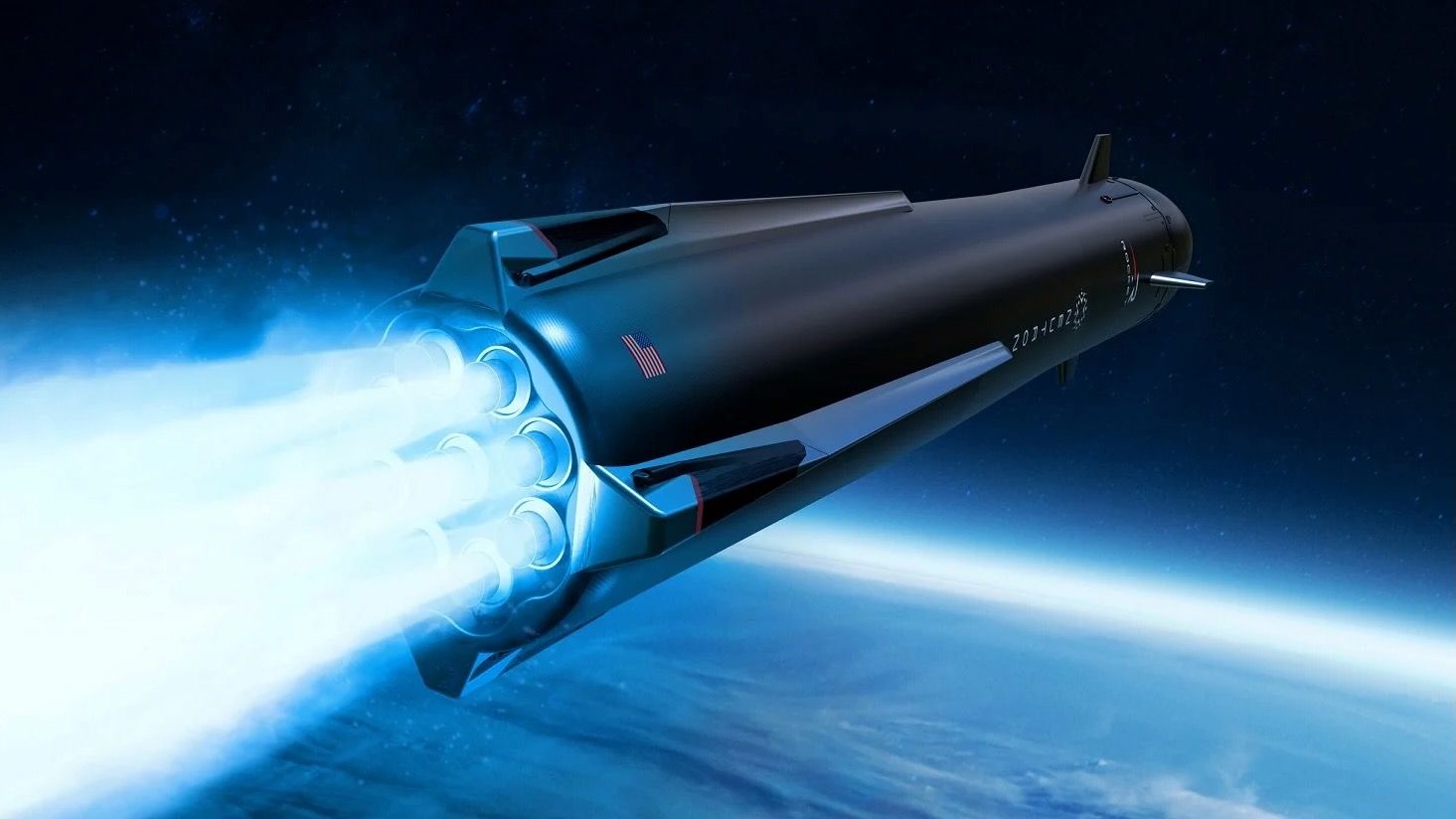
Rocket Lab pushes 1st launch of next-gen Neutron rocket to 2027
Key Points
Rocket Lab pushes 1st launch of next-gen Neutron rocket to 2027 We'll have to wait a bit longer to see Rocket Lab's next-gen launcher fly. The California-based company just announced that it's pushing the debut of its powerful, partially reusable Neutron rocket from late 2026 into 2027 due to a manufacturing issue. "We believe Neutron is going to be a game-changer, and taking the time now to solve these challenges means we're in a better position to deliver a rocket that's ready to meet the...
Rocket Lab pushes 1st launch of next-gen Neutron rocket to 2027
We'll have to wait a bit longer to see Rocket Lab's next-gen launcher fly.
The California-based company just announced that it's pushing the debut of its powerful, partially reusable Neutron rocket from late 2026 into 2027 due to a manufacturing issue.
"We believe Neutron is going to be a game-changer, and taking the time now to solve these challenges means we're in a better position to deliver a rocket that's ready to meet the needs for the industry for years to come," Rocket Lab founder and CEO Peter Beck said in a video the company posted on YouTube late on Tuesday (Oct. 13).
Beck explained the issue in depth in that seven-minute video. It concerns the cabon-fiber propellant domes in Neutron's first stage — the large caps for the vehicle's fuel tanks, which hold liquid oxygen and liquid methane.
Rocket Lab makes the domes using an automated fiber placement machine, "which lays down the carbon with speed and accuracy," Beck said.
The company noticed a problem, however, after curing a recently manufactured forward (front-facing) dome: Inspectors found some voids within the carbon-fiber layers.
The voids "don't necessarily mean that the dome would fail in flight, but our practice is to proceed only when we believe the system has the appropriate margins," Beck said. "Possible success isn't our standard."
After analysis and testing, Rocket Lab added some "mitigations" to the dome-manufacturing process — a tweak that has done the trick, according to Beck.
"We've since run another carbon composite section called the aft dome through this new process, and I'm pleased to report that it has resulted in the highest quality carbon composite dome to date, and we've solved the problem," he said.
Rocket Lab still needs to build a new forward dome, then cure and inspect it — steps that are expected to be complete by the end of the year, according to Beck. The company then needs to incorporate that hardware into a complete Neutron first stage, and then subject that stage to a battery of tests. If all goes to plan, that will all be done during the first quarter of 2027.
"From there, we expect to be in good shape to share a new target launch date," Beck said.
The newly announced delay is the latest setback for Neutron, which Rocket Lab announced in 2021. Back then, the company — which also flies the workhorse Electron small-satellite launcher — targeted a 2024 debut for the 141-foot-tall (42 meters) Neutron, which features a reusable first stage.
That timeline has been pushed back multiple times — to 2025, then to early 2026 and then, after a fuel tank ruptured during a pressure test, to late 2026.
Rocket Lab has been been steadfast throughout, stressing that it will not rush the development of a vehicle that it sees as vital to its future success.
"There's significant demand for what Neutron has to offer, including some new contracts we'll be able to talk about soon," Beck said in the video. "Those customers understand that a reliable rocket is far more valuable than an early one, and we're grateful for their trust."
Michael Wall is the Spaceflight and Tech Editor for Space.com and joined the team in 2010. He primarily covers human and robotic spaceflight, military space, and exoplanets, but has been known to dabble in the space art beat. His book about the search for alien life, "Out There," was published on Nov. 13, 2018. Before becoming a science writer, Michael worked as a herpetologist and wildlife biologist. He has a Ph.D. in evolutionary biology from the University of Sydney, Australia, a bachelor's degree from the University of Arizona, and a graduate certificate in science writing from the University of California, Santa Cruz. To find out what his latest project is, you can follow Michael on Twitter.
You must confirm your public display name before commenting
Please logout and then login again, you will then be prompted to enter your display name.