
Science
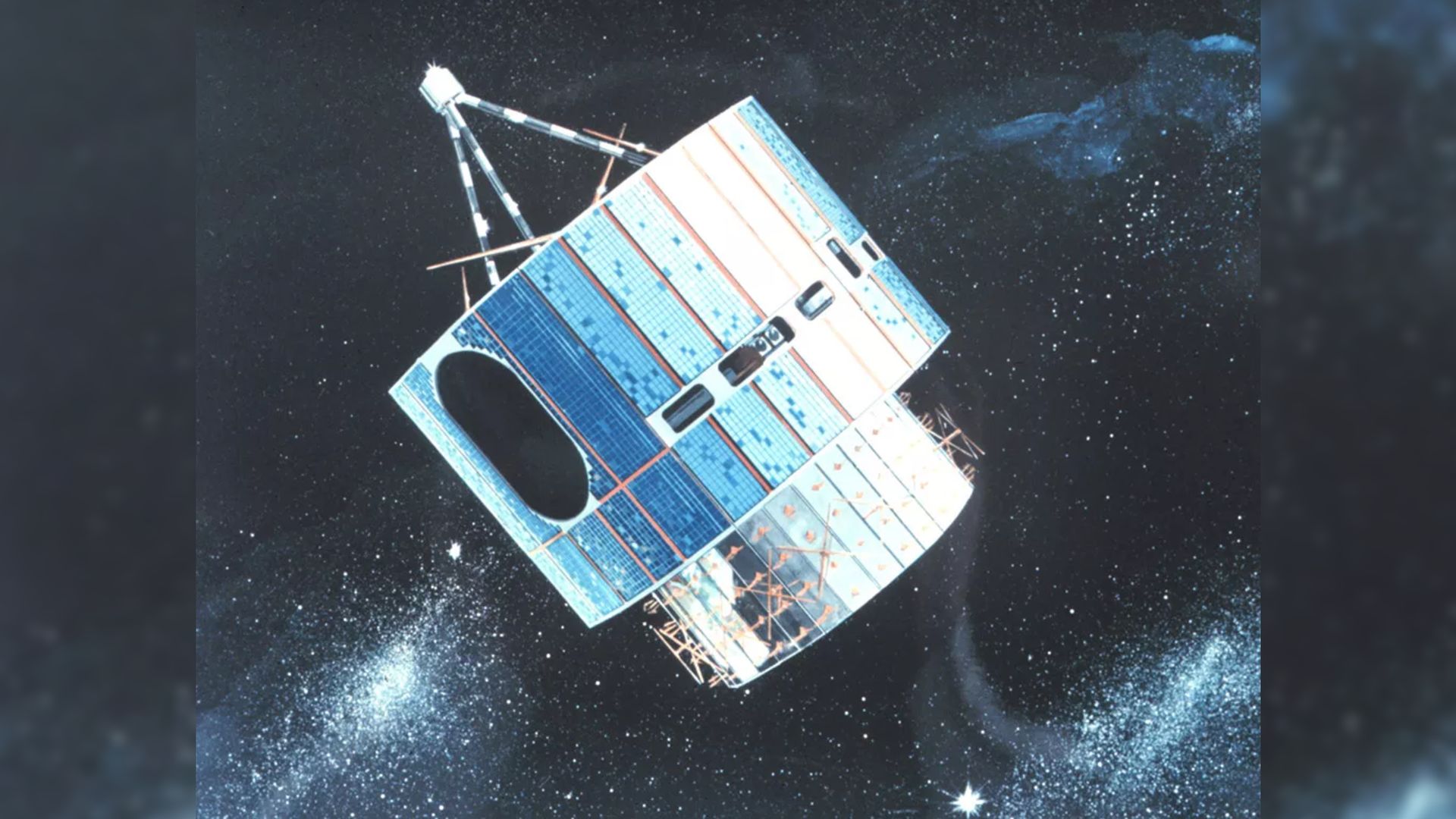
On this day in space! Oct. 16, 1975: NASA launches the 1st-ever GOES weather satellite to watch Earth from space
Key Points
On this day in space! Oct. 16, 1975: NASA launches the 1st-ever GOES weather satellite to watch Earth from space On Oct. 16, 1975, NASA launched the first operational GOES satellite! GOES-A was the first in a series of weather satellites that NASA jointly operated with the National Oceanic and Atmospheric Administration (NOAA).
On this day in space! Oct. 16, 1975: NASA launches the 1st-ever GOES weather satellite to watch Earth from space
On Oct. 16, 1975, NASA launched the first operational GOES satellite!
GOES-A was the first in a series of weather satellites that NASA jointly operated with the National Oceanic and Atmospheric Administration (NOAA).
The name is short for Geostationary Operational Environmental Satellite. GOES-A launched on a Delta rocket from Cape Canaveral, Florida. GOES satellites all have a geostationary orbit, which means they always face the same part of Earth — in this case, the Indian Ocean. Once GOES-A became operational, it was renamed GOES-1.
The GOES satellite fleet has grown over the years, and is a critical link in the chain of satellites tracking Earth's weather from space. In 2016, NASA and NOAA launched GOES-R, the first in a new next-generation series of GOES weather satellites, with more to follow in ensuing years.
Why it mattered
With weather forecasts so prevalent (you can literally find them in the palm of your hand with a smartphone), it may be hard to think that such daily information wasn't always readily available. But that was the case when NOAA began building what has become an essential part of the U.S. weather monitoring fleet of satellites.
GOES-A, or GOES-1 as it was later called, "gave forecasters their first near-real time look at atmospheric conditions from a fixed location," NOAA officials said in an overview.
The satellite launched from Pad 17A at what is now the Cape Canaveral Space Force Station and returned its first photo just nine days after liftoff, on Oct. 25, 1975. The satellite was equipped with a Visible/Infrared Spin Scan Radiometer (VISSR) to capture Earth observations in daylight and nighttime to track clouds and surface temperature.
The spin-stabilized satellite was able to observe Earth just 10% of the time, but was still the most up-to-date satellite observations for weather forecasters.
GOES-1 was active until March 7, 1985, when it was ultimately decommissioned. But during that time, NASA and NOAA launched five more successors, GOES 2, 3, 4, 5 and 6.
"For 50 years, GOES data has been the backbone of short-term forecasts and warnings of severe weather and environmental hazards in the Western Hemisphere and forecasts and warnings of space weather hazards," NOAA wrote while celebrating 50 years of GOES satellites. "Each successive generation of GOES has brought improvements and new capabilities to monitor our part of the world."
Since the first next-generation GOES satellite, GOES-R, launched in 2016, NOAA has flown another three satellites, most recently with GOES-U weather satellite launch in 2024.
Want more space history? Check out our full On This Day In Space Story archive and watch our On This Day In Space videos on YouTube.
Hanneke Weitering is a multimedia journalist in the Pacific Northwest reporting on the future of aviation at FutureFlight.aero and Aviation International News and was previously the Editor for Spaceflight and Astronomy news here at Space.com. As an editor with over 10 years of experience in science journalism she has previously written for Scholastic Classroom Magazines, MedPage Today and The Joint Institute for Computational Sciences at Oak Ridge National Laboratory. After studying physics at the University of Tennessee in her hometown of Knoxville, she earned her graduate degree in Science, Health and Environmental Reporting (SHERP) from New York University. Hanneke joined the Space.com team in 2016 as a staff writer and producer, covering topics including spaceflight and astronomy. She currently lives in Seattle, home of the Space Needle, with her cat and two snakes. In her spare time, Hanneke enjoys exploring the Rocky Mountains, basking in nature and looking for dark skies to gaze at the cosmos.
- Tariq Malik Editor-in-Chief
You must confirm your public display name before commenting
Please logout and then login again, you will then be prompted to enter your display name.
NASA (ORG)
Earth (LOCATION)
the National Oceanic and Atmospheric Administration (ORG)
NOAA (ORG)
Geostationary Operational Environmental Satellite (ORG)
Delta (LOCATION)
Cape Canaveral (LOCATION)
Florida (LOCATION)
the Indian Ocean (LOCATION)
U.S. (LOCATION)
Pad 17A (LOCATION)
the Cape Canaveral Space Force Station (ORG)
the Western Hemisphere (LOCATION)
YouTube (PERSON)
Hanneke Weitering (PERSON)