
Politics
Albanian’s PM says violent protest are a threat to country joining the European Union
Key Points
Albanian’s PM says violent protest are a threat to country joining the European Union As Edi Rama spoke, excavators were digging up and removing the paving outside his office in central Tirana - Bookmark - CommentsGo to comments Become an Independent member to bookmark this article Already a member? Log in Albanian’s Prime Minister has said the protests in his country are a threat not to his government but to Albania's progress toward joining the European Union. Student-led demonstrations,...
Albanian’s PM says violent protest are a threat to country joining the European Union
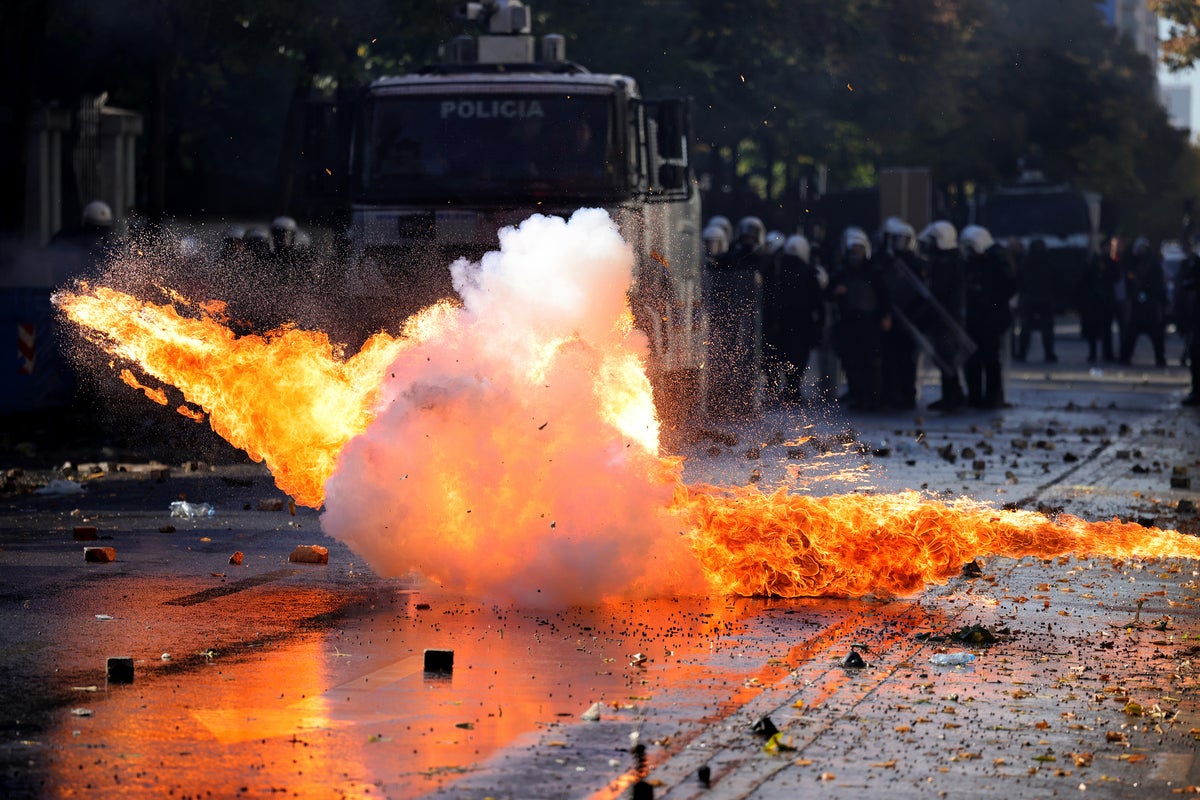
As Edi Rama spoke, excavators were digging up and removing the paving outside his office in central Tirana
- Bookmark
- CommentsGo to comments
Become an Independent member to bookmark this article
Already a member? Log in
Albanian’s Prime Minister has said the protests in his country are a threat not to his government but to Albania's progress toward joining the European Union.
Student-led demonstrations, fuelled by anger over perceived government corruption, a lack of jobs and poor education standards, have engulfed central Tirana and spread to other cities in the past week.
It comes amid widespread protests across Europe.
Demonstrators demanding Edi Rama’s resignation have set fire to government buildings as well as banks and pulled up paving stones to throw at police, who have responded with tear gas, water cannon and rubber bullets.
The unrest, which followed months of largely peaceful protests in the summer against a luxury coastal development backed by US President Donald Trump's son-in-law Jared Kushner, pose the biggest challenge yet to Rama, who has governed since 2013 and last year won a fourth term in office.
"I am not being challenged, the government is not being challenged, a government majority or a winning party in the elections is not being challenged but a path is being challenged, a mission is being challenged," Rama said in a live address on Facebook.
“Albanians need to think very clearly: Do they want this, do they want that, or do they want the EU?”
As Rama spoke, excavators were digging up and removing the paving outside his office in central Tirana as a new round of protests was expected.
Corruption scandals have tarnished Albania's image over the years and analysts say the country is a hub for gangs seeking to launder money from drugs and weapons trafficking.
However, Rama has said his government is tackling corruption as never before. Along with Montenegro, Albania is currently leading the posse of Balkan countries seeking to join the EU, and is aiming for entry by 2030.
Rama blamed unspecified foreign interests for the protests and for what he said was an attempted drone attack at his office this week.
"God knows what the consequences will be. There are no young people, no students, and no minors who would even think of implementing this plan. This is a foreign hand," he said.
Police said 388 people had been charged with criminal offences during the demonstrations. Scores of police officers and protesters have been injured.
Elsewhere in Europe, rioting erupted in cities across France on Saturday as demonstrations against rising living costs and declining public services spiralled out of control in some of the worst violence the country has witnessed for decades.
While hundreds of thousands protested peacefully in street marches in scores of cities, violent fringe groups targeted public buildings, looted luxury boutiques and supermarkets and attacked police vehicles and officers.
In Limoges, the city hall was set ablaze; in Marseille, black-clad protesters broke into city hall and defaced the building with anarchic graffiti, and in Lyon, protesters torched the city's tourist office.
French Prime Minister Sebastien Lecornu said the government would not be "intimidated" by violence, and blamed the unrest on the "ultra-left" and criminals just months before a presidential election next year.
In Portugal, tens of thousands took to the streets of Lisbon following days of unrest to protest against housing and other living costs. Housing prices in Portugal have doubled since 2017, fuelling one of the worst affordability crises in Europe.
In Italy, a march against high costs of living in Milan degenerated into disorder, with police clearing the central cathedral square with tear gas. Police in Bologna used water cannons to try to disperse crowds and made seven arrests after another protest turned violent, the ANSA news agency reported.
Join our commenting forum
Join thought-provoking conversations, follow other Independent readers and see their replies
Comments