
Health
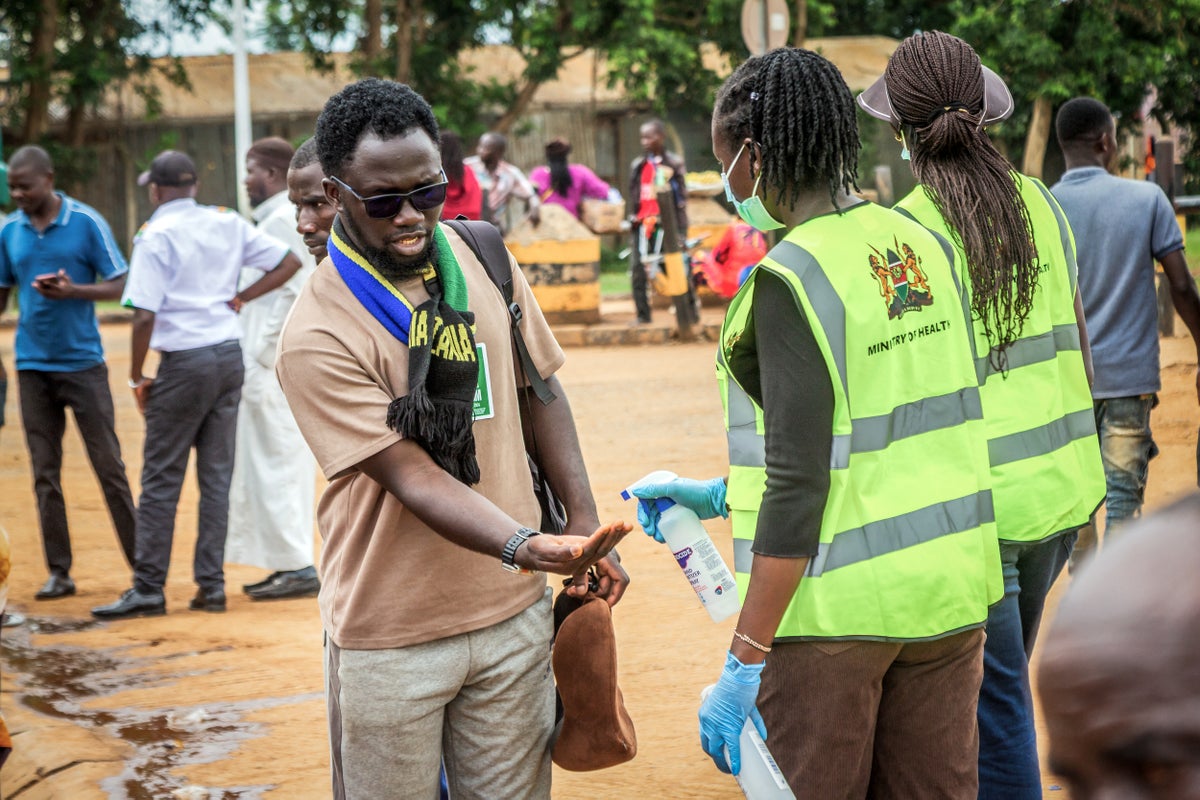
Fast-moving Ebola outbreak spreads to another Congo province
Key Points
Fast-moving Ebola outbreak spreads to another Congo province The outbreak is caused by the rare Bundibugyo virus, for which there is no approved vaccine or treatment - Bookmark Become an Independent member to bookmark this article Already a member? Log in Congo's Ebola outbreak has reached an eighth province, according to authorities. The two new cases were recorded in Nord-Ubangi, a province on the border with the Central African Republic.
Fast-moving Ebola outbreak spreads to another Congo province
The outbreak is caused by the rare Bundibugyo virus, for which there is no approved vaccine or treatment
- Bookmark
Become an Independent member to bookmark this article
Already a member? Log in
Congo's Ebola outbreak has reached an eighth province, according to authorities.
The two new cases were recorded in Nord-Ubangi, a province on the border with the Central African Republic.
One of the patients died, the Health Ministry said on Sunday.
Both were men in their 20s living in the Wapinda health zone, which borders Bas-Uele province, where Ebola cases have been reported previously.
The outbreak, declared in mid-May, is the deadliest in Congo's history.
At least 9,400 cases have been recorded, including more than 4,500 deaths.
The virus has also spilled over into other countries, among them neighbouring Uganda, which has since declared itself free of the disease.
Kenya recorded a seventh case on Saturday.
The Central African Republic has not recorded any confirmed cases.
Ituri province in eastern Congo remains the epicenter of the disease, accounting for almost three quarters of confirmed cases.
The government's most recent data shows 66 health zones have been affected since the start of the outbreak.
Nord-Ubangi sits between Sud-Ubangi and Bas-Uele, the last two provinces the disease had spread to along the border with the Central African Republic.
Recurring armed violence in the Central African Republic has forced thousands to flee and take refuge in Congolese border communities.
Access in the region can be difficult because of poor roads and limited communication networks.
The outbreak is caused by the rare Bundibugyo virus, for which there is no approved vaccine or treatment.
Its spread is fueled by mass population movements, rebel violence, mistrust and poor working conditions of front line workers.
“We see pockets of Ebola generally going down, but unfortunately geographically it’s spreading out," World Health Organization Regional Director for Africa Mohamed Yakub Janabi told The Associated Press in an interview in Beni, eastern Congo, on Friday.
Janabi said one of the biggest challenges has been convincing those who are infected to seek medical assistance.
Some deaths occur in the community outside of health centers, he added.
What is Bundibugyo?
Bundibugyo is a less commonly encountered strain of Ebola, compared to the Zaire ebolavirus, and has caused just two previous outbreaks.
It was first detected in Uganda’s Bundibugyo district during a 2007-2008 outbreak that infected 149 people and killed 37 people. The second time was in 2012 in an outbreak in Isiro, Congo, where 57 cases and 29 deaths were reported.
The fatality rate is estimated to be between 30 per cent and 40 per cent.
What are the symptoms?
As with other Ebola viruses, it is spread by contact with the blood or body fluids of a person who is infected with or has died from BVD. It is also spread by contact with contaminated objects (such as clothing, bedding, needles, and medical equipment), or by contact with animals, such as bats and nonhuman primates, that are infected with BVD.
Symptoms include fever, headache, muscle pain, weakness, diarrhea, vomiting, stomach pain, and unexplained bleeding or bruising (a late stage of illness).
There is no known vaccine or specific therapeutics against Bundibugyo virus, though early supportive care is lifesaving, according to the WHO.
[Image text:] MINIRYOHEALT
Congo (LOCATION)
Bundibugyo (ORG)
Independent (ORG)
Nord-Ubangi (ORG)
the Central African Republic (LOCATION)
the Health Ministry (ORG)
Wapinda (ORG)
Bas-Uele (PERSON)
Uganda (LOCATION)
Kenya (LOCATION)
Sud-Ubangi (ORG)
Congolese (ORG)
World Health Organization Regional (ORG)
Mohamed Yakub Janabi (PERSON)
The Associated Press (ORG)