
Entertainment
Over 45% of Saudi flights cancelled since Oct 8, residents scramble for alternatives
Key Points
Residents in Saudi Arabia are being forced to rethink travel plans, take lengthy detours through neighbouring countries and adapt to remote working amid flight cancellations. According to a report by Cirium, more than 45% of flight departures from Saudi Arabian airports have been cancelled since October 8. Businesses have also been forced to adjust, while expatriates who regularly travel home on weekends are weighing their options amid uncertainty over when flights will resume.
Residents in Saudi Arabia are being forced to rethink travel plans, take lengthy detours through neighbouring countries and adapt to remote working amid flight cancellations. According to a report by Cirium, more than 45% of flight departures from Saudi Arabian airports have been cancelled since October 8.
Businesses have also been forced to adjust, while expatriates who regularly travel home on weekends are weighing their options amid uncertainty over when flights will resume.
Government agencies in Riyadh have told employees to work from home starting Monday, while the 99-storey Kingdom Centre skyscraper, which houses the regional office of the International Monetary Fund, has also shifted to remote work, according to an AFP report, citing workers and two consultants.
The disruption has also forced Saudi Arabia to postpone or cancel several high-profile events. Its flagship investment forum, the Future Investment Initiative (FII), was postponed until 2027 on Monday. Announcements have also been made concerning the MDLBEAST Soundstorm music festival, Riyadh Fashion Week and the Red Sea Film Festival. A star-studded tennis tournament has also been affected.
Residents seek alternative routes
With Riyadh's airport closed, domestic airlines have been promoting flights from alternative airports, including Qassim, around three hours from the capital.
Some residents have also travelled by road to airports in Bahrain and Qatar to enter or leave Saudi Arabia.
A Riyadh resident described being diverted mid-flight during an attack on the airport.
"We decided to land in Jeddah," said the resident on the condition of anonymity. "From Jeddah, thank God, everything worked out, and we were able to catch a flight to Qassim."
For expatriates, the uncertainty has raised concerns about how long they can manage without regular air connections. One resident, who frequently travelled to a Middle Eastern country before the closure, said: "I can cope with this situation for a month or more, but I cannot imagine it lasting much longer than that."
Businesses are also finding ways to maintain operations. A Dubai-based consultant said that "no employee is forced to travel to Saudi Arabia" but if a client relationship was at risk they were "encouraged to make the trip by car via Bahrain".
Western embassies have tightened travel advisories, with some warning against travelling to the kingdom. Discussions among expatriates about potentially leaving Saudi Arabia have also stirred resentment among some Saudis, who feel that wealthy foreign residents have not stood by the country during the crisis.
Airport attacks deepen disruption
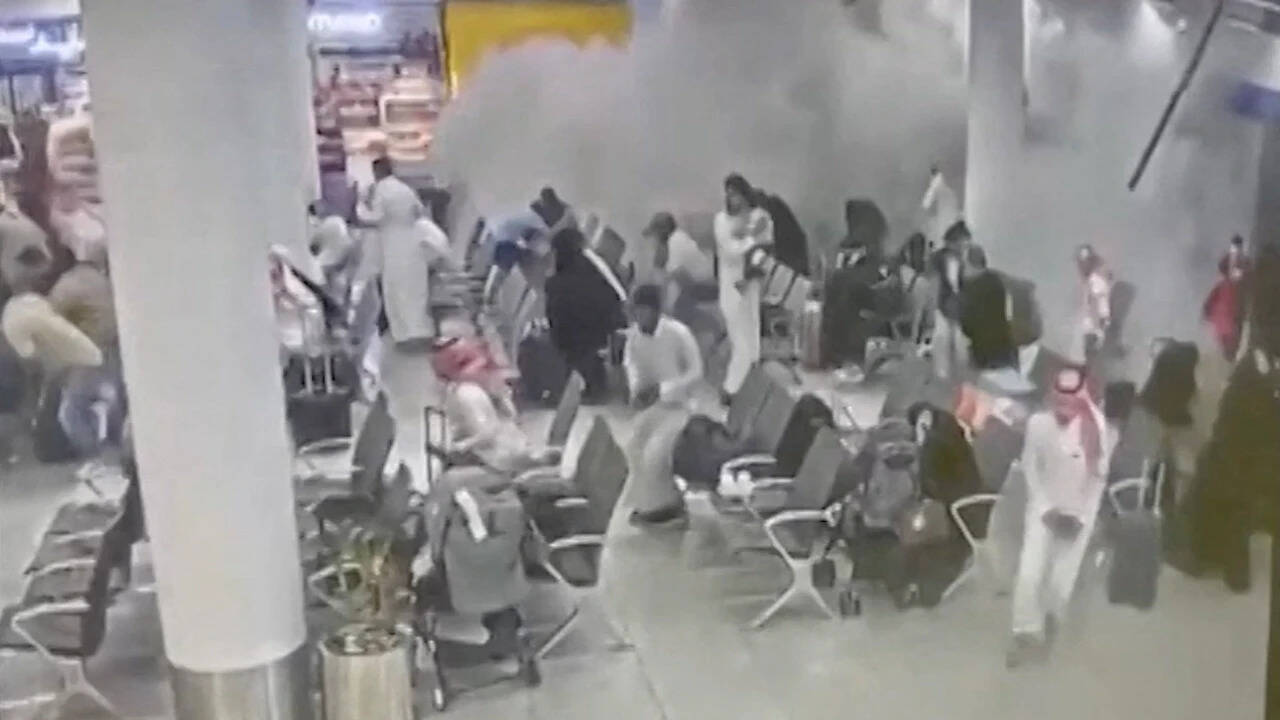
The travel crisis follows a sharp escalation in fighting between Saudi Arabia and Yemen's Iran-backed Houthi rebels, who have targeted airports and energy infrastructure in the kingdom in recent weeks.
Last week, the Saudi-led coalition accused the Houthis of attacking Riyadh's airport 20 times in October alone.
"The Houthis must immediately cease all terrorist operations," said coalition spokesman Turki Al-Malki.
A regional airline source said the carrier had been told by Saudi authorities on Friday that the airport would remain closed until further notice. A second source from another regional airline said it had been informed that the closure would last at least until October 24.
"When people start throwing missiles directly at Riyadh airport and any other airport, you can't just continue to operate," said Captain Desmond Ross, an aviation expert based in Dubai and Ireland with decades of experience as a pilot and air traffic controller.
"An attack on an airport is something entirely different from a non-aviation target," AFP reported quoting Ross.
"I think Riyadh has suffered that more dramatically than any other of the Gulf nations or the Arab nations," during the ongoing Middle East war.
Blow to Saudi Arabia's economic ambitions
The prolonged airport closure and the postponement of major events have also dealt a blow to Saudi Arabia's efforts to attract international investment and diversify its economy beyond oil.
For nearly a decade, the Future Investment Initiative has served as a platform for the kingdom to court global investors, business leaders and heads of state.
"Few want to visit a country under persistent deadly missile attacks. And even fewer want to invest in one," wrote Karen Elliott House, author of a recent book about the crown prince, in a Wall Street Journal op-ed.
Saudi ministers have sought to reassure residents and investors amid growing concerns over security. Last week, as text messages warning of an attack on the capital were sent, Human Resources Minister Ahmad bin Sulaiman Al Rajhi addressed the issue at the Riyadh Economic Forum.
"We are safe. With God's will," he told the crowd. "May God turn their plots back against them."
Saudi (ORG)
Saudi Arabia (LOCATION)
Cirium (PERSON)
Saudi Arabian (ORG)
Riyadh (LOCATION)
Kingdom Centre (LOCATION)
the International Monetary Fund (ORG)
the Future Investment Initiative (ORG)
MDLBEAST Soundstorm (ORG)
Riyadh Fashion Week (EVENT)
the Red Sea Film Festival (ORG)
Qassim (PERSON)
Bahrain (LOCATION)
Qatar (LOCATION)
Jeddah (LOCATION)