
Education
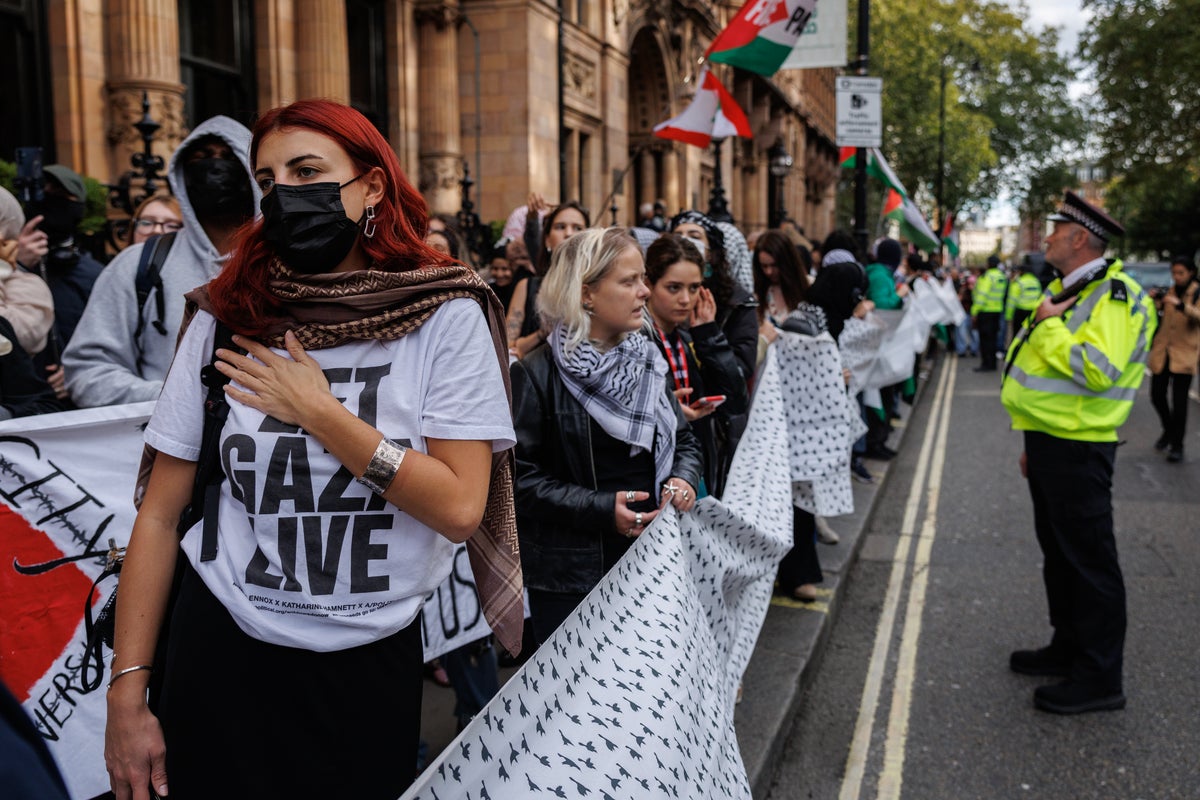
UK universities sanctioning students and academics over emojis as part of Palestine protests crackdown, Amnesty warns
Key Points
UK universities sanctioning students and academics over emojis as part of Palestine protests crackdown, Amnesty warns Amnesty International said that universities had taken extreme measures to restrict Palestine solidarity protests in an attack on free speech and the right to protest - Bookmark - CommentsGo to comments Become an Independent member to bookmark this article Already a member? Log in UK universities have sanctioned students and academics for donning keffiyehs and using the...
UK universities sanctioning students and academics over emojis as part of Palestine protests crackdown, Amnesty warns
Amnesty International said that universities had taken extreme measures to restrict Palestine solidarity protests in an attack on free speech and the right to protest
- Bookmark
- CommentsGo to comments
Become an Independent member to bookmark this article
Already a member? Log in
UK universities have sanctioned students and academics for donning keffiyehs and using the watermelon emoji as part of a crackdown on Palestinian solidarity protests, a report from Amnesty International has warned.
The human rights charity has warned that universities including Cambridge, Oxford, LSE and Birmingham have taken extreme measures to restrict solidarity with Palestinians amongst students and academics.
Students and academics have faced suspensions, campus bans and threats to visa status for chanting, clapping and wearing keffiyehs, the report outlined. Some institutions used legal and bureaucratic means to restrict protests and events on campuses relating to Palestinian solidarity, they said.
The University of Birmingham, for example, withdrew approval for a staff-student listening session on the legal and humanitarian situation in Palestine in November 2023, citing the appearance of a watermelon emoji in promotional materials.
In an email to the organisers, senior leadership argued the watermelon, which has become a symbol of Palestinian solidarity, undermined the neutrality of the event. At first the event was postponed, with staff caveating that approval had been given on the basis that it was intended to be “inclusive”.
The organising staff objected to the use of the word “inclusive”, arguing that it implied the planned content was discriminatory or harmful with no evidence, as no content had been shared in advance of the event.
After further internal dialogue, the university adjusted its messaging, stating the session may not have “provided the safe and objective space for discussion that was intended.” The university’s decision to cancel followed complaints from the university’s Israel student society and Jewish student society, which accused the organisers of failing to ensure the event was appropriately balanced.
When staff questioned the basis of the decision and asked for clarity on how the university’s free speech policies were being applied, the dean reportedly issued a private apology to the organisers - yet no public correction or clarification was made to students or the wider community.
A spokesperson from the University of Birmingham denied cancelling the event, suggesting other routes were provided for it to go ahead.
They said: “The event was not cancelled; the event organisers were provided with routes to go ahead but did not take those up. We have a strong and longstanding commitment to freedom of speech and academic freedom, supported by our Code of Practice. Through this we regularly facilitate debates and activities (such as rallies) on a range of issues, including in relation to Palestine.”
In a separate incident at the London School of Economics (LSE), seven students were subject to a campus ban after they took part in a peaceful protest in July 2024. Students wore keffiyehs and T-shirts with red handprints symbolising blood, used a megaphone, and chanted slogans inside the LSE Student Services Centre foyer in a protest they claim lasted 15 minutes.
LSE subsequently imposed precautionary campus bans on them, alleging their protest had caused harassment, bullying, fear and distress to staff.
At least two students said they were forced to defer their studies or alter academic plans because of the bans, a fact disputed by the university who said the students chose to defer their studies.
Subject access requests by the students showed that senior university leadership described the protest as a “temper tantrum by children”, and referred to students as “dressed as terrorists”. One official proposed expelling the students before an investigation had even taken place.
An LSE spokesperson said that the action against the students was initiated after complaints from multiple staff members during student registration.
“Freedom of speech and expression are of the utmost importance to LSE and underpin everything we do. Our free speech policy is designed to protect and promote lawful freedom of expression on campus, including the right to protest. LSE will only take measures against protestors if a protest crosses the line into illegality, is threatening to individuals, or significantly disrupts the community.
“Following a protest on campus on 7 July 2024, LSE commenced an investigation based on multiple witness statements and extensive CCTV footage, all of which was collected and used in compliance with data protection requirements.
“Seven students were subject to precautionary measures pending the investigation. The students continued their studies, nothing was put into their records or files, and adjustments to the precautionary measures were made based on requests by the students. Following the investigation, six of the students were given formal warnings, but no further action was taken. One case was dismissed.
“The action against the students was initiated after we received multiple complaints from staff who had volunteered their time on a Sunday to register students — who also observed first-hand and heard from students seeking to register — that the protesters, with covered faces, physically obstructed their work and efforts; used loud megaphones in an enclosed inside space; shouted in people’s faces; and behaved in a manner that intimidated and frightened people.
“We could not responsibly ignore these complaints and allegations, which required us to initiate an investigation and disciplinary proceedings, even if some who were present may not have been upset or may have a different perspective.
“The investigation into this incident followed our processes correctly.”
Amnesty said that the actions taken by these universities was an attack on free speech and the right to protest.
Kerry Moscogiuri, CEO of Amnesty International UK said: “This is an attack on our freedom of speech and the right to protest from the very institutions who are supposed to encourage free thought.
“Students and academics care about the victims of Israel's genocide in Gaza. It’s beyond belief that some of our prominent universities see this as a threat that requires punitive measures like court injunctions, and harsh punishments that leave students with their lives turned upside down.
“This is part of a wider crackdown on communities coming together to make their voices heard on Israel’s genocide of Palestinians in Gaza and other issues they care about. Just as we’re seeing students facing sanctions for clapping and chanting on our campuses, we’re seeing grandparents, amongst many others, facing arrest for holding placards at the Defend Our Juries protests.
“Universities should be an environment in which students feel safe in coming together and demonstrating on the issues they care about. That’s why we are asking universities to commit to our Defend Dissent Charter."
The Independent has contacted Universities UK for comment.
Join our commenting forum
Join thought-provoking conversations, follow other Independent readers and see their replies
Comments