
Health
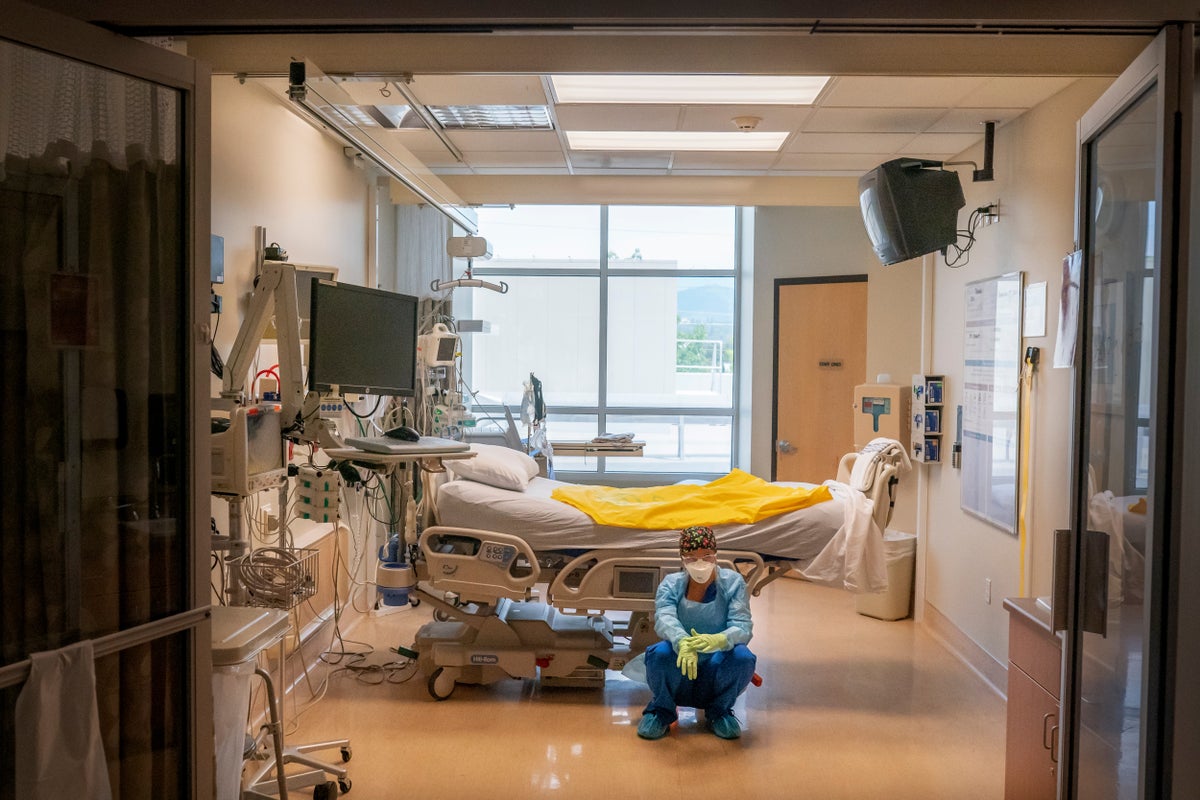
It’s an AI-proof, in-demand profession — and people are leaving in droves
Key Points
It’s an AI-proof, in-demand profession — and people are leaving in droves Driven off front lines by severe burnout and physical threats, tens of thousands of experienced nurses are moving to telehealth, urgent care and outpatient clinics - Bookmark - CommentsGo to comments Become an Independent member to bookmark this article Already a member? Log in Despite rising salaries and strong job security, registered nurses across the United States are leaving bedside roles due to heavy workloads,...
It’s an AI-proof, in-demand profession — and people are leaving in droves
Driven off front lines by severe burnout and physical threats, tens of thousands of experienced nurses are moving to telehealth, urgent care and outpatient clinics
- Bookmark
- CommentsGo to comments
Become an Independent member to bookmark this article
Already a member? Log in
Despite rising salaries and strong job security, registered nurses across the United States are leaving bedside roles due to heavy workloads, chronic understaffing and escalating physical violence from patients.
American nurses earn a median annual salary of $97,550. Because their direct, hands-on care cannot easily be replaced by automation, nursing school enrollments remain high. Yet even as AI ranks among Americans’ top fears regarding job displacement and economic disruption, data highlighted in a report by The Wall Street Journal show that qualified healthcare professionals are walking away from hospital floors of their own accord.
According to figures from the nurse-placement firm NSI Nursing Solutions, the annual turnover rate for bedside registered nurses reached 18 percent last year, up from 11 percent 15 years ago.
Recent industry surveys highlight a growing desire to exit. A 2024 survey of 800,000 nurses showed that approximately 40 percent planned to retire or leave the workforce within five years, citing stress and understaffing.
This high turnover rate is not driven by a lack of trained professionals, experts say.
“There is no shortage of nurses in this country,” Jeff Doucette, chief nursing officer at healthcare analytics firm Press Ganey, told The Wall Street Journal. “There’s a shortage of nurses that want to work in the current environment.”
Health executives note that the departure of experienced staff hurts operational efficiency and patient safety, increasing the risks of medical errors and falls. Senior nurses provide crucial mentoring and quick diagnostic assessment on busy floors.
Dustin Bass, president of the Emergency Nurses Association, recalled that a decade ago, veteran nurses with 10 to 20 years of experience managed triage departments and could identify severe conditions across a crowded room.
“Now you have nurses running massive emergency rooms with 133 care spaces, and they’ve only been working for two or three years,” Bass told the publication.
Part of the pressure stems from structural shifts in modern healthcare delivery. While outpatient care handles routine recoveries, hospitalized patients today are typically sicker and require complex, intensive care.
Emergency departments have faced severe strain as fewer hospital beds create backlogs, leaving patients waiting in corridors for long periods. Data analyzed by the University of Michigan Medical School and Beth Israel Deaconess Medical Center found that ER wait times spiked during the pandemic and remained high through 2024, with nearly 5 percent of winter patients waiting more than 24 hours for a hospital bed.
This overcrowding frequently boils over into physical aggression against healthcare workers. Data compiled by Press Ganey showed that 2.4 percent of nursing personnel experienced a physical assault last year — a 26 percent increase since 2017, representing more than 1,000 reported incidents per month. Union surveys suggest the actual figure is higher. A National Nurses United poll of 1,300 nurses found that 33 percent reported being slapped, punched or kicked in the last year, while 12 percent reported being groped or inappropriately touched.
“The nurse is the face of the hospital, and we’re constantly blamed for things outside our control,” Juliet Etienne, a 29-year-old emergency department nurse in New Orleans, told The Wall Street Journal.
Amy Stimpfel, an associate professor at Villanova University’s M. Louise Fitzpatrick College of Nursing, observed that long delays fuel patient anger.
“You have people in their most vulnerable times of their life, and their call button’s not getting answered because the nurse is overworked, their loved one’s not being seen,” Stimpfel told the newspaper. “It’s bubbling up from a system that’s sort of broken.”
For many, the physical threat forces an exit. Paige Campbell, 33, became a nurse during the pandemic and worked in an emergency department in Fort Walton Beach, Florida. After being kicked, spat on and shoved over her tenure, she left her bedside role last year when an aggressive patient strangled her after she offered him a blanket.
“All I could think was, ‘I can’t breathe, I’m going to die here, and who’s going to tell my mom and dad?’” Campbell said.
She transitioned to a remote patient-monitoring role to recover.
Expanded career alternatives give bedside nurses clearer exit paths than in prior decades. Many transition to urgent care centers, virtual nursing or independent nurse practitioner roles, which offer higher pay and predictable hours.
Christian Stone, a Washington, D.C. nurse, spent five years in emergency rooms — where he was routinely yelled at and once bitten by a patient — before moving to an urgent care clinic.
“I do miss it,” Stone said, regarding bedside care. “But now I don’t hate coming to work every day.”
The financial burden of nurse departures on healthcare facilities is substantial. Omid Razmpour, a researcher at Emory University and former ICU nurse, analyzed turnover at Emory Healthcare and determined that losing a single nurse costs the system approximately $78,000 in recruitment, training and temporary contract labor.
“If you talk to the C-suite, it’s easy to say, ‘Hey, give us resources for a physician,’ because they’re going to generate X amount of revenue,” Razmpour told The Wall Street Journal.
To address the issue, Emory Healthcare invested $150 million in staff pay increases, primarily for nurses. Sharon Pappas, former chief nurse executive at Emory, explained to the publication that the investment ultimately saved the health system money by reducing turnover rates.
Hospitals nationwide are also expanding physical security. Measures include panic buttons, armed security staff and metal detectors — such as those installed across 40 facilities by the University of Pittsburgh Medical Center following a fatal shooting at its York, Pennsylvania campus.
“Everyone in the country is trying to roll these out as best and as fast as they can,” Maribeth McLaughlin, the hospital’s chief nurse executive, said.
Nurses maintain that security hardware must be matched by better staffing levels and safety policies. Campbell, the Florida nurse who survived a strangulation attempt, recently voted with colleagues to unionize her HCA Healthcare facility over safety concerns and overcrowding.
Despite her past trauma, Campbell plans to return to emergency department care later this year.
“Everyone has a mom or dad or child they feel passionate about caring for,” Campbell said. “I want to stay in the game.”
Join our commenting forum
Join thought-provoking conversations, follow other Independent readers and see their replies
Comments
Independent (ORG)
the United States (LOCATION)
American (ORG)
AI (ORG)
Americans (ORG)
The Wall Street Journal (ORG)
NSI Nursing Solutions (ORG)
Jeff Doucette (PERSON)
healthcare analytics (ORG)
Press Ganey (ORG)
Dustin Bass (PERSON)
the Emergency Nurses Association (ORG)
Bass (PERSON)
the University of Michigan Medical School (ORG)
Beth Israel Deaconess Medical Center (ORG)