
Science
Always tired? To reclaim energy, 6 Singaporeans try these small biohacks that could help you too
Key Points
To reclaim energy, 6 Singaporeans try these small biohacks that could help you too From late workouts to doomscrolling, everyday habits can take a toll. With guidance from NUS researchers, six participants in the series, Restless: Biohacking Better Health, discover how “micro” adjustments can make a difference. SINGAPORE: By the early afternoon, Jeffrey Pang usually feels what he calls the “Z monster” coming.
Always tired? To reclaim energy, 6 Singaporeans try these small biohacks that could help you too
From late workouts to doomscrolling, everyday habits can take a toll. With guidance from NUS researchers, six participants in the series, Restless: Biohacking Better Health, discover how “micro” adjustments can make a difference.
SINGAPORE: By the early afternoon, Jeffrey Pang usually feels what he calls the “Z monster” coming.
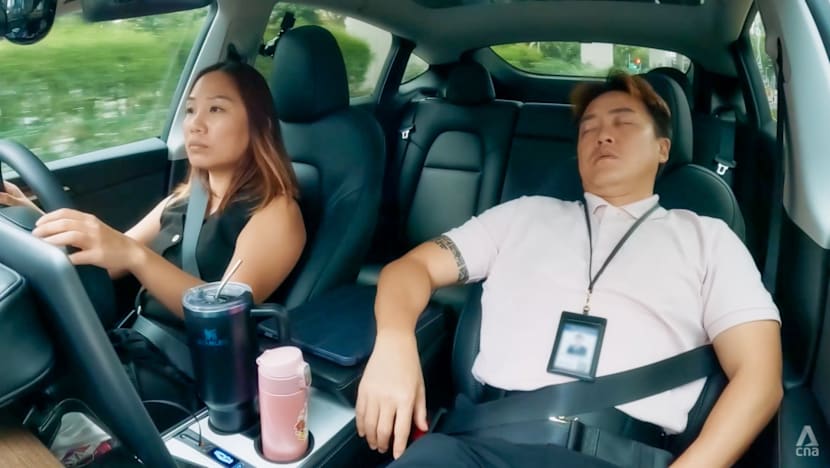
The 42-year-old property agent spends four to five hours a day behind the wheel, what with the school run and property viewings. Around 2pm, fatigue sets in. His eyelids flutter, and at times, he groans involuntarily and is jolted awake.
On bad days, his wife tells him to pull over so she can drive instead. “I’ll tend to doze off,” said the father of three. “It gets very worrying because I become a road hazard.”
The exhaustion follows him home, where he can become short-tempered. “My whole focus is to provide for my family, but (in the end), I’m causing all this unhappiness and arguments,” he said.
He is not alone in struggling to feel well-rested. For many Singaporeans, work and study hours, family responsibilities and social commitments fill the day, leaving little time for recovery.
With those demands unlikely to disappear, what could help people feel more energised?
In the two-part series, Restless: Biohacking Better Health, six Singaporeans spend several weeks using data from smartwatches and continuous glucose monitors to see how their sleep, diet and exercise affect them. Then they test small changes to their everyday routines.
Guiding them is digital medicine expert Dean Ho, the director of the Institute for Digital Medicine at the National University of Singapore Yong Loo Lin School of Medicine (NUS Medicine) and head of biomedical engineering at the university.
Rather than overhauling their lives, he favours personalised “micro adjustments”. Lifestyle changes must be things they are “willing to do” and that are not “so drastic” as to be hard to sustain, said the professor.
WATCH PART 1: We’re so tired — Can these working parents and a nurse reclaim their energy? (46:54)
Here are six recommendations for better health, for the participants and others too:
1. PRIORITISE RECOVERY TIME OVER LONG WORKOUTS
One of the first discoveries Ho made about Pang’s usual routine was that the latter did strength training four times a week, for about three hours in the morning, but slept as little as four to five hours at night.
This was a mismatch between training load and recovery time. Weight training and sufficient sleep can both support testosterone levels, but when someone over-exercises while under-sleeping, “it’s possible that the opposite happens”, said Ho.
To Pang’s surprise, a blood test showed that his total testosterone level was borderline low. He had thought the more he worked out, the higher his testosterone level.
To free up time for recovery, Ho asked him to cut his workouts to 90 minutes. So he streamlined his training — while going to bed earlier and keeping his phone out of the bedroom.
By the third week, his average sleep time had exceeded seven hours. After five weeks of changes to his sleep, diet and exercise, his total testosterone level had risen by almost 50 per cent.
“Serious?!” he exclaimed when told the result. “Wow!”
He also reported having more energy in the afternoon. At home his family found him more engaged with them and less irritable. His emotions have “improved a lot”, said wife Genevieve Pay. “It’s like I (got) my best friend back.”
2. DIAL DOWN STIMULATION AS THE DAY GOES ON
Pang was not the only who needed an afternoon boost. On an internship and mentally drained by 3pm, final-year undergraduate Tommy Yeow, 25, relied on coffee and a muffin to get through the days.
He would go for an evening run and supper twice a week, then return home to work on his resume or coding.
Though exhausted by bedtime, he would still doomscroll until 2am or 3am to switch off, leaving him with four to five hours of sleep.
Without enough time to wind down, anxiety can “creep in” and trigger people to doomscroll, said Jocelyn Chew, an assistant professor at NUS Medicine who leads its Digital Behavioural Insights Lab.
The habit taps the brain’s reward-seeking system, and a constant stream of content keeps people stimulated even late into the night.
Ho also flagged Yeow’s evening runs. Late workouts affect sleep, and the data showed Yeow’s heart rate was still elevated when he went to bed.
WATCH PART 2: Doomscrolling and late workouts — Why are these young people so tired? (46:37)
To let his body wind down earlier, Yeow moved his coffee and muffin break from 3pm to 2pm and his runs to the weekend. On weeknights, he switched to a walk after dinner, with no supper.
“I can reach home much earlier and then sleep much earlier to have more energy for the next day,” said Yeow, who also tried deep breathing exercises to manage stress.
In the end, he was averaging more than 7.5 hours in bed, including more than 80 minutes of deep sleep. And his daily screen time had fallen from 10 hours to about seven hours.
3. ME-TIME SHOULD HELP YOU WIND DOWN, NOT STAY UP
Evenings for Gelsey Tan, meanwhile, are when her second shift begins. The information technology business partner and mother of two ensures homework is done and bedtime routines are followed and prepares for the next day.
Only then can she “rest (her) mind”. Despite feeling tired, the 45-year-old would often stay up until 1am to watch television with chips and a glass of wine, leaving her with five to six hours of sleep.
She would sometimes catch up on sleep on days off, once sleeping for nearly 12 hours on the eve of a public holiday. But building up this sleep debt, warned Ho, could affect her heart and cognitive health.
To help her rest more, he suggested that she start by sleeping 15 minutes earlier. A small change such as this requires less mental effort and, with repetition, is more likely to stick, said Chew.
And when Tan turned in earlier, her wearable data showed a longer stretch of deep sleep, and she felt happier and energetic.
She also began meditating with her husband before bedtime. Over time, she was sleeping before 11pm and getting seven to eight hours of rest. Her takeaway was this: “Mindless me-time drains. Intentional me-time restores.”
4. MAKE THE HEALTHIER CHOICE THE EASIER CHOICE
For nurse Mishel Teo, 33, her hospital duties rotate between shifts, and it is the nights that test her the most. Between 3am and 5am, she would start dozing off and sometimes have two, three or four coffees.
Proper meals are hard to come by at the hospital late at night, leaving her with options such as chips, biscuits, cakes and instant noodles.
To avoid relying on less nutritious snacks, she has made a habit of preparing balanced meals and protein-rich snacks, such as rice cakes with cottage cheese and fruit with Greek yoghurt, to bring on her night shifts.
Over four weeks, Ho’s team saw that there were no very late sugar spikes in her blood glucose data. He said her attention to what and when she ate could support more consistent sleep.
Teo realised “the trick is (to) not buy all these chips and stuff … so that you don’t have a choice — if you’re hungry, this is all you have”.
5. CUT BACK WITHOUT CUTTING OUT EVERYTHING
Late nights for Muhammad Nasrulhaq, meanwhile, were part of his “work hard, play hard” lifestyle. The trade compliance analyst often stayed up to trade stocks or socialise; sometimes he woke at 3am to watch football.
On some nights, the 32-year-old slept for only a couple of hours, leaving him tired and cranky.
Food and smoking also figured prominently in his life. He enjoyed his parents’ home-cooked food — even when it was oily — often ate fried food outside and smoked a pack a day to relieve stress and bond with his father.
His blood tests, however, showed elevated levels of two markers: high sensitivity C-reactive protein (hs-CRP), which indicates inflammation in the body, and homocysteine, which is associated with cardiovascular risk.
Ho told a shocked Nasrulhaq that the numbers more closely resembled those of someone in their 50s or 60s.
Consultant cardiologist Laureen Wang at Alexandra Hospital said chemicals in cigarette smoke promote inflammation and damage blood vessels. “It’s like rusting your pipes,” she added, warning that narrowed or blocked blood vessels can lead to a heart attack.
Rather than cutting out everything, Ho stressed balance and respecting food and family traditions. So Nasrulhaq had his family meals but ate less fried and ultra-processed foods outside and left social gatherings earlier.
He also cut back on smoking, especially after his father offered to “quit together”.
Within five weeks, his sleep score had risen from 60-plus to more than 90. In less than 13 weeks, he had cut his smoking down to as little as two cigarettes in one week.
His hs-CRP fell by 80 per cent and his homocysteine by about 30 per cent. Reflecting on how much he had reduced his smoking, Nasrulhaq said: “Never in my wildest dreams (did) I think I could. But I did it.”
6. STRUGGLING TO WAKE UP? LET THERE BE LIGHT
For project manager Nicole Lum, 30, sleeping less than five hours a day had become routine. She was juggling work, a part-time master’s degree course, four or five workouts a week and, when filming began, wedding preparations.
Getting out of bed was her biggest struggle. She would set her alarm for multiple times and repeatedly hit the snooze. She once overslept and missed an important meeting.
The problem persisted even after she started a job with a later start time. Despite averaging more than eight hours of sleep, she found it “very hard to wake up” — this and her “repeated snoozing” stood out, observed Ho.
He suggested another wake-up cue that can signal to the body that it is time to rouse, namely morning light. One option was a smart bulb timed to switch on with her alarm.
Lum tried switching on a bedside light when she woke. “It feels a bit weird, but I think it helps,” she said. “I feel less tired when I get out of bed. I don’t feel so groggy.”
Watch the series, Restless: Biohacking Better Health, here: Part 1 and Part 2.