
Science
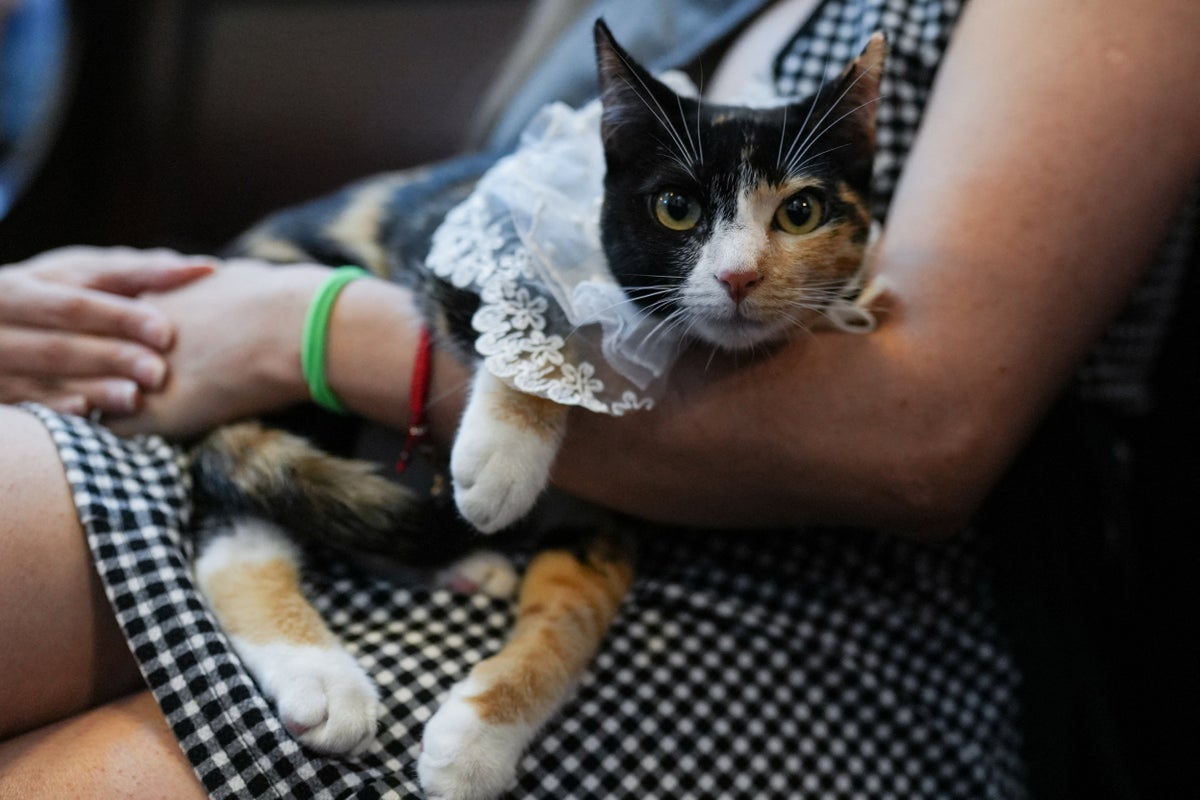
Cat happiness chemically linked to happiness of its owner, new study shows
Key Points
Cat happiness chemically linked to happiness of its owner, new study shows Landmark study reveals feline happiness levels mirror their owners’, while reducing human anxiety and stress - Bookmark - CommentsGo to comments Become an Independent member to bookmark this article Already a member? Log in A cat’s sense of well-being is chemically linked to that of its owner, with feline bonding hormones directly mirroring human emotional states, according to groundbreaking new research. In a...
Cat happiness chemically linked to happiness of its owner, new study shows
Landmark study reveals feline happiness levels mirror their owners’, while reducing human anxiety and stress
- Bookmark
- CommentsGo to comments
Become an Independent member to bookmark this article
Already a member? Log in
A cat’s sense of well-being is chemically linked to that of its owner, with feline bonding hormones directly mirroring human emotional states, according to groundbreaking new research.
In a month-long study published in iScience, scientists examining the connections between humans and pet cats found a positive hormonal link centred on oxytocin – the “love hormone” associated with social bonding, happiness, and affection.
The findings provide the first objective proof of a shared physiological bond between cats and their owners, challenging long-held assumptions that domestic felines are emotionally detached compared to dogs.
“Cats serve not merely as passive companions, but as active social partners,” capable of participating in emotional interactions with humans,” noted lead author Dr Saho Takagi, a animal behaviour researcher at Kyoto University.
While physiological connections between humans and dogs are well documented – with dog-owner bonds often centred around shared stress hormone levels – the hormonal dynamics between humans and cats have remained largely unexplored.
To measure these hidden biological connections, researchers at Kyoto University and Azabu University tracked 19 owners and 29 pet cats over a month, analysing their urinary oxytocin and cortisol (the primary stress hormone) alongside daily physical proximity.
During the study, researchers confirmed that higher oxytocin levels in cats were directly linked to higher oxytocin levels in their owners, highlighting a clear relationship between higher oxytocin levels in cats and reduced negative mood states in humans.
When cats displayed elevated oxytocin levels – reflecting an affectionate, socially engaged state – their owners reported significantly lower levels of anxiety, depression, tension, and overall mood disturbance.
Crucially, higher owner stress was linked to lower oxytocin in their pets. Owners with elevated cortisol levels lived with cats that produced less oxytocin, demonstrating that human stress may actively suppress a cat's bonding hormone.
Physical closeness also played a direct role in human well-being. Using Bluetooth beacons attached to cat collars, the team found that spending more time in close physical proximity to a cat predicted higher energy and vitality scores in owners, whereas the length of time an owner had owned the cat showed no such benefit.
"Time spent in close physical proximity to one's cat – plausibly reflecting the frequency of petting, play, or other direct engagement – may be associated with more immediate, positive affective states," explained Dr Takagi.
To confirm whether these hormone levels influenced real-world behaviour, the team conducted tests and found that cats with higher oxytocin levels were much more likely to approach both their owners and unfamiliar individuals. Conversely, cats with higher stress levels showed reduced willingness to approach strangers.
Because the study was cross-sectional, experts note that further work is required to establish whether happy owners create affectionate cats, or whether affectionate cats improve owner mood.
"Although the mood-enhancing effects of cat ownership may diminish over time, daily interaction and physical proximity with cats may help sustain positive psychological states in owners," Dr Takagi said.
Join our commenting forum
Join thought-provoking conversations, follow other Independent readers and see their replies
Comments