
Environment
‘Flesh-eating’ screwworm confirmed in US wildlife as officials scramble to contain spread
Key Points
‘Flesh-eating’ screwworm confirmed in US wildlife as officials scramble to contain spread The metallic, orange-eyed parasite uses mouth hooks to burrow into the flesh of mammals - Bookmark - CommentsGo to comments Become an Independent member to bookmark this article Already a member? Log in A case of New World screwworm has been detected in U.S. wildlife for the first time. The flesh-eating parasitic fly was found in elk on a game ranch in Pecos County, Texas, after being harvested by a...
‘Flesh-eating’ screwworm confirmed in US wildlife as officials scramble to contain spread
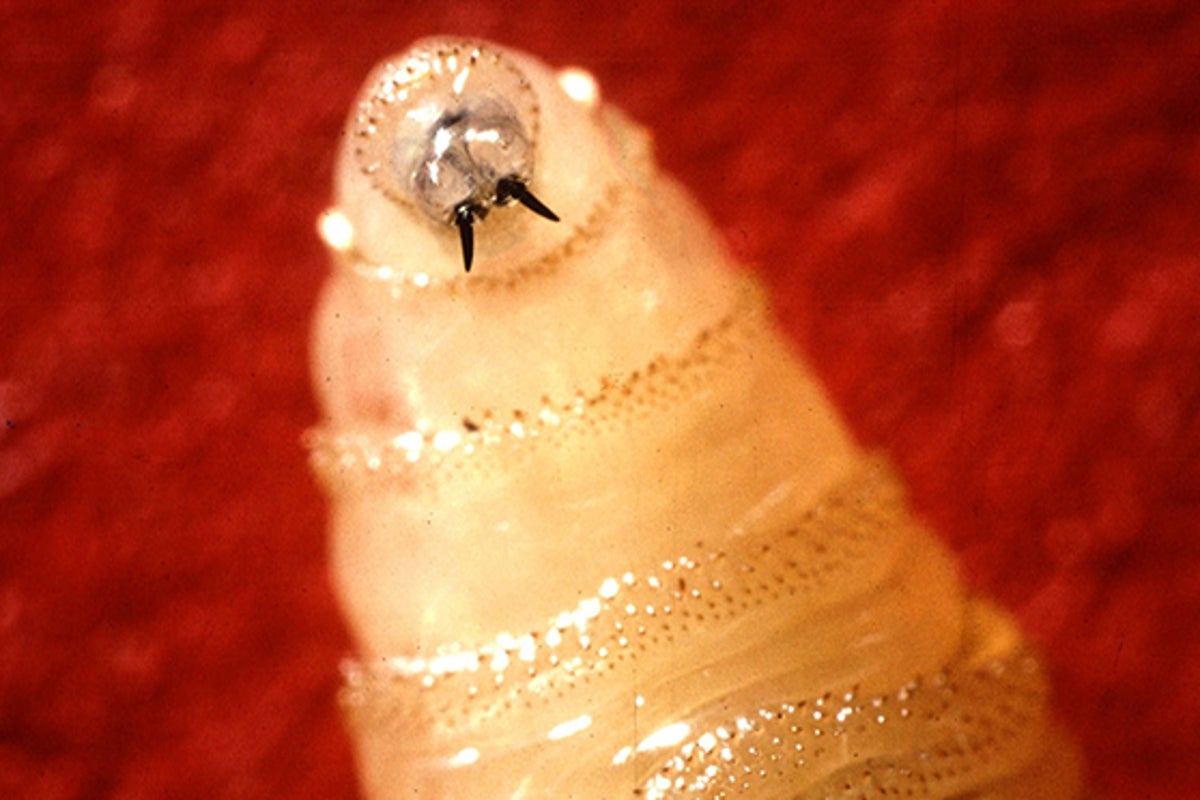
The metallic, orange-eyed parasite uses mouth hooks to burrow into the flesh of mammals
- Bookmark
- CommentsGo to comments
Become an Independent member to bookmark this article
Already a member? Log in
A case of New World screwworm has been detected in U.S. wildlife for the first time.
The flesh-eating parasitic fly was found in elk on a game ranch in Pecos County, Texas, after being harvested by a hunter, the U.S. Department of Agriculture said Wednesday.
The state’s parks department is conducting additional wildlife surveillance in the area and a previously-established “infested zone” will be updated following the detection, the department said.
“This detection highlights the critical role hunters, landowners, outdoor enthusiasts and wildlife professionals play in helping detect and stop the spread of NWS,” the department noted. “Early reporting is one of the most important tools we have to protect wildlife, livestock and pets in the United States.”
The detection comes as another new case was reported in a New Mexico cow in Otero County. Earlier this month, two cases were reported in a calf and a horse in the state’s Grant County, five hours West of Otero. In June, Texas also confirmed cases in calves, a goat and a dog in multiple counties.
The screwworms are often attracted to cattle after procedures such as dehorning, causing fatal infestations and costing millions in livestock losses, economic damage and eradication efforts. Related livestock losses in Mexico reached an estimated $2.8 billion since 2024, according to Bloomberg Law.
To stop the spread, the U.S. closed the southern border ports to livestock imports last year - sending beef prices soaring to a record near $7 per pound in August, according to Bloomberg Tax - and has since reopened the ports in phases.
“Every animal entering the United States through these ports will undergo a full USDA inspection to ensure it is free of any signs of New World screwworm,” the Department of Agriculture said in July.
While the orange-eyed New World Screwworm was eradicated from the U.S. decades ago, the pest has moved northward from South and Central America through Mexico since 2023.
Measures have been in place to combat the spread of the metallic-bodied maggots in Mexico - releasing sterile flies into areas where known populations were established - but the screwworm suddenly overtook the other insects.
It’s still not known exactly how this happened, but the American Society for Microbiology suggests interruptions in sterile fly production during the Covid-19 pandemic could have played a role.
Unfortunately, the New World Screwworm can infect any living mammal, including humans.
The female parasite uses mouth hooks to burrow into the flesh, causing severe wounds and complications that can lead to death.
There the small fly can lay up to 300 eggs at a time. The eggs hatch into larvae that burrow into the wound to feed on the living flesh. After a week of feeding, they drop to the ground, burrow into the soil, become a pupa, and emerge.
Secondary infections may occur in already-infected wounds.
Symptoms can include feeling or seeing maggots move in a skin wound or sore, worsening skin wounds, a foul-smelling odor from wounds and bleeding from open sores.
Bacterial infections may also occur in wounds where the maggots are present, leading to symptoms like fever or chills, according to the Centers for Disease Control and Prevention.
Some people are at greater risk of infection, including hunters, pet owners, people who work with livestock and people who have open wounds that can attract the flies. The best way to prevent infection is to avoid exposure - including sleeping outside - and be alert for symptoms in people with a history of recent travel to endemic regions.
The only way to treat an infection is to remove the larvae from the impacted tissue. People should contact their healthcare providers immediately if they believe they may have been infected and not try to remove any maggots or egg masses by themselves.
“If maggots or eggs fall out of the wound, place them in a leak-proof container with rubbing alcohol to kill them. Bring them with you to your healthcare provider,” the CDC instructs.
Join our commenting forum
Join thought-provoking conversations, follow other Independent readers and see their replies
Comments
US (LOCATION)
Independent (ORG)
New World (ORG)
U.S. (LOCATION)
Pecos County (LOCATION)
Texas (LOCATION)
the U.S. Department of Agriculture (ORG)
NWS (ORG)
the United States (LOCATION)
New Mexico (LOCATION)
Otero County (LOCATION)
Grant County (LOCATION)
Otero (LOCATION)
Mexico (LOCATION)
Bloomberg Law (ORG)