
Weather
Europe suffers deadliest summer on record with over 50,000 deaths linked to extreme weather
Key Points
Europe suffers deadliest summer on record with over 50,000 deaths linked to extreme weather There were several heatwaves across Europe over the summer - Bookmark - CommentsGo to comments Become an Independent member to bookmark this article Already a member? Log in Europe experienced its deadliest summer on record in 2026, with elevated temperatures claiming more than 50,000 lives in towns and cities across the continent, according to a landmark study. Researchers estimated that two-thirds...
Europe suffers deadliest summer on record with over 50,000 deaths linked to extreme weather
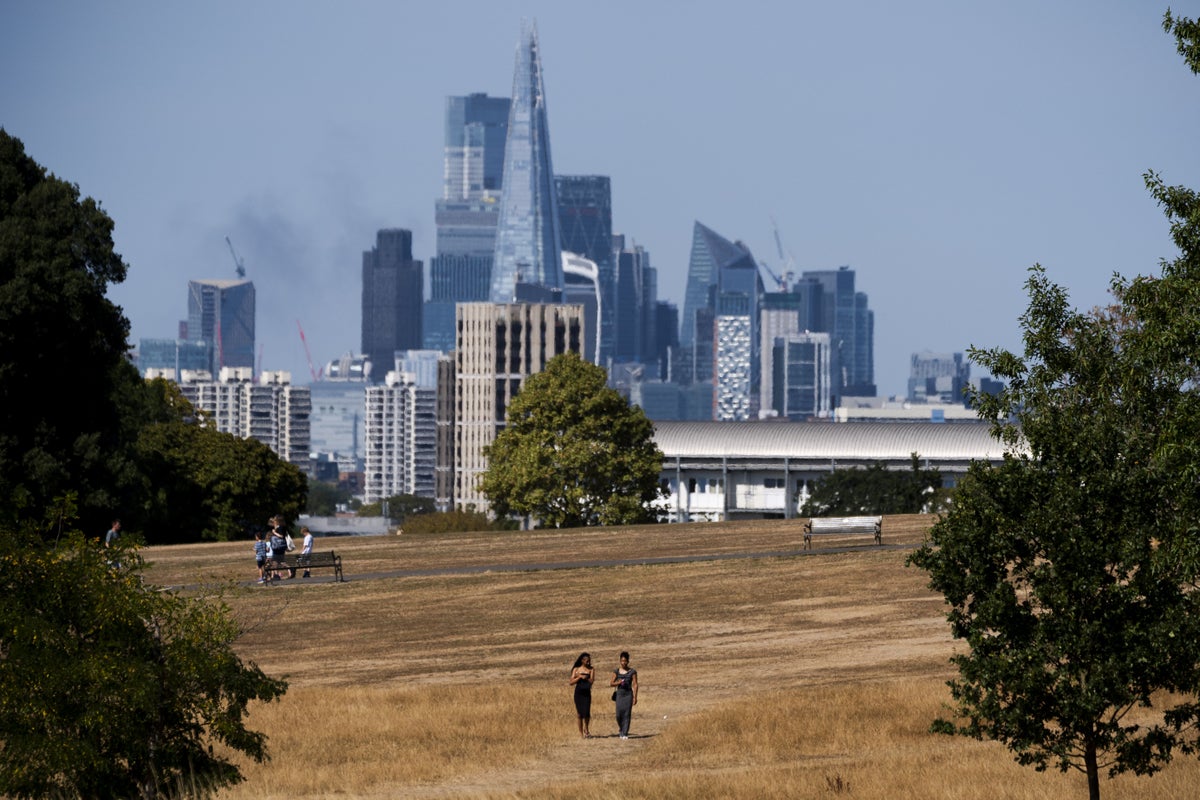
There were several heatwaves across Europe over the summer
- Bookmark
- CommentsGo to comments
Become an Independent member to bookmark this article
Already a member? Log in
Europe experienced its deadliest summer on record in 2026, with elevated temperatures claiming more than 50,000 lives in towns and cities across the continent, according to a landmark study.
Researchers estimated that two-thirds of these excess deaths – exceeding 32,000 – can be directly linked to climate change intensifying the extreme heat.
In the UK, urban areas recorded around 4,500 excess deaths, with 2,500 of those attributed to the heightened severity of heatwaves driven by global warming, according to the paper published in Nature Health.
The summer of 2026 brought a sequence of severe heatwaves, particularly across western Europe, where seasonal temperatures were 2.9C higher than the 1991-2020 average and surged by up to 12C above normal on peak days.
Academics from Imperial College London and the London School of Hygiene and Tropical Medicine modelled mortality across 854 urban centres representing approximately 40 per cent of the population in the EU, UK, Norway and Switzerland.
Their analysis, combining temperature logs with historical mortality patterns, indicates that urban heat deaths reached slightly above 50,000.
This total significantly surpasses earlier catastrophic heatwave years, such as 2003, which saw an estimated 28,000 fatalities, and 2022, when 29,000 deaths were recorded.
The study indicates that the impact of climate change – caused largely by burning fossil fuels for energy, heating, transport and industry – continues to intensify.
Comparing recorded urban temperatures against counterfactual models of a world without greenhouse gas warming revealed that climate change was responsible for 65 per cent of all heat deaths this summer.
This represents a major increase compared to the start of the century, when global warming accounted for roughly 40 per cent of heat-related fatalities.
The paper highlights a particularly severe period in late June, during which the UK issued a rare "red warning" for dangerous, life-threatening heat.
Between June 17 and July 1, when continental temperatures rose more than 5C above average, one-third of the summer's total European heat deaths occurred.
Italy suffered the highest toll with over 13,000 deaths, as southern and western Europe faced the highest temperatures and mortality rates.
However, urban populations in northern European nations, including the UK, also recorded thousands of deaths.
While heat mortality primarily affects older populations, an estimated 6,000 people under 65 died due to extreme heat across the studied urban regions.
Dr Clair Barnes, extreme weather and climate change researcher at the Centre for Environmental Policy, Imperial College London said: "I think we can be quite confident in stating that the summer of 2026 is likely to have been the worst on record for heat-related mortality across much of Europe.
"These numbers are a stark reminder that our hotter, more extreme summers are having an increasingly severe impact on public health."
And she warned: "Behind these statistics are real people whose lives were lost and real families who grieve for them.
"It is yet another reminder both of the imperative of rolling out targeted interventions to protect those who are most vulnerable to this increasingly extreme heat, and of the growing need to rapidly transition away from fossil fuels to slow the pace of change and limit future warming."
Dr Pierre Masselot, assistant professor, statistician and epidemiologist at London School of Hygiene and Tropical Medicine said the summer was another dramatic reminder that climate change is "everybody’s problem".
"It is not just hot regions that are suffering anymore with some parts of Western and Northern Europe experiencing extreme heat and historically high health burden."
"And the whole population is affected, as shown by the significant death toll among younger age groups," he said.
He noted that cities remain unprepared for rising temperatures, calling for urgent adaptation measures such as green spaces for cooling, pollution reduction, and improved healthcare support.
Although the numbers stem from statistical modelling, the researchers highlighted that previous studies using identical methods closely mirrored official data.
Earlier in the summer, the team estimated more than 2,700 excess deaths occurred during the record May and June heatwaves across England and Wales.
Subsequent figures released by the UK Health Security Agency (UKHSA) placed the actual toll at approximately 2,880.
Responding to the study, climate transition minister Katie White said: "These shocking figures represent thousands of families who have lost a loved one this summer due to the climate crisis."
She added: "We’re not waiting for climate change to arrive; it’s already happening.
"We need to act, which is why we’re preparing hospitals for extreme heat, accelerating clean homegrown power to tackle the root causes of climate change, and strengthening our resilience to wildfires with the Prime Minister’s wildfire summit today."
Join our commenting forum
Join thought-provoking conversations, follow other Independent readers and see their replies
Comments
Europe (LOCATION)
Independent (ORG)
UK (LOCATION)
Nature Health (ORG)
Imperial College London (ORG)
the London School of Hygiene and Tropical Medicine (ORG)
EU (ORG)
Norway (LOCATION)
Switzerland (LOCATION)
European (ORG)
Italy (LOCATION)
Dr Clair Barnes (ORG)
the Centre for Environmental Policy (ORG)