
Politics
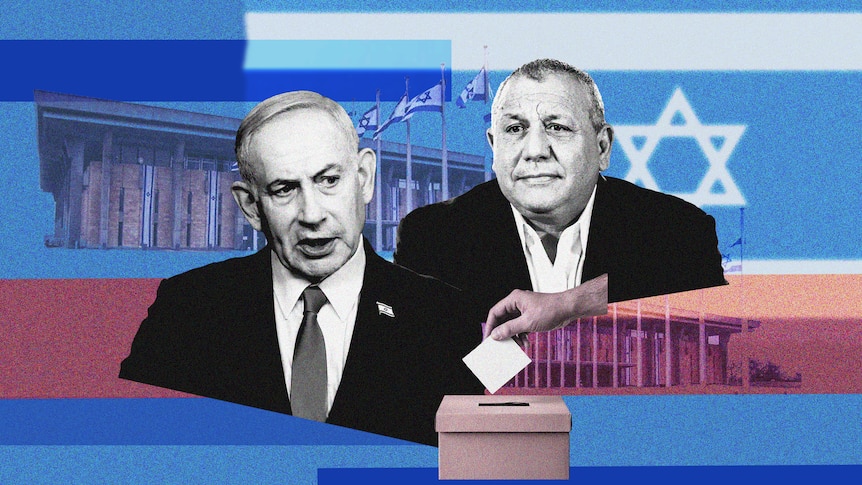
Israelis are heading to the polls in their most seismic election in decades
Key Points
Israelis are heading to the polls in their most seismic election in decades Israel's general election is being held on Tuesday, October 27, with the nation's longest serving prime minister trying to hold on to power. It is the first poll since the devastating Hamas terrorist attacks three years ago kicked off a chain of events that has forever reshaped the country and the region around it, and is effectively shaping up as a referendum on Benjamin Netanyahu's leadership. While some...
Israelis are heading to the polls in their most seismic election in decades
Israel's general election is being held on Tuesday, October 27, with the nation's longest serving prime minister trying to hold on to power.
It is the first poll since the devastating Hamas terrorist attacks three years ago kicked off a chain of events that has forever reshaped the country and the region around it, and is effectively shaping up as a referendum on Benjamin Netanyahu's leadership.
While some challengers are polling strongly, Israel's complicated coalition structures mean it's not a foregone conclusion who will lead the country in coming weeks and months.
In the quest for power and influence, some strange bedfellows could emerge and usual partners may not find themselves joining forces.
Here's a breakdown of the key players, what to expect on election night, and the biggest issues driving this election.
Who are the main parties in the Israeli election?
There are 38 different parties contesting the election — but most will not get enough votes to secure a spot in the 120-seat parliament, called the Knesset.
The parties likely to gain seats, based on current polling, are:
Centre-right nationalists
A brand new political party formed in September 2025, contesting the election for the first time.
Led by Gadi Eisenkot, former IDF chief of staff from 2015 to 2019.
Right-wing nationalist
One of the oldest parties in Israel, tracing its history back to the 1970s.
Led by Benjamin Netanyahu, prime minister of Israel from 1996 to 1999, 2009 to 2021, 2022 to now.
Centre-right nationalists
A joint list of two opposition parties, contesting the election together for the first time.
Led by Naftali Bennett, prime minister of Israel from 2021 to 2022, and Yair Lapid, prime minister of Israel from July to December 2022.
The Democrats
Read moreCentre-left
Another new party, created in 2024 from a merger of the former Labor and left-wing Meretz parties.
Led by former IDF deputy chief of staff Yair Golan.
The Joint List
Read moreLeft wing, Arab/Palestinian
The leading Palestinian political grouping in the election, comprising three Arab-majority political parties from the nationalists through to the communists. The United Arab List used to be part of it.
Led by Yousef Jabareen.
Right-wing nationalists
Originally established in 1999 as a party with strong support from Israelis hailing from the former Soviet Union.
Led by Avigdor Liberman, former foreign and defence minister in previous Netanyahu governments. He lives in a West Bank settlement.
Shas
Read moreUltra-Orthodox, religious conservative
Another of the ultra-Orthodox Jewish parties, which has been in the Netanyahu coalition during the last term of government. It generally represents the Sephardic and Mizrahi Jewish community, hailing from areas such as north Africa, the Middle East and central Asia.
Led by Aryeh Deri, former health minister from 2022 to 2023.
Far-right, ultranationalist, religious
Founded in 2012 by anti-Arab Jewish supremacists from the Kahanist movement. Currently in the Netanyahu coalition government.
Led by current national security minister Itamar Ben-Gvir, who is a settler.
Religious Zionists
Read moreFar-right, ultranationalist, religious
Founded in 1998, a pro-settlement expansion and development political party. Currently in the Netanyahu coalition government.
Led by current finance minister Bezalel Smotrich, who is a settler.
United Torah Judaism (UTJ)
Read moreUltra-Orthodox religious conservative
A joint list of two ultra-Orthodox Jewish parties that is directed by rabbis. It represents the Ashkenazi or European Jewish community, and has been part of the Netanyahu coalition during the last term of government.
Led by Ya'akov Asher.
Arab/Palestinian
One of the two players when it comes to representation for Palestinian citizens of Israel, led by Mansour Abbas.
The party was recently bolstered by the announcement of its first Jewish candidate, Yoav Segalovich, a former high-ranking police and intelligence official. He is the party's second candidate behind Mr Abbas.
The UAL wants to be part of a government, or influence its make-up, which is different to The Joint List.
The Reservists
Read moreCentre-right nationalist
Another new party, with a focus on issues such as compulsory military service for all Israelis — not just the non-religious citizens. It is running in an alliance with The New Economic Party.
The Reservists party is led by Yoaz Hendel, a former communications minister in 2020 and 2021–2022, while the New Economic Party is led by former senior finance department bureaucrat Yaron Zelekha.
Right-wing nationalist
Another new party formed in August 2026, backing issues such as the "voluntary emigration" of Palestinians from Gaza and the forced conscription of ultra-Orthodox Jews to the IDF.
Led by retired IDF brigadier general Ofer Winter, a right-wing leader who has actively called for an independent investigation into the October 7 attacks.
Centrist, liberal nationalist
It had been a major player in Israeli politics, but had lost considerable support and membership from candidates and members breaking away — including Gadi Eisenkot.
The party's leader, former IDF chief Benny Gantz, dropped out of the race with just over a week to go, on October 19.
Who could win the Israel election?
Polling figures are jumping around a bit, and most of the major media outlets run their own data.
With the exception of the right-wing media, which is very pro-Netanyahu and Likud, most polling is suggesting Yashar will be the largest party in the Knesset with between 20 and 23 seats.
Likud would run second on 19 to 21 seats.
This is where it gets complicated, and why Israeli governments are almost always coalitions.
If you consider the right-wing parties, which would naturally gather around Likud and include:
- Otzma Yehudit
- Religious Zionism
- United Torah Judaism
- Shas
- Amcha Yisrael
… you get to between 49 and 51 seats in the "Netanyahu bloc".
If you join up the opposition parties likely to back in Yashar and Gadi Eisenkot:
- Beyachad
- The Democrats
- Yisrael Beiteinu
… the tally gets to between 52 and 55.
Roughly 14 to 19 seats fall to smaller groups, including the Palestinian parties.
Neither bloc is reaching an outright majority of 61, without the support of groups like The United Arab List or The Joint List.
There could be weeks of coalition negotiations and nothing is certain.
There could also be defections from parties — elected members jumping ship to other parties, as part of the process.
Loyalty isn't guaranteed.
What are the main issues in the Israel election?
Much of this election is centred around one man: Benjamin Netanyahu.
His brand, and whether he's reached his "use-by date" as leader, drives a lot of the debate during the campaign.
Some of the biggest issues Israel is involved in, such as the wars in Gaza and Lebanon, aren't expected to have a huge impact on the election, and opposition parties are not promising radical changes if elected.
Even the problem challenging governments worldwide, cost-of-living pressures, isn't that much of a dial shifter in Israel, despite the country being one of the most expensive to live in in the OECD.
October 7
Read moreMany of the opposition parties are running on a platform of establishing an independent national enquiry into the failures that allowed Hamas's October 7 attacks on Israel.
That is something Mr Netanyahu has repeatedly rejected, arguing it would be nothing more than a political witch-hunt against him, particularly as he pushes a theory that he wasn't woken up early enough on October 7 to order a more forceful response to the attacks.
In recent weeks, reports have emerged that he had advance warning from the UAE and Egypt of Hamas planning an attack but ignored them — allegations the prime minister has labelled libellous, launching legal action against the media organisations publishing them.
Twenty days after the third anniversary of the deadly dawn raids, during which time about 1,200 people were killed and 251 taken hostage, this is something that remains top of the agenda for many Israelis.
Netanyahu's legacy
Read moreThe tenure of Israel's longest-serving prime minister is a key issue, given how closely entwined Mr Netanyahu is seen with the Israeli establishment.
Things from his ongoing corruption trial (charges he rejects) through to the influence of his family, particularly his wife Sara, in matters of state are widely talked about — leading his opponents to argue whether it's time for change, and whether a prime minister who has been indicted and is standing trial should be leader.
National security
Read moreIsrael is a country seemingly in a perpetual state of war — its defenders would argue that's because it's constantly under threat, while its critics would say it's because of the aggressive policies of its current government.
Since October 7 and the war in Gaza began, there has been war against Hezbollah in southern Lebanon, two conflicts started (but only one completed) with Iran, ground incursions and air strikes into Syria, and attacks against and from the Houthis in Yemen.
In recent days, reports have emerged that Netanyahu was agitating to restart strikes against Iran, but was encouraged to hold fire by Donald Trump.
Who can keep Israel safe is central to this election — with the prime minister often labelling his challengers weak and all too willing to yield to Israel's enemies.
The recent attempted hijacking of a flydubai plane en route to Tel Aviv plays into this, with fevered criticism of institutional failures allowing a pilot with documented extremist views, from a country Israel does not have diplomatic relations with, from getting behind the controls of a fully laden passenger plane.
Orthodox draft
Read moreIt's an issue that dogged the prime minister during this last term of government — should Israel's Orthodox Jewish community be forced to serve in the military, like other Israelis are?
The Supreme Court struck out the sweeping exemptions from service afforded to the Haredi community in 2024, and the Netanyahu government was faced with demands from within its coalition — particularly from religious parties — to reinstate them.
The "change" camp, including people such as Gadi Eisenkot, say they will not be forming a coalition with those orthodox parties.
The matter was largely unresolved prior to the election, and some of Mr Netanyahu's challengers are promising to ensure draft-dodging is a thing of the past.
Judicial overhaul
Read moreBefore October 7, and the rolling wars that have followed, the issue that mobilised Israelis like few others had was a contentious plan to overhaul and effectively weaken the country's judiciary.
The right wing of Israeli politics have argued that the courts have too much power, and can hijack the government's agenda by tearing up legislation and blocking its policies.
Hundreds of thousands had taken to the streets to protest against the idea of stripping some of its powers. It was somewhat shelved, but remains an issue fuelling energised debate in Israel.
It also feeds into the personal narrative around the prime minister, who continues to argue that the corruption charges he's been battling for years are unfounded and part of an attempt by the "deep state" to undermine him.
International standing
Read moreMr Netanyahu's critics argue that his decisions, and the conduct of his right-wing government, have harmed the country's standing internationally and isolated it on the world stage.
Issues including the behaviour of ministers such as Itamar Ben-Gvir, condemned for publicly berating Palestinian prisoners and the crew of the Gaza Freedom Flotilla, come into play here.
Mr Netanyahu's political opponents also point to the handling of the US-Israel relationship, vital for the country's ongoing security, and his reported bust-ups with Mr Trump, however much the two men talk up their relationship and the US president formally endorses Mr Netanyahu for another term in office.
The incumbent is also subject to an arrest warrant issued by the International Criminal Court on allegations of war crimes in Gaza, charges he rejects.
Wars
Read moreWhile many of the party leaders have firm views that they would be better at managing the multiple wars Israel is involved in, none are actually promising significant changes in approach.
For example, while some of Mr Netanyahu's challengers insist they would be able to deliver results that he has not been able to achieve, and would be more open to international criticism on the approaches taken there, none of the contenders are suggesting things like an immediate end to the conflict.
The argument from the prime minister's challengers is that they would make decisions about war according to Israel's national interest, and not their own desire for personal survival, something critics have accused Mr Netanyahu of.
Settlers
Read moreThe scourge of settler violence is generally viewed very differently in Israel than it is around the world.
There are, of course, some Israeli politicians who condemn the violence, but insist settlers should be allowed to stay in places such as the West Bank.
There are others who insist the attacks are being hyped up by the media, and it is settlers who are under threat from Palestinians, including vocal members of the current coalition ministry.
Again, few of the contenders are promising wholesale change in terms of the broader settler project. But Mr Netanyahu's rivals are promising to bring back law enforcement against extremists.
Palestinian citizens of Israel
Read moreThis is an issue that goes to not only the problems affecting the Palestinian population inside Israel, such as marginalisation and high crime rates, but the idea of working with them in any government.
Twenty per cent of Israel's population are what's often referred to as "Arab-Israelis".
But when it comes to the complicated coalition structures that could be needed to form government, many of the Israeli leaders are distancing themselves from joining forces with parties such as The United Arab List or The Joint List.
Mr Netanyahu has even been campaigning on the issue, by arguing Israelis are faced with a choice between backing him as a right-wing candidate or backing in Palestinians and Palestinian statehood — "right or Palestine" is the pitch, which when said in Hebrew rhymes.
Earlier in the campaign he posted an AI-generated video of Mr Eisenkot riding a Trojan Horse, with one of the Palestinian party leaders, Mansour Abbas, hiding inside.
This is quite separate to the issue of Palestinian statehood for residents of the West Bank and Gaza.
Major Jewish Israeli party leaders are generally of the same view when it comes to the establishment of a Palestinian statehood, opposing it vehemently.
When will we know the result?
Polls open in Israel at 7am local time on Tuesday, October 27, which is 4pm AEDT.
Polls close at 10pm local time that night, which is 7am AEDT on Wednesday, October 28.
Each of the major media outlets will publish exit polling around that time, likely to give a much clearer indication of the result than pre-election data.
Unlike countries such as Australia, the UK and the US, Israel does not have electoral districts. It is a single nationwide vote, and the number of seats each party gets is dependent on their share of the national result.
Voters do not even have to mark a ballot paper; they pick a ballot with the logo of their preferred party, and drop it into the ballot box.
Israelis also cannot vote early, via post (unless they're soldiers) or while overseas, with all voting happening in person, in the country, on the day.
Because of that relative simplicity, the vote count could happen pretty quickly. An indication of how the parties stand might be known within a few hours of polls closing.
The final declaration of the results happens a few days afterwards, but the outcome of the popular vote will be largely known by then.