
Environment
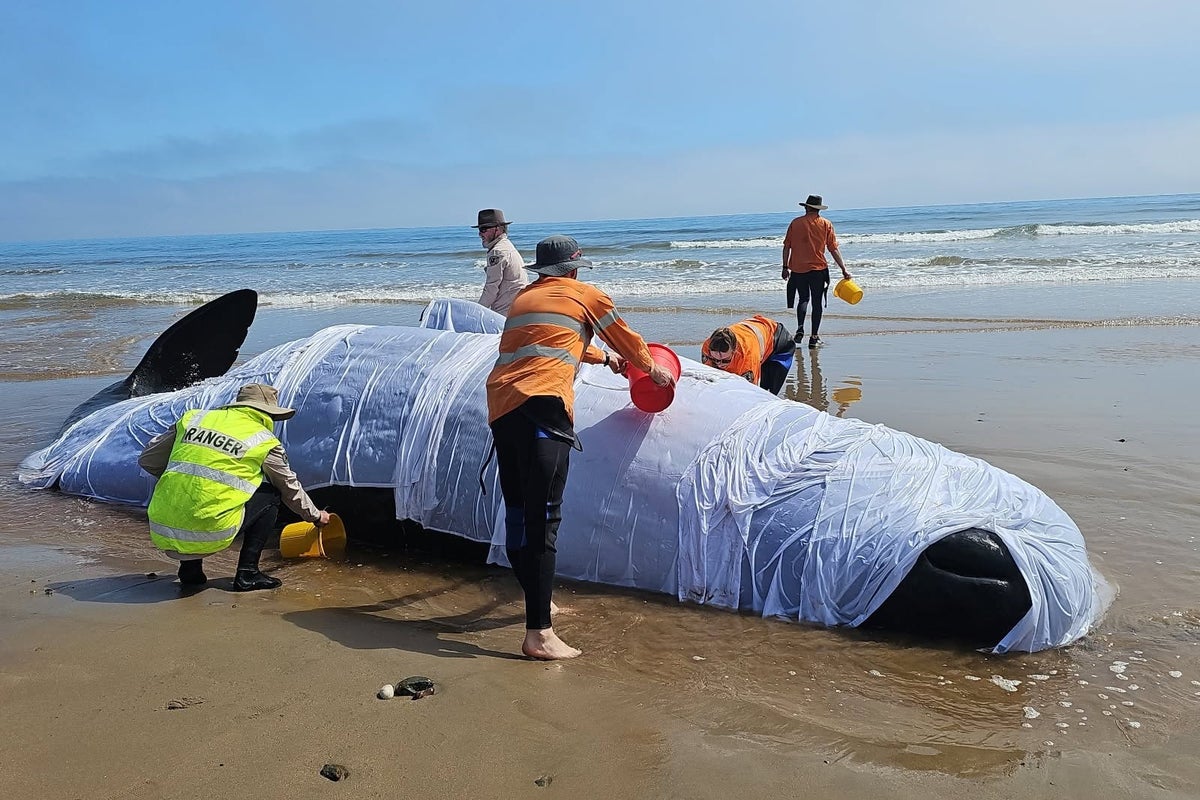
Sperm whale carcass buried on Tasmanian beach sparks concerns over potential shark attack
Key Points
Sperm whale carcass buried on Tasmanian beach sparks concerns over potential shark attack A resident says ‘children like to swim in the area directly out front from where whale is currently being buried’ - Bookmark - CommentsGo to comments Become an Independent member to bookmark this article Already a member? Log in Tasmanian authorities have buried a sperm whale that died after becoming stranded on a beach, sparking concerns that the body could attract sharks near a popular swimming spot....
Sperm whale carcass buried on Tasmanian beach sparks concerns over potential shark attack
A resident says ‘children like to swim in the area directly out front from where whale is currently being buried’
- Bookmark
- CommentsGo to comments
Become an Independent member to bookmark this article
Already a member? Log in
Tasmanian authorities have buried a sperm whale that died after becoming stranded on a beach, sparking concerns that the body could attract sharks near a popular swimming spot.
The 10-metre sperm whale became stranded in shallow water at Turners Beach in north-west Tasmania on Wednesday night.
Despite efforts to save it and provide aid, the whale died on Thursday.
Tasmania's Parks and Wildlife Service said they have buried the whale in vegetation at the western end of the beach with help of excavators.
The spokesperson for PWS said the decision to bury the carcass of the whale near the beach was reached after careful planning and liaison with relevant landholders and authorities. It also consulted councils and the Environment Protection Authority.
However, the proximity of the buried whale carcass to a popular swimming spot in the area has led to concerns among locals.
A resident Greg Tompos said he and many other residents have raised concerns that the decomposing body could attract sharks in the swimming spots, according to ABC News.
"It's in an area that's only a couple of hundred metres away from Camp Clayton, which is a camp used by a number of children's groups and camps throughout the year, they go swimming in that area," Mr Tompos, who lives near the beach, said.
"Personally, my children like to swim in the area directly out front from where the whale is currently being buried."
Kate Wylie, another resident, said she has forwarded the concerns of the concerned community members to the authorities.
"In relation to leeching attracting sharks, toxins in the water, because it can take a very long time for a whale that size to decompose," she said.
She added that “often the carcasses will wash back in and wash in somewhere else and it's just a problem for somebody else”.
Samples from the whale’s carcass were taken to investigate the cause.
Tasmania’s department of natural resources and environment spokesperson stated: “While this is a sad outcome, strandings occur for a range of reasons and wildlife deaths are a natural part of life in the marine.”
The PWS said the site was determined to be more suitable for environmental and public amenity reasons than burying the whale on the beach or leaving it to decompose.
Amid the concerns, the PWS said it will monitor the burial site and respond to emerging issues.
"The chosen site was determined to be more suitable for environmental and public amenity reasons than burying the whale on the beach or leaving it to decompose," they said.
Join our commenting forum
Join thought-provoking conversations, follow other Independent readers and see their replies
Comments