
Science
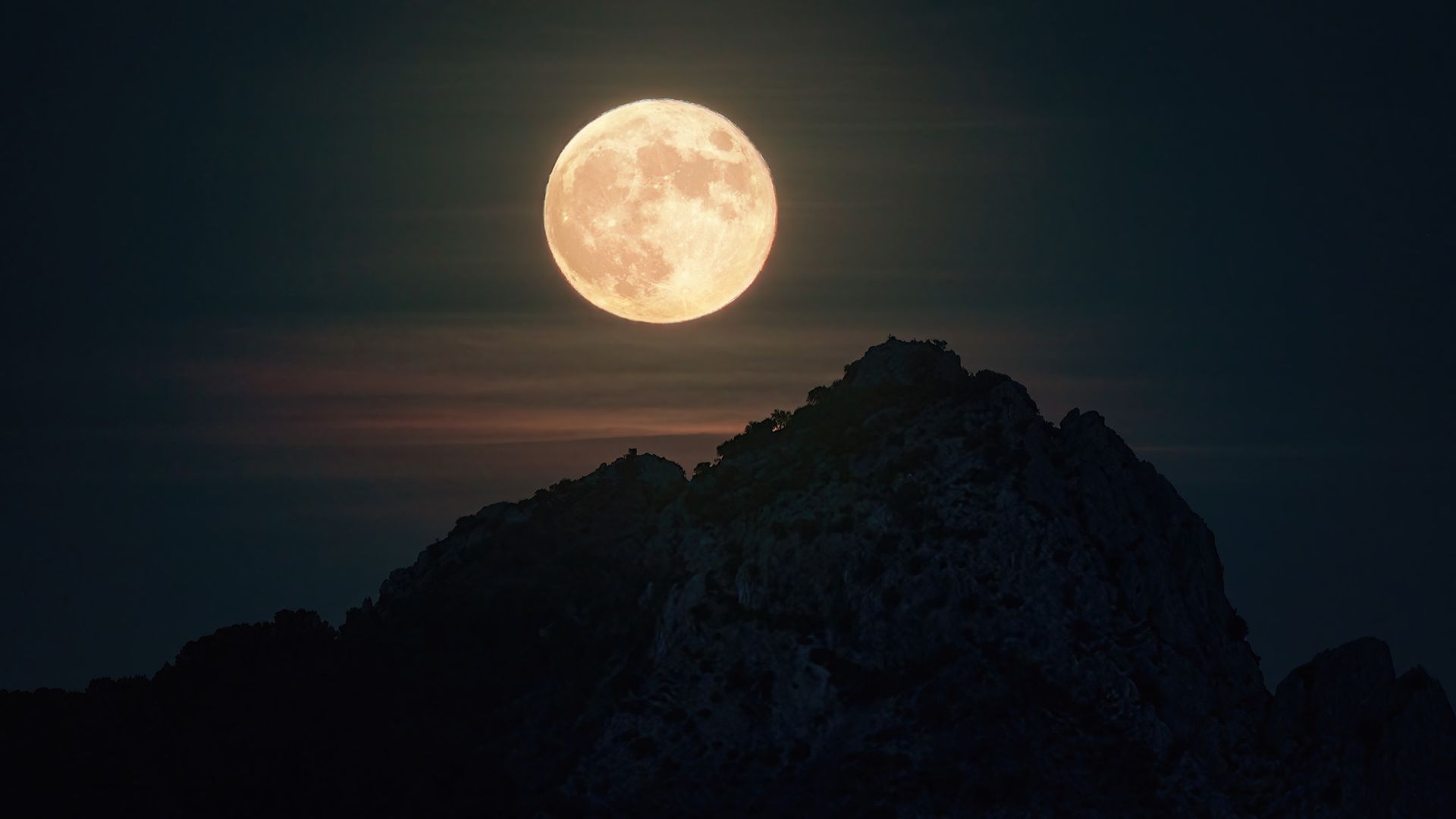
Watch the full 'Hunter's Moon' rise next to Saturn this weekend
Key Points
You have 2 superb chances to watch the 'Hunter's Moon' rise this week You'll have two chances to see October's full Hunter's Moon rise dramatically this week. Here's when to get the best views. October's full "Hunter's Moon" is about to rise, and skywatchers will get two great chances to see it appear on the eastern horizon around sunset.
You have 2 superb chances to watch the 'Hunter's Moon' rise this week
You'll have two chances to see October's full Hunter's Moon rise dramatically this week. Here's when to get the best views.
October's full "Hunter's Moon" is about to rise, and skywatchers will get two great chances to see it appear on the eastern horizon around sunset.
Although it officially turns full at 12:11 a.m. EDT on Monday (Oct. 26), the Hunter's Moon will appear almost perfectly full as it rises on both Sunday (Oct. 25) and Monday evenings, giving skywatchers two opportunities to observe it.
October's full moon is nicknamed the Hunter's Moon because it was traditionally a signal for hunters to prepare for the coming cold winter by hunting, slaughtering and preserving meat, according to Time and Date. That's an Anglo-Saxon name; Native American names for October's full moon include the Drying Rice Moon, the Falling Leaves Moon and the Freezing Moon.
The first chance to see the Hunter's Moon comes just before sunset on Sunday, when the almost-full moon will rise in the east. The second opportunity comes on Monday, when the moon — still essentially 100% illuminated — will again rise just after sunset. Because it will be in a slightly darker sky, Monday's moonrise will likely be more dramatic.
As it rises Sunday, the moon will appear in the constellation Aries, and Saturn will be to its upper right. On Monday, it will rise above the Pleiades open cluster (M45).
For the best view on either evening, find somewhere with a clear view low to the eastern horizon and be in position shortly before moonrise where you are. An elevated viewpoint, open field or coastline is ideal because buildings, trees and hills can delay the moment the moon becomes visible.
Related stories
Although the full moon will look magnificent with the naked eye, a backyard telescope or good stargazing binoculars can help you zoom in on various lunar features.
Get the world’s most fascinating discoveries delivered straight to your inbox.
The Hunter's Moon may appear unusually large thanks to the "moon illusion," which makes the moon seem bigger when it's seen beside familiar objects, such as trees and buildings, near the horizon. The illusion stems from the fallacies of how our brains use distance to perceive size.
October's Hunter's Moon isn't a supermoon, but it comes immediately before a notable sequence of four consecutive supermoons. The first will be the next full moon, the Beaver Moon, on Nov. 24, followed by full moons in December, January and February. A supermoon occurs when a full moon happens while the moon is relatively close to Earth in its slightly elliptical orbit, making it appear somewhat larger and brighter than average.
How much do you know about the moon? Test your lunar smarts with our moon quiz!
Jamie Carter is a Cardiff, U.K.-based freelance science journalist and a regular contributor to Live Science. He is the author of A Stargazing Program For Beginners and co-author of The Eclipse Effect, and leads international stargazing and eclipse-chasing tours. His work appears regularly in Space.com, Forbes, New Scientist, BBC Sky at Night, Sky & Telescope, and other major science and astronomy publications. He is also the editor of WhenIsTheNextEclipse.com.
You must confirm your public display name before commenting
Please logout and then login again, you will then be prompted to enter your display name.