
Weather
What’s in a name? How and why we give storms human titles
Key Points
How and why we give storms human titles Here’s what goes into naming a storm, and why particular words are avoided - Bookmark Become an Independent member to bookmark this article Already a member? Log in The UK is braced for its second storm of the season just a day after Storm Austen passed. Flights have been grounded after the Met Office issued fresh “danger to life” weather warnings ahead of Storm Boelo.
What’s in a name? How and why we give storms human titles
Here’s what goes into naming a storm, and why particular words are avoided
- Bookmark
Become an Independent member to bookmark this article
Already a member? Log in
The UK is braced for its second storm of the season just a day after Storm Austen passed.
Flights have been grounded after the Met Office issued fresh “danger to life” weather warnings ahead of Storm Boelo.
Dublin Airport announced several cancellations and delays on Saturday as this second storm hurtled towards the UK and Ireland, bringing heavy rains and gales.
But why have these storms been called Austen and Boelo? Why are storms named, and how does the naming system work?
Here is what you need to know.
Why do we name storms?
In 2015, the Met Office launched a scheme inviting the public to suggest names for storms to raise awareness of the dangers of severe weather.
The forecaster said that using a single, recognisable name for a storm helps the public better understand the risks and take action to keep themselves safe.
When is a storm named?
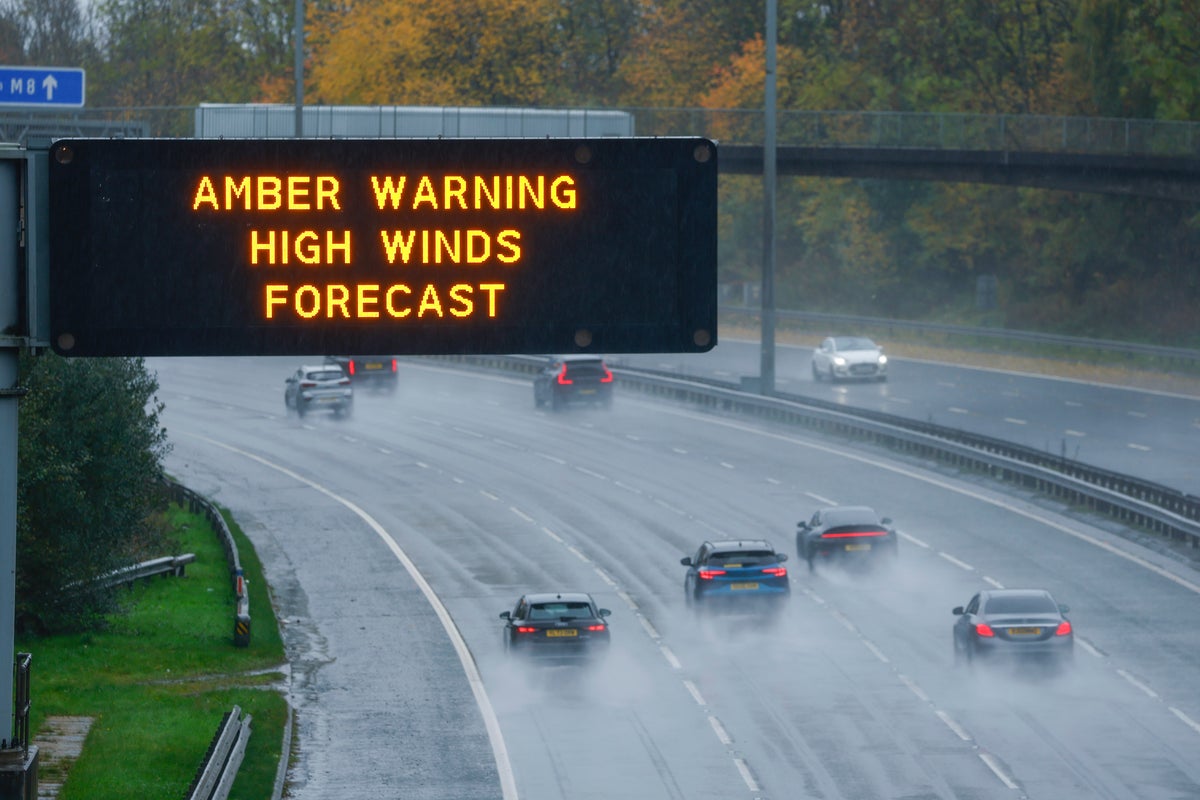
The decision is linked to weather warnings. If a storm is disruptive or dangerous enough for an amber or red warning to be issued, the Met Office gives it a name.
Named storms are often expected to bring strong winds, heavy rain that could lead to flooding, or significant snowfall.
Why did we name Storm Austen when the weather warning was yellow?
A yellow warning can be used when far more significant impacts are possible but there is less confidence in where of if they will hit.
The Met Office previously said Storm Austen’s exact track and position were still being determined and warnings remain in review.
How is a name chosen?
The Met Office uses suggestions from the public to agree a list of names for the year ahead, working together with Irish forecaster Met Éireann, and Dutch forecaster KNMI as the storm naming group for western Europe.
A name is avoided if it is too difficult to pronounce, has different meanings in different countries, or if it is associated with a private company, public figure, or a storm that has previously caused loss of life.
The US National Hurricane Centre does not use storm names beginning with the letters Q, U, X, Y or Z, so, for consistency in the North Atlantic, neither does the Met Office.
The alphabetical list, which runs from early September until late August the following year, alternates between male and female names.
Next up this season: Chloe, Dano, Evelyn, Finn, Gwendolyn and Heather.
How do other European countries name storms?
Spain, Portugal, France, Belgium and Luxembourg work together to name storms in south-western Europe, while Norway, Sweden and Denmark agree names for storms in the north of the continent.
[Image text:] M8
AMBER
WARNING
HIGH WINDS
FORECAST
Independent (ORG)
UK (LOCATION)
the Met Office (ORG)
Storm Boelo (PERSON)
Dublin Airport (LOCATION)
Ireland (LOCATION)
Austen (PERSON)
Boelo (PERSON)
Storm Austen (PERSON)
Irish (ORG)
Met Éireann (PERSON)
Dutch (ORG)
Europe (LOCATION)
The US National Hurricane Centre (ORG)
the North Atlantic (LOCATION)