
Technology
Everything Apple announced this week so far: New iPad and MacBooks
Key Points
Everything Apple announced this week so far: New iPad and MacBooks Ahead of its 'Pro and Tell' event, the company has already launched a few new devices. Apple wasn't done with its product reveals for the fall after unveiling the iPhone Duo, iPhone 18 Pro models and an array of smart home devices.
Everything Apple announced this week so far: New iPad and MacBooks
Ahead of its 'Pro and Tell' event, the company has already launched a few new devices.
Apple wasn't done with its product reveals for the fall after unveiling the iPhone Duo, iPhone 18 Pro models and an array of smart home devices. Nor could it wait until the third event of the season, dubbed Pro and Tell, to show off more gear.
The company got a string of announcements underway on Monday with the reveal of the long-awaited OLED iPad mini. Tuesday brought us an M6-powered iMac and 14-inch MacBook Pro. It's expected that Apple will unveil a touchscreen MacBook as well.
Elsewhere, Apple released the latest versions of its operating systems. Among other things, those added more Siri AI features and made the assistant available in more languages. The company updated Apple Creator Studio with more AI features and creative tools as well.
We'll update this story if and when Apple makes more announcements. In the meantime, here's everything Apple has announced so far this week.
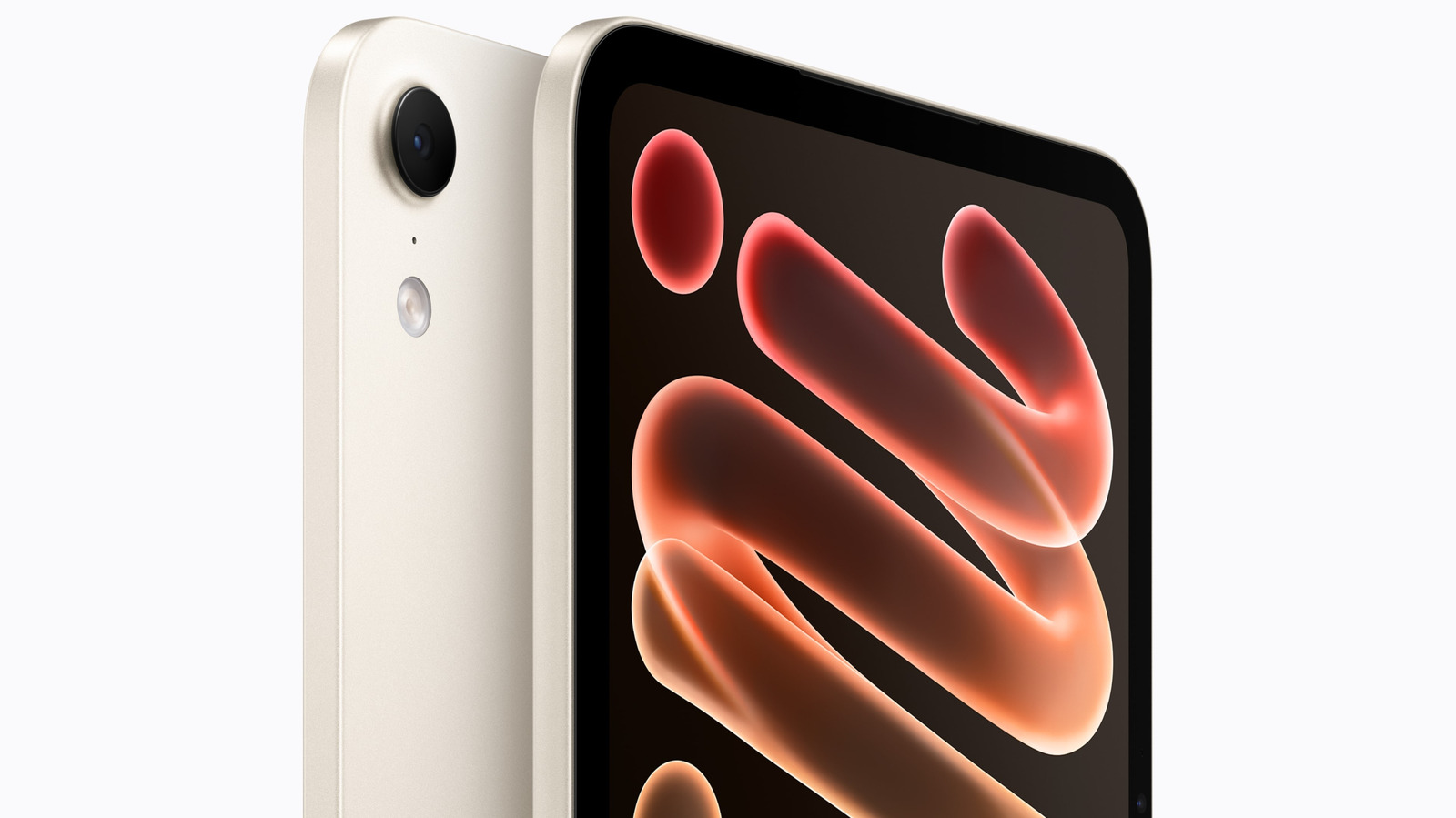
OLED iPad mini
It feels like we've been waiting for forever for Apple to put an OLED display in the iPad mini but that day has finally arrived. The new display has double the peak brightness of the one on the previous model at 1,200 nits, and it has a 2,000,000:1 contrast ratio. The base storage remains the same at 128GB, though if you opt for 256GB or 512GB of storage, you can snag a variant with a nano-texture glass display. That'll cost you extra, naturally.
The company managed to squeeze in a larger screen — an 8.5-inch display rather than the 8.3-inch one in the previous model — without increasing the size of the tablet. In fact, the new iPad mini is slightly narrower than the last one, at 5.22 inches vs. 5.3 inches. It's lighter as well, with the Wi-Fi model coming in at 0.56 pounds (compared with 0.65 pounds last time) and the 5G variant weighing 0.58 pounds (versus 0.66 pounds). The latter, by the way, now boasts Apple's C2 modem, which is said to deliver up to 50 percent faster data speeds than the previous iPad mini. There's also Wi-Fi 7, Bluetooth 6 and Thread connectivity thanks to the N1 chip.
The OLED iPad mini — the eighth generation of the device — runs on the A20 Pro, the same chipset as the iPhone 18 Pro and iPhone Duo. Apple says the SoC is capable of running large language models locally, in case you're into that kind of thing. Otherwise, the tablet should be notably faster than earlier models. It supports Apple Intelligence and Siri AI as well, of course. The chipset also boasts a 7-core GPU — two more cores than the A17 Pro, which powered the last-gen iPad mini.
On the camera front, there's a 12MP Center Stage lens on front of the tablet, which Apple has finally shifted to the landscape edge on the iPad mini. However, there's still no Face ID. The 12MP camera on the rear supports 4K 60fps video capture and Smart HDR 4.
The 8th-gen iPad mini has a sealed enclosure to help protect it from the elements. The tablet has an IP67 rating, meaning that it should withstand dust and being immersed in a meter of freshwater for up to 30 minutes, though I would advise against intentionally submerging your iPad mini.
As for battery life, Apple says that should be roughly the same as last time. The company says the new iPad mini should run for up to 10 hours when you're watching video or surfing the web over Wi-Fi. That drops down to nine hours if you're browsing over a cellular connection. If you have at least a 35W power adaptor, you'll be able to recharge the battery to 50 percent of its capacity in 30 minutes, Apple says.
The most interesting thing to me about this iPad mini is that it has Apple's first Acoustic Display, which the company says helps it deliver "an even better audio experience." It claims the tablet offers more volume and "punchier bass" thanks to woofers that "are paired through the display." Apple added that "custom tweeters are now hidden between the glass and aluminum enclosure for clearer highs." I'm definitely curious to find out how all of that sounds in practice.
Inevitably, the latest iPad mini comes with a price hike. It starts at $699, which is $150 more than the previous model after Apple increased the price of that in June. Pre-orders open on October 28, and the tablet will hit shelves on November 6.
M6 iMac
On Tuesday, Apple gave the iMac and MacBook Pro spec bumps. The desktop and laptop now each have the M6 chipset, which recently debuted in the Mac mini.
Let's start with the new iMac. Apple says the M6's dual 16-core neural engine enables it to deliver up to five times faster on-device AI performance (for Siri AI, Apple Intelligence and local LLMs) than the previous-gen iMac from 2024, which had the M4 chipset. The M6 is said to deliver up to 1.5 times faster performance than the M4 for daily tasks, up to two times faster graphics performance (for photo editing etc.) and up to two times higher gaming performance with ray tracing.
The base-level M6 has 10 CPU cores (two super, three performance and two efficiency cores) and a 10-core CPU, compared with eight of each in the M4. There's the option to have a 12-core M6, in which case your desktop will have four Thunderbolt 4 ports instead of the two that the base model has. The four-port model has a nano-texture glass option as well.
Elsewhere, Apple has introduced its N1 networking chip to the iMac. As such, the computer has support for Wi-Fi 7, Bluetooth 6 and Thread connectivity. It also has the option to add a 2.5Gb Ethernet port, an upgrade from gigabit Ethernet on the M4 iMac.
Specs otherwise are the same as last time. You'll still get a 24-inch 4.5K Super Retina display, a 12MP Center Stage camera, a six‑speaker Dolby Atmos system, at least 16GB of RAM and 256GB of base storage. The dimensions are identical too, though the M6 iMac is a touch lighter than the previous gen at 9.7 pounds (versus 9.74 pounds). Don't expect any changes to the color options either — the new iMac is still available in blue, green, pink, yellow, purple, orange and silver.
One other thing that's staying the same? The starting price, at least after the $200 increase that Apple gave the M4 iMac over the summer. The new model starts at $1,499, and the four-port version will run you at least $1,699. Pre-orders open October 28 and you'll be able to pick one up in store on November 6.
M6 14-inch MacBook Pro
The latest 14-inch MacBook Pro has the 12-core version of the M6 chipset and the N1 networking chip for Wi-Fi 7, Bluetooth 6 and Thread support. Those appear to be the only spec changes this time.
Compared with the previous-gen 14-inch MBP, which had an M5 SoC, Apple says the M6 model offers up to 30 percent faster graphics performance and up to 25 percent faster AI workloads. It's said to deliver up to 1.3 faster rendering performance with ray tracing in Blender, up to 1.2 times faster image-processing performance in Affinity and up to 1.3 faster project build performance for compiling code in Xcode.
It doesn't seem like this will be a massive upgrade for folks with an M5 model. However, if you have an older MacBook Pro (or really need those incremental improvements from the previous gen), it might be worth making the switch.
At least you won't have to pay more than you would have for the M5 model following this summer's price increase. The M6-powered 14-inch MacBook Pro starts at $1,999 for 16GB of RAM and 1TB of storage. Again, pre-orders start on Wednesday with general availability to follow on November 6.