
Science
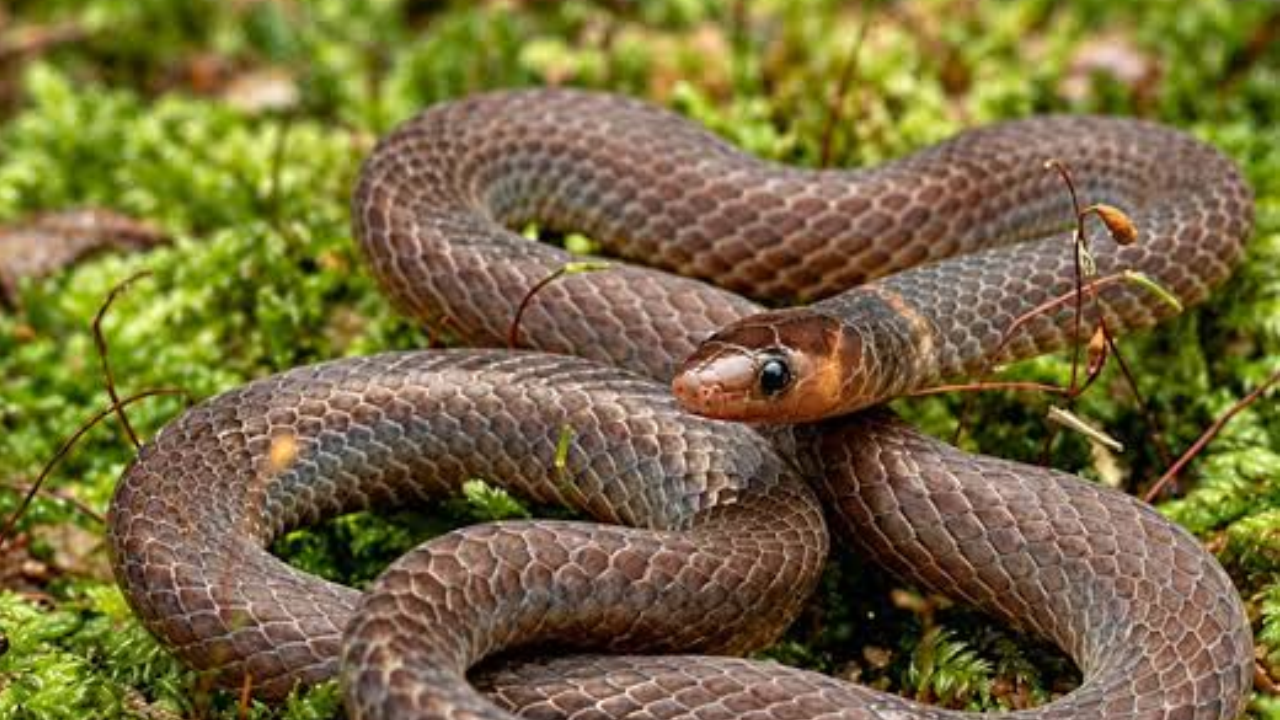
Tiny snakes in Malaysia cartwheel at up to 12 feet per second to escape danger
Key Points
Scientists have captured rare footage of tiny Southeast Asian snakes performing rapid cartwheels to escape danger, revealing an unusual form of movement that allows the reptiles to travel at speeds of up to 12 feet per second. The findings, published in Current Biology on October 19, 2026, were reported by Science News, Live Science and Japan’s Toho University, whose researchers investigated how the snakes coordinate their bodies during the remarkable manoeuvre. The behaviour, known as...
Scientists have captured rare footage of tiny Southeast Asian snakes performing rapid cartwheels to escape danger, revealing an unusual form of movement that allows the reptiles to travel at speeds of up to 12 feet per second. The findings, published in Current Biology on October 19, 2026, were reported by Science News, Live Science and Japan’s Toho University, whose researchers investigated how the snakes coordinate their bodies during the remarkable manoeuvre. The behaviour, known as active cartwheeling, has been documented in dwarf reed snakes belonging to the genus Pseudorabdion. Unlike conventional snake movement, which relies on lateral undulation along the ground, this escape technique involves the animal briefly lifting parts of its body into the air and rolling forward in a series of rapid rotations. The research offers a closer look at how these small, secretive reptiles manage the unusual feat while keeping their heads relatively stable and maintaining control over their direction of travel.
How do the snakes perform their cartwheels?
Researchers from Japan and Malaysia studied 13 dwarf reed snakes from three Pseudorabdion species, alongside six related reed snakes from the genus Calamaria. They built a narrow track measuring approximately 2.2 metres and recorded the animals using cameras positioned above and beside it.
The footage revealed a carefully coordinated sequence. The snake begins by curling its body into a C shape, lifting its head and pointing it in the direction it intends to move. It then straightens its body and pushes off the ground, briefly lifting part of itself into the air.
As it becomes airborne, the snake twists its body into an arch and swings it forward past its head. When the body makes contact with the ground again, the movement initiates another roll. By alternating the side of its body that touches down, the snake can repeat the sequence and continue moving forward. Despite these rapid rotations, the researchers found that the snake's head remains relatively stable and aligned with its direction of travel. This control may help it maintain its orientation and move along a narrow path without losing its bearings.
Cartwheeling snakes can reach speeds of 12 feet per second
The researchers measured peak forward speeds ranging from 1.72 to 3.69 metres per second, equivalent to approximately 5.6 to 12.1 feet per second, or around 6 to 13 kilometres per hour. The fastest recorded movement was roughly four times the peak forward speed measured when the snakes travelled using conventional side-to-side undulation.
All 13 snakes belonging to the Pseudorabdion genus demonstrated the rolling behaviour during the experiments. None of the six Calamaria snakes used the same technique under the test conditions, suggesting that the behaviour may be specific to certain groups rather than a universal ability among small reed snakes.
However, the findings do not establish that cartwheeling is the fastest or most effective escape method in every situation. The tests measured movement along a controlled track, and researchers still need to determine how the snakes use the technique in their natural habitats.
Why do these snakes roll instead of slither?
Dwarf reed snakes are small, secretive reptiles that spend much of their time beneath leaf litter, fallen branches and other ground cover. Their behaviour is consistent with an animal that relies on avoiding danger rather than confronting larger predators. Scientists suspect that sudden, rapid rolling could help the snakes escape threats, potentially startling or confusing a predator long enough to reach shelter. Some researchers have also suggested that the unusual movement might disrupt scent trails, although this possibility remains unproven.
The behaviour was first formally documented in a 2023 study published in Biotropica. Researchers described a dwarf reed snake rolling away after being startled during fieldwork in Malaysia. The new study builds on that initial observation by examining the mechanics of the movement in greater detail.
Although rolling locomotion is unusual in the animal kingdom, it is not entirely unique. The Moroccan flic-flac spider, for example, uses a rolling movement to escape threats. The snake study nevertheless offers a rare example of how an animal without limbs can use coordinated body rotations to achieve rapid forward movement.
Researchers must also determine how much energy the movement requires, how long the snakes can sustain it and whether specific anatomical or neurological features enable them to perform the manoeuvre. For now, the findings demonstrate that snake locomotion can be more varied than conventional slithering suggests. By coordinating rapid body rotations while stabilising their heads, these small reptiles have developed an unusual way to move quickly when threatened.