
Business & Finance
UK growth forecast slashed to 1% for next year. Here’s how it could affect you
Key Points
UK growth forecast slashed to 1% for next year. Here’s how it could affect you UK gross domestic product (GDP) is set to improve by 1.2 per cent this year but slow in 2027 - Bookmark Become an Independent member to bookmark this article Already a member? Log in UK economic growth projections for next year have been drastically cut due to the “global economic storms” attributed the war on Iran.
UK growth forecast slashed to 1% for next year. Here’s how it could affect you
UK gross domestic product (GDP) is set to improve by 1.2 per cent this year but slow in 2027
- Bookmark
Become an Independent member to bookmark this article
Already a member? Log in
UK economic growth projections for next year have been drastically cut due to the “global economic storms” attributed the war on Iran.
The country’s economy is expected to slow next year in the face of rising inflation, according to new forecasts published on Wednesday alongside the autumn Budget. The Office for Budget Responsibility (OBR) said UK gross domestic product (GDP) is set to improve by 1.2 per cent this year, up from a previous estimate of 1.1 per cent.
However, the watchdog said the economy is then expected to see growth slow to one per cent in 2027.
UK’s economic growth expected to fall
This marks a significant downgrade to the growth outlook, with the watchdog having previously predicted the economy would grow by 1.6 per cent for the year.
Growth is expected to lift back to 1.6 per cent in 2028, followed by rises of 1.8 per cent in 2029, 1.7 per cent in 2030 and down to 1.6 per cent in 2031, pointing to a slightly stronger outlook for the final years of the forecast period than previously expected.
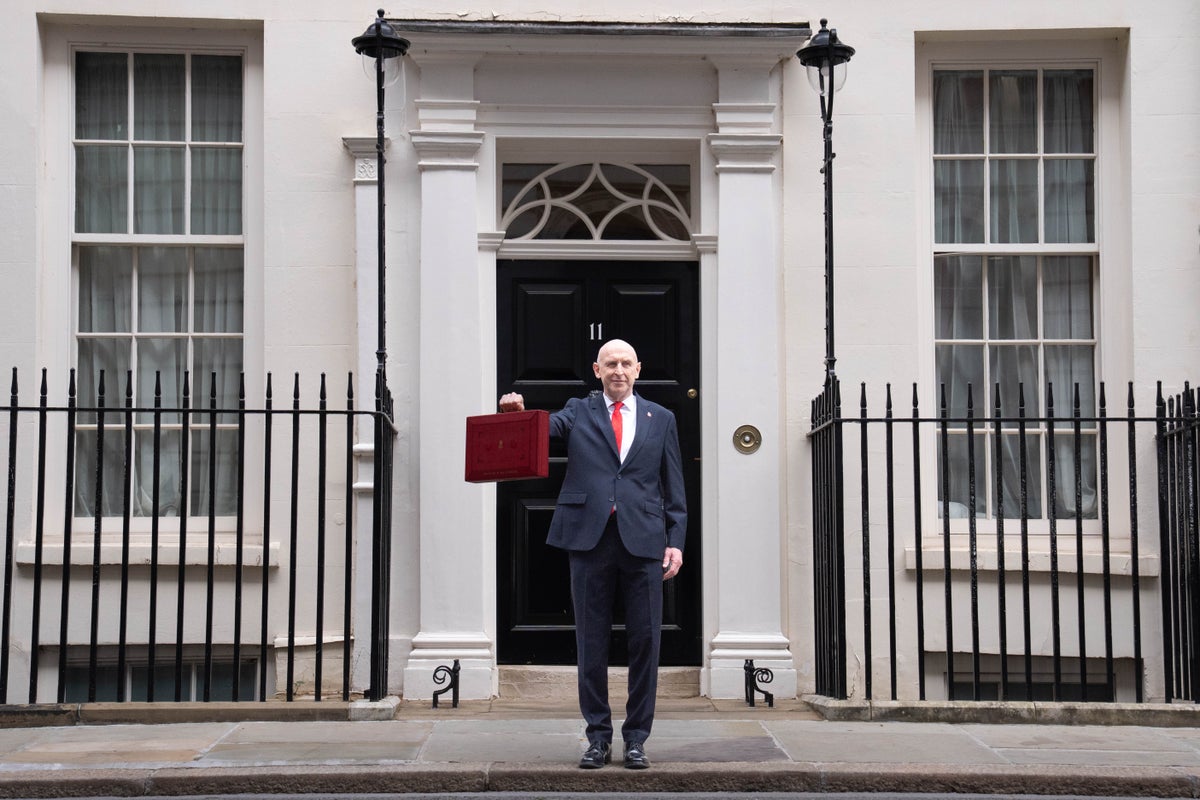
Chancellor John Healey also confirmed that he will reduce the UK’s fiscal headroom to £15 billion in 2029/30, from a previous prediction of £26 billion, after witnessing a jump in borrowing costs. The weaker headroom, which will improve to £22 billion by 2031, was linked to a £14 billion jump in debt interest costs for the past year.
"The UK’s economic and fiscal position remains very challenging," the OBR said in its Economic and Fiscal Outlook. “Since 2008 repeated adverse shocks have contributed to persistently weak GDP growth and elevated levels of government borrowing. This has resulted in a sharp increase in government debt as a share of GDP, to a level that is high by both recent historical and international standards."
How does economic growth impact you?
GDP is used to measure the size of a country’s economy and the health of that economy. If GDP is growing fast that means resources available to people in the country, such as goods, services, wages and profits, are on the increase.
Most economists and politicians want to see GDP rising steadily, as it usually means that more people are spending more, extra jobs are being created and more tax is being paid. When GDP falls, it can have a domino effect on businesses and workers - risking pay freezes and job losses.
A recession occurs when GDP falls for two quarters in a row.