
Politics
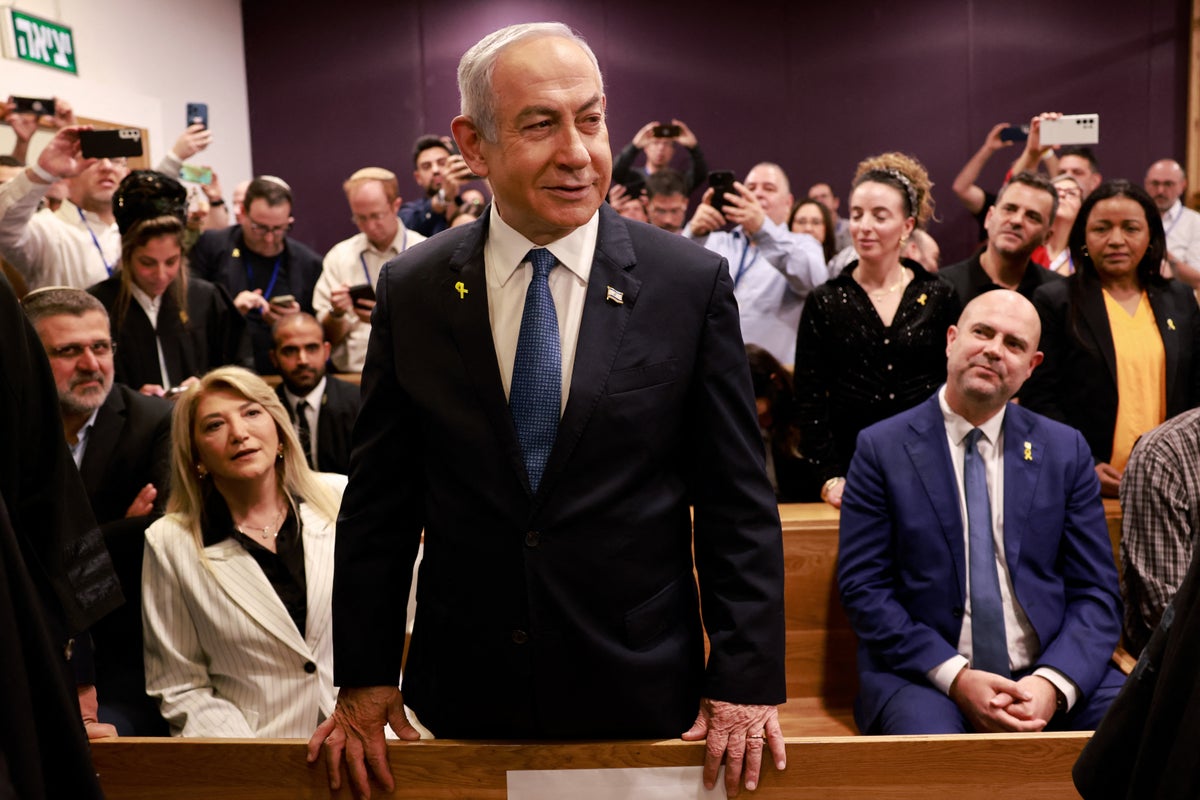
Elections, corruption scandals and assassination attempts: Netanyahu’s remarkable history of survival
Key Points
Elections, corruption scandals and assassination attempts: Netanyahu’s remarkable history of survival The Israeli prime minister faces another test of his staying power with the fallout from the 2026 elections. But time and time again, he has shown his ability to overcome impossible odds, writes James C. Reynolds - Bookmark - CommentsGo to comments Become an Independent member to bookmark this article Already a member?
Elections, corruption scandals and assassination attempts: Netanyahu’s remarkable history of survival
The Israeli prime minister faces another test of his staying power with the fallout from the 2026 elections. But time and time again, he has shown his ability to overcome impossible odds, writes James C. Reynolds
- Bookmark
- CommentsGo to comments
Become an Independent member to bookmark this article
Already a member? Log in
Benjamin Netanyahu and his allies are on track to win the most seats in Israel’s parliament, despite weeks of polling predicting he would not survive Tuesday’s election.
The central election committee was still tallying votes on Wednesday, and it will likely take until Thursday before definitive results of the election are known.
Current forecasts suggest Netanyahu and his allies will win 54 seats, falling short of the 61 needed for a majority in the Knesset, but also leaving his main challenger Gadi Eisenkot without a clear path to government.
Israel’s longest serving prime minister, 77, has established himself as a political survivor with a cumulative 19 years in office, and could stay on as caretaker if negotiations fail to yield a new government. But beyond politics he has survived multiple assassination attempts and multiple corruption scandals.
Below, The Independent looks back on Netanyahu’s unmatched staying power at the top of Israeli politics.
Political longevity
Thirty years have passed since Bibi was first elected prime minister in 1996. The single most dominant figure in Israeli politics, he has spent 19 years in the role, including 12 consecutively between 2009 and 2021.
Netanyahu’s first election set the tone as he overcame opponent Shimon Peres by just 29,457 votes. Likud took charge of the 14th Knesset with just 50.4 per cent of the vote, against Labor’s 49.6.
He resigned as party leader three years later after suffering a landslide defeat to Labor challenger Ehud Barak. Netanyahu would spend a decade in the wilderness before storming to power again on the heels of the 2009 war with militants in Gaza.
The Likud party did not win the most seats this year, as foreign minister Tzipi Livni’s centrist Kadima party narrowly pulled in front. But it was Bibi who managed to form a coalition government with the remaining parties.
Voters struggled through the second term with the cost of living and mounting income equality, and Netanyahu was polling behind a Labor-Livni hybrid in the run up to the 2013 election.
A popular new centrist party, Yesh Atid, had also emerged around former journalist Yair Lapid, swallowing up a swathe of Bibi’s base. And yet, a Likud-Yisrael-Beiteinu alliance formed and Netanyahu stayed on.
Livni and current president Isaac Herzog made a challenge with the centre-left Zionist Union alliance in 2015, but lost out with just 24 seats to Likud’s 30.
April 2019 began a turbulent year as Likud failed to form a government after tying with centrist challenger Benny Gantz. A second inconclusive election followed in September, with Gantz pulling ahead 33-32. But again, neither side was able to form a government.
A third election would follow in March 2020, by which time Netanyahu had become embroiled in a corruption row, charged with bribery, fraud and breach of trust.
Corruption scandals
Netanyahu has been on trial for six years over three separate criminal cases, all of which he denies. The cases have been repeatedly delayed, particularly since the October 7 terror attacks in 2023.
He was first indicted in 2019 on charges of bribery, fraud and breach of trust. The prime minister was accused of accepting tens of thousands of dollars’ worth of cigars and champagne from a Hollywood producer in exchange for assistance with personal and business interests.
He was also accused of promoting advantageous regulations for media moguls in exchange for favourable coverage of himself and his family. He consistently denied the charges and cast the case as a partisan witch hunt.
The third case accuses Netanyahu of granting regulatory favours worth around $500 million to Bezeq Telecom Israel.
Bribery charges alone carry a prison sentence of up to 10 years and a fine. Fraud and breach of trust are punishable by up to three years in jail.
Under Israeli law, a prime minister is under no obligation to stand down unless convicted. If he or she appeals their conviction, they can keep their office throughout the appeals process.
Netanyahu’s cross examination was completed in June this year after 98 hearings. Earlier this month the court moved to sit five days a week in a bid to accelerate the case before the presiding judge retires.
Meanwhile, Netanyahu has requested a pardon from president Isaac Herzog, with a decision still pending.
Out of office - and back just 18 months later
The March 2020 election became a fight for survival as Bibi pleaded for immunity from prosecution while campaigning as the world began to lockdown from the Coronavirus.
He and Gantz signed an emergency unity government deal that April, rotating the leadership and resolving calls to form a coalition and get to work tackling the pandemic.
Netanyahu was finally forced out of office after 12 years in 2021 by a broad coalition of ideologically disparate partners, Yair Lapid and Naftali Bennett. But it would be barely 18 months before Netanyahu’s return.
The unique coalition, which for the first time included an Arab party (Ra’am), was beginning to destabilise by spring 2022. Bennett called for early elections and the stage was set for Likud to come out on top with a strong majority, despite the corruption scandal.
The country was soon thrown back into crisis in 2023 as Netanyahu moved to overhaul the judiciary. Tens of thousands of people turned out for weekly protests in towns and cities across the country, calling for all the planned reforms to be scrapped and for Netanyahu to resign.
Protests ran from January until October 2023, when the Hamas-led October 7 attacks and ensuing hostage crisis led the country to war. Netanyahu agreed to freeze new legislation including the judicial overhaul and the protests subsided.
The war pushed back his corruption trial and it was December 2024 before he appeared to give testimony in court. A cross examination began in June 2025, when the US and Israel exchanged strikes with Iran. Cross examination continued in February 2026, when the US and Israel again attacked Iran. The trial resumed in April 2026 when the state of emergency was lifted.
Assassination attempts
Amid soaring tension with Tehran, Israeli security services reported in late 2024 that they had arrested an Israeli citizen on suspicion of involvement in an Iranian plot to assassinate Netanyahu that August. They said the businessman was twice smuggled into Iran and received payment to carry out missions.
The blitz on Gaza also drew in allied Hezbollah in Lebanon. A year after the conflict started, in October 2024, Israel’s government reported that a drone had targeted Netanyahu’s house.
Netanyahu’s office said that the drone targeted his his house in the Mediterranean coastal town of Caesarea. Neither he nor his wife was there. It wasn’t clear if the house was hit.
“The proxies of Iran who today tried to assassinate me and my wife made a bitter mistake,” Netanyahu said. Hezbollah did not claim responsibility but said it had carried out strikes on Israel.
A month later, police reported that two flash bombs had been fired towards Netanyahu’s home in Caesarea. Again, the family were not present and there was no damage reported.
Join our commenting forum
Join thought-provoking conversations, follow other Independent readers and see their replies
Comments
Netanyahu (PERSON)
Israeli (ORG)
James C. Reynolds - Bookmark - CommentsGo (PERSON)
Independent (ORG)
Benjamin Netanyahu (PERSON)
Israel (LOCATION)
Knesset (ORG)
Gadi Eisenkot (PERSON)
Bibi (PERSON)
Shimon Peres (PERSON)
Likud (ORG)
Labor (ORG)
Ehud Barak (PERSON)
Gaza (LOCATION)
Tzipi Livni (PERSON)