
Politics
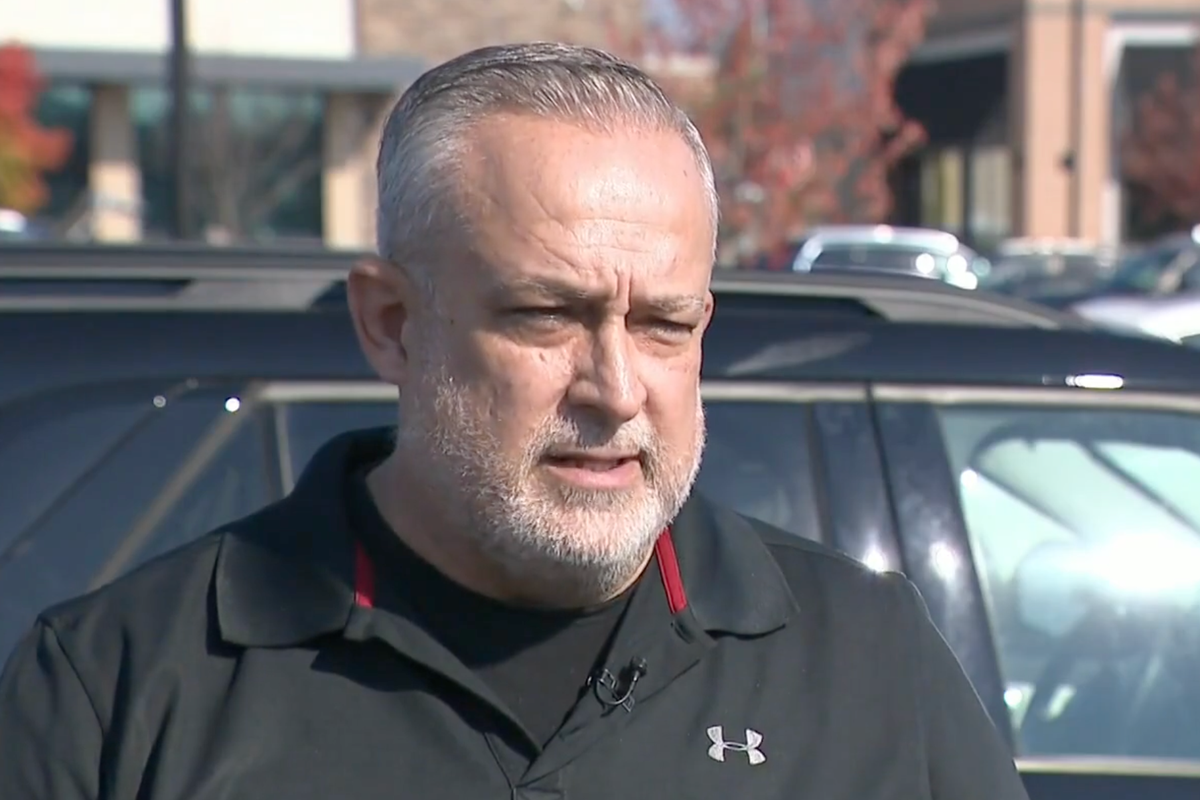
Career highs: Cops take on new jobs as weed delivery drivers
Key Points
Career highs: Cops take on new jobs as weed delivery drivers One ex-police officer explained that his law enforcement experience transferred easily to transporting cannabis - Bookmark - CommentsGo to comments Become an Independent member to bookmark this article Already a member? Log in Police officers and military veterans are taking on jobs as cannabis delivery drivers when they leave public service, according to a report. Cannabis is now legal for recreational use in 24 states, as well as...
Career highs: Cops take on new jobs as weed delivery drivers
One ex-police officer explained that his law enforcement experience transferred easily to transporting cannabis
- Bookmark
- CommentsGo to comments
Become an Independent member to bookmark this article
Already a member? Log in
Police officers and military veterans are taking on jobs as cannabis delivery drivers when they leave public service, according to a report.
Cannabis is now legal for recreational use in 24 states, as well as Washington, D.C., although it remains a controlled substance at a federal level.
In recent years, delivery companies dedicated to transporting the drug from cultivators to dispensaries have taken to hiring people with backgrounds in law enforcement and the military in order to protect the cargo.
“When you're working, especially on the street, you're always in that sort of elevated alert mode,” former cop Matthew Dzambo explained to CBS News Baltimore. “So that translates really well to this because of what we're doing. We have to naturally be aware of our surroundings.”
Recreational cannabis in Maryland became legal in July 2023 for adults over the age of 21, after legislation passed a year earlier.
Dzambo, who worked at the Baltimore Police Department for nearly 30 years, told CBS he has been hired by cannabis transportation company Talaria.
According to its website, Talaria was founded back in 2017 and now operates in seven states.
Explaining his previous career in law enforcement, Dzambo said: “I went into what was then called major crimes, which is a detectives unit that deals with things like robberies, shootings, aggravated assaults, burglaries, and things like that.”
Ralph Miller, who once worked with the Baldwin Borough Police Department, told Pittsburgh Media Partnership last year that he had also been recruited by Talaria to drive unmarked vans filled with the substance across Pennsylvania.
“It’s not that big of a transition,” he said. “A lot of the skill sets that police officers have transition very, very well into this industry because the bottom line is, as a police officer, it’s service oriented.”
Cannabis is big business in the U.S., with the United States Census Bureau reporting in September that 30 states and the District of Columbia collected nearly $3.6 billion in estimated cannabis excise tax revenue between July 2025 and June 2026. The amount takes both recreational and medical sales into account.
President Trump signed an executive order in December 2025 to increase research into medical cannabis and directed the Attorney General to reschedule cannabis to Schedule III of the Controlled Substances Act. That means it is classified as having less potential for abuse than drugs on Schedules I and II.
As the industry continues to grow, Ari Raptis, the CEO of Talaria and cash transportation firm National Secure Transport, told CBS News Baltimore that his firms have recruited about 300 ex-police and military personnel.
“They retired in good standing. They protected and served our community,” Raptis said. “There's no one I would trust more to be driving our vehicles and moving the product that we pick up every single day.”
Speaking to the Pittsburgh Media Partnership, Aaron Smith, co-founder and then-CEO of the National Cannabis Industry Association, said that cannabis not being legal in all states means that the substance has an “outsized value to criminals.”
Each of Talaria’s drivers is armed, and their vehicles come with cameras connected to a control room to keep the vans safe.
Join our commenting forum
Join thought-provoking conversations, follow other Independent readers and see their replies
Comments
Independent (ORG)
Washington (LOCATION)
D.C. (LOCATION)
Matthew Dzambo (PERSON)
CBS News (ORG)
Baltimore (LOCATION)
Maryland (LOCATION)
the Baltimore Police Department (ORG)
CBS (ORG)
Talaria (PERSON)
Dzambo (LOCATION)
Ralph Miller (PERSON)
the Baldwin Borough Police Department (ORG)
Pittsburgh Media Partnership (ORG)
Pennsylvania (LOCATION)