
This is an edition of The Atlantic Daily, a newsletter that guides you through the biggest stories of the day, helps you discover new ideas, and recommends the best in culture. Sign up for it here.
One fundamental truth of politics is that ultimately all voter decisions come down to money. That’s why Dwight Eisenhower blew out Adlai Stevenson in 1956; it’s what James Carville meant when he declared, “It’s the economy, stupid,” in 1992; and it’s the reason that Joe Biden tried in vain to convince Americans that they were doing better than they believed during his presidency.
This was also why some Democratic politicians and strategists counseled candidates not to place Donald Trump and his scandals at the center of their campaign. Better to focus on “kitchen table” issues, such as inflation and housing costs, they argued. To a great extent, this seems to have worked. Economic worries have been a consistent theme throughout the midterms, and Democrats appear poised to fare well. They’ve been helped by Trump, who has not only dismissed worries about affordability as a “hoax,” but has also gone out of his way to worsen inflation by launching a war in Iran. I wrote just last week that the economy explained GOP struggles.
Yet an interesting thing has popped up in opinion surveys over the past couple weeks. A Fox News poll finds that corruption is the top issue for voters, edging inflation, gas prices, and health care. CNBC gets the same result: “Voters are now more concerned about government corruption than any other issue, including high grocery and gas prices, according to the final CNBC All-America Economic Survey.” The Financial Times has similar findings: “About 69 per cent of registered voters, and almost 50 per cent of those who voted for the president in 2024, said they were ‘very’ or ‘somewhat’ concerned about ‘corruption, self-dealing or conflicts of interest’ in the Trump administration.”
The idea that the economy alone explained Trump’s unpopularity was never entirely convincing. He has almost always had poor approval ratings, even when presiding over a strong economy. He didn’t win the popular vote in 2016; House Republicans were shellacked in 2018, when he made the election about him; he lost in 2020; and the GOP underperformed in 2022, under his influence. He was able to win only in 2024, when the elections centered on voters’ views of the Biden presidency. One big reason for these repeated voter rejections is the miasma of scandal that follows Trump wherever he goes. “When elections are clearly about Trump and MAGA, MAGA will lose,” Michael Podhorzer, a progressive strategist, told me in 2022.
Still, this finding is reassuring about voters’ discernment. My colleague Anne Applebaum has been foremost among many observers who have deemed this the most corrupt presidency in U.S. history. Even as the president and his family have made billions from his office, no single story seems to have broken through: no Teapot Dome, no Watergate, not even a Whitewater. The new polls on corruption, combined with Trump’s steadily declining favorability, suggest that rather than any single news story producing an inflection point—like the swift turn on Joe Biden after the chaotic withdrawal from Afghanistan—voters have just been steadily souring on the president, with corruption as one main reason.
(It’s worth noting that, although the FT poll specified that Trump voters are concerned about corruption within the administration, corruption also tops lists because it means different things to different voters. Trump supporters who say they are concerned about “corruption” could be referring, for example, to “deep state” conspiracy theories.)
The polling around corruption is also an indication of the success (believe it or not) of much-maligned Democratic messaging. In February, Senator Jon Ossoff began speaking about “the Epstein class,” referring to the then-recent release of materials related to the late sex offender, which sketched a clique of wealthy, powerful people emailing and socializing around the globe. “They are the elites they pretend to hate,” Ossoff said. “Trump was supposed to fight for the working class; instead, he’s literally closing rural clinics and hospitals to cut taxes for George Soros and Elon Musk.” Democrats have been using similar lines ever since.
In making “corruption” a rallying cry, Democrats have found a way to yoke together a range of different stories, effectively sidestepping any division between economic issues and Trump scandals. It’s a big enough trend to fit any number of developments: Trump’s promotion of AI and data centers, despite wide public skepticism; his focus on projects such as the White House ballroom, which is funded by donors, many of whose identities the administration hasn’t disclosed, and an arch in Washington, D.C.; his work to undermine elections. His policy toward Ukraine appears influenced by possible business ventures in Russia. His Iran war was encouraged in part by Middle Eastern allies with whom Trump family members have business relationships. Trump seems determined to help the Democrats out by boasting about oil-company profits at a time when Americans are upset about the cost of filling up their vehicles. Republicans have also bolstered the case with nominees such as Ken Paxton, a one-man alleged-graft spree.
If an anti-corruption message does carry Democrats to victory in the House, and perhaps in the Senate, it will also point to how they might use Congress over the next two years. Even if they win both chambers, they will have little ability to enact policy—including actions that might help bring prices down. But a House majority alone would have investigatory power, and could use its reach to delve into Trump-administration actions that threaten both rule of law and voters’ pocketbooks.
Related:
Here are three new stories from The Atlantic:
- Israeli election results are hazy.
- When ICE comes for a MAGA supporter
- What should you do with your money in the age of AI?
Today’s News
- At least 68 people were killed and dozens more injured when a high-speed passenger train rear-ended another train this morning in the province of Toledo, Spain, causing a derailment. Spain’s transportation minister said traffic controllers had inexplicably instructed the train to continue despite another train being stopped farther along the tracks.
- Israel appears to be headed for a deadlock after its parliamentary election; neither Prime Minister Benjamin Netanyahu nor his main rival, the former military chief Gadi Eisenkot, secured a clear path to a governing majority. With most votes counted, Netanyahu’s bloc is projected to win 53 seats, the opposition 48, and Arab parties a record 19, complicating efforts to form a coalition.
- The Federal Reserve voted to leave interest rates unchanged despite inflation rising to 3.7 percent last month, driven in part by higher energy prices. Two officials dissented in favor of raising rates, while Fed Chair Kevin Warsh said the central bank needed more economic data before deciding whether to increase rates.
Evening Read
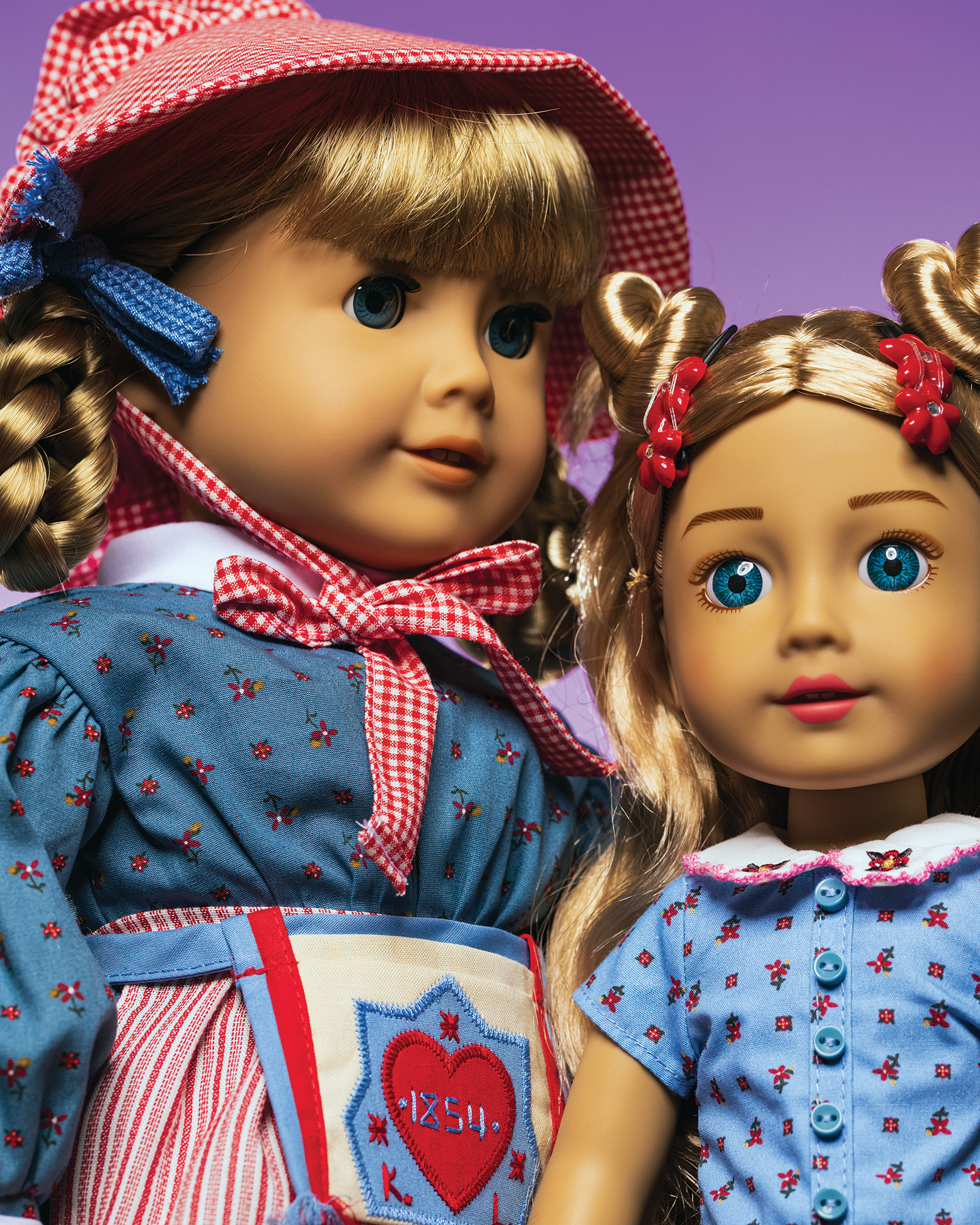
Elizabeth Renstrom for The AtlanticHow American Girl Doll Lost Its Way
By Hillary Kelly
In the early 1990s, when I was in elementary school, a fancy catalog would arrive in the mailbox of our 1950s split-level in Philadelphia four times a year, and I’d hurry to my room to pore over its elaborate spreads. Tea caddies, Windsor chairs, writing quills, ice-cream churns. We didn’t have any antiques in our home, but the lure of the past was so strong that sometimes my sisters, five and seven years older than me, crammed onto my bed to dog-ear the pages too. Most of all, we looked forward to checking in with the girls arrayed there, whose stories we knew so well: Samantha, Molly, Kirsten, Felicity, Addy, and, later in the decade, Josefina.
They were the American Girl dolls, preadolescents just slightly older than me, and I was enthralled by the pictures of their period dresses, tiny school supplies, and exotic waxed lunch foods. My own doll was the farm girl Kirsten Larson, a Swedish immigrant to 1850s Minnesota. She had come in a burgundy box, with a slim book titled Meet Kirsten tucked in beside her. I promptly begged for the five other Kirsten books; the historical-fiction series followed the same pattern for each doll, ushering her through a year’s worth of life events, tailored to her personality and time and place. I remember playing with Kirsten in the backyard and having her trace out symbols in the dirt, just as she did with her new friend, a Dakota girl called Singing Bird, in the second book, Kirsten Learns a Lesson. To have such a doll was to own a whole world and the narratives within it …
Yet as American Girl’s 40th anniversary arrives, the brand finds itself in something of a midlife crisis.
More From The Atlantic
- The David Frum Show: The man who risked death documenting ISIS
- Why India is erupting
- What you are about to see from Oleshky, Ukraine, is a lie.
- Flying across the world to vote
- There are too many apps for that.
Culture Break
Illustration by Jonelle Afurong / The Atlantic. Source: Edward Berthelot / Getty.Explore. After becoming a mother, Lily Meyer went on a hunt for comfortable, stylish pants—and stumbled, she writes, on a uniform for today’s cool mom.
Read. A new opera based on George Saunders’s novel Lincoln in the Bardo makes some fantastically shocking choices, and suggests that the medium might do book adaptation best, Talya Zax writes.
Rafaela Jinich contributed to this newsletter.
When you buy a book using a link in this newsletter, we receive a commission. Thank you for supporting The Atlantic.