
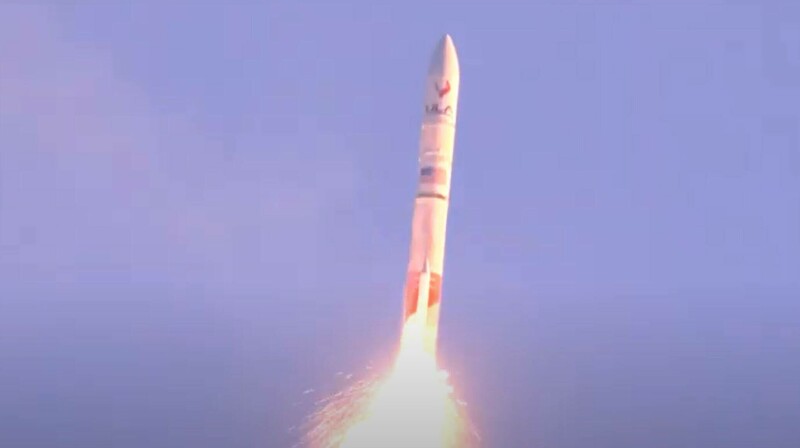
United Launch Alliance (ULA) has set a target date for its return to flight: Friday, November 13, for a Vulcan launch.
The mission will send 40 Amazon Leo satellites into orbit. A pair of BE-4 engines will power the booster, along with six Solid Rocket Boosters (SRBs). A Centaur V second stage, propelled by two RL10C-1 engines, will complete the journey to orbit and deploy the payload.
The launch is the first Vulcan launch for Amazon after eight deployments with ULA's Atlas V. It is also the first since the launch earlier this year for the US Space Force in which an SRB burned through its nozzle during the ascent, treating viewers to some impressive fireworks and controllers to some likely clenched sphincters thanks to a "significant performance anomaly."
In the event, the US Space Force payload successfully reached orbit, but the Vulcan was stood down while ULA conducted an investigation. This wasn't the first time a Vulcan had had issues with its SRBs. A nozzle was shed during the second launch of the rocket in 2024. Things went OK with the third launch. But another problem on the fourth trek to orbit meant a stand-down was unavoidable.
The workhorse Atlas V has continued deploying Amazon Leo satellites during the Vulcan's hiatus. Another 29 were added on a July 2 launch from Space Launch Complex-41 at the Cape Canaveral Space Force station. However, Amazon booked 38 Vulcan rocket launches – quite an increase from the eight Atlas V launches ULA has already performed for Leo. It is obviously keen to add more satellites to its growing constellation.
The SRBs are Northrop Grumman units, and the six Graphite Epoxy Motor (GEM) 63XL units will each provide an additional 459,600 lbs (2,044 kN) of thrust at liftoff. That's assuming nothing unexpected burns through or falls off. ULA has not detailed the results of its investigation or any changes it had to make.
ULA said: "The integrated team has made great strides in improving our understanding of the solid rocket booster (SRB) anomaly that occurred on the previous Vulcan flight and have identified several potential contributors which have been mitigated through design and process improvements to the nozzle. To support our customers, this upcoming launch will utilize the improved nozzle design, and additional testing and analysis will continue in parallel with the mission. By flying the improved design, ULA gains valuable flight data that validates these improvements and is the most beneficial path in support of all our customers."
US Space Force and Amazon are ULA's biggest customers - and Space Force will be watching. ULA came second to SpaceX in contracts awarded by Space Force for FY25 to FY29. ®