
Weather
Super El Niño could kill 870,000 people around the world, warn climate scientists
Key Points
Super El Niño could kill 870,000 people around the world, warn climate scientists China, India and Nigeria are are among the countries expected to be hardest hit, according to researchers at the University of Chicago - Bookmark - CommentsGo to comments Become an Independent member to bookmark this article Already a member? Log in Super El Niño could lead to nearly 900,000 extra deaths worldwide over just 10 months, climate scientists have warned in an alarming new prediction. The El Niño...
Super El Niño could kill 870,000 people around the world, warn climate scientists
China, India and Nigeria are are among the countries expected to be hardest hit, according to researchers at the University of Chicago
- Bookmark
- CommentsGo to comments
Become an Independent member to bookmark this article
Already a member? Log in
Super El Niño could lead to nearly 900,000 extra deaths worldwide over just 10 months, climate scientists have warned in an alarming new prediction.
The El Niño Heat Mortality Tracker, produced by the University of Chicago’s Climate Impact Lab, forecasts the human impact of the weather phenomenon. El Niño occurs when the average sea surface temperatures in the central and tropical Pacific Ocean rise above the long-term average by 2C or more.
Researchers estimate the climate pattern has already lead to 484,500 excess heat-related deaths between June and September this year, with around 372,900 more forecast for the next six months.
The mortality tracker map gives a breakdown of which countries are most badly affected, with Nigeria expected to see the highest death toll. Experts predict the African nation will see more than 56,000 additional deaths across the next six months, according to Climate Impact Lab.
It forecasts a further 55,000 heat-related deaths in India, while Southeast Asia is also under threat with around 29,000 deaths predicted in Indonesia.
China, Nigeria and India alone are predicted to account for more than one third of deaths related to El Niño, according to the figures.
“Our research puts new forecasting capabilities to work to answer one of the most urgent questions we face: where is extreme heat likely to cost lives?” Michael Greenstone, co-founder of the Climate Impact Lab said.
“Being able to anticipate the deadly effects of extreme heat is a major step forward. It means we can identify where people face the greatest risks and give decision-makers a chance to act before lives are lost. The Tracker provides this information for the Super El Niño we’re living through today.”
The Climate Impact Lab’s projected total additional heat deaths has risen dramatically from a September 2026 report, following the extreme heats experienced by many countries this summer.
“The two months turned out to be much warmer than forecasted”, it said, adding that “August was the warmest August and September the second warmest September on record”.
A regular El Niño event happens irregularly, every two to seven years, while a super El Niño occurs roughly every 10 to 15 years.
The super El Niño has already been impacting weather worldwide. It typically brings wetter and stormier conditions to the US, parts of South America, and Europe during autumn and winter.
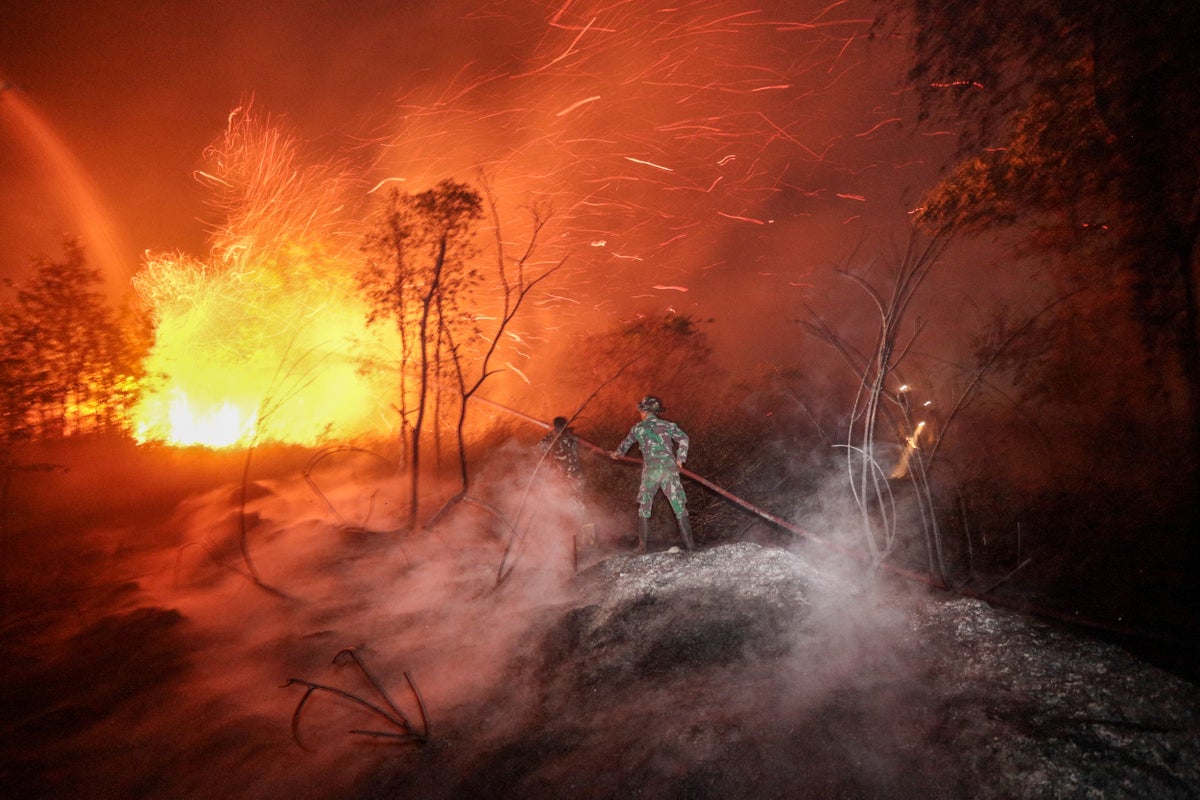
It can cause long dry spells in Australia, Indonesia and South Asia, sometimes leading to severe droughts. In Indonesia, the haze from El Niño-fuelled wildfire season has caused a spike in respiratory illnesses at home and a dramatic decline in air quality in Singapore and Malaysia.
Temperatures can also increase globally due to heat being released from the ocean into the atmosphere.
Many regions experienced a record-breaking summer this year, with Earth suffering its hottest August on record, according to the World Meteorological Organization (WMO).
However, experts says this was as a result of climate change and global warming, rather than El Niño which typically produces its strongest impacts from late autumn into winter.
Earlier this year, a new study suggested that El Niños are getting stronger because of human-caused climate change.
El Niños are more than 36 per cent stronger than they were before the industrial age began in the mid 1800s, with a 16 per cent jump in just the last 40 years showing that the increase is accelerating, according to a study in Thursday's journal Science.
“That’s important because strong El Niños have much stronger impacts on climate hazards and extremes worldwide,” said study lead author Julia Cole, a paleoclimate scientist at the University of Michigan.
“When we set out to answer the question of why this might be happening, we set our data up against a record of global temperature, and we found that the increase in El Niño’s strength closely parallels the rise in global temperature that is due to human causes such as the burning of fossil fuels.”
The projections also come after a new report in the Lancet Countdown on Health and Climate Change said extreme heat contributed to a record 710,000 fatalities in 2023, with researchers attributing over 70 per cent directly to man-made warming.
Countries facing largest predicted death tolls (June-March)
- India: 160,000 (including 55,200 in next six months)
- China: 85,400 (including -240 in next six months)
- Nigeria: 69,700 (including 56,100 in next six months)
- Sudan: 53,200 (including 14,700 in next six months)
- Indonesia: 49,500 (including 29,300 in next six months)
- Brazil: 26,700 (including 19,500 in next six months)
- Democratic Republic of the Congo: 24,700 (including 11,300 in next six months)
- Bangladesh: 18,400 (including 6,700 in next six months)
- Vietnam: 18,100 (including 8,300 in next six months)
- Chad: 17,000 (including 17,300 in next six months)
Join our commenting forum
Join thought-provoking conversations, follow other Independent readers and see their replies
Comments
Super El Niño (ORG)
China (LOCATION)
India (LOCATION)
Nigeria (LOCATION)
the University of Chicago - Bookmark - CommentsGo (ORG)
Independent (ORG)
The El Niño Heat Mortality Tracker (ORG)
the University of Chicago’s Climate Impact Lab (ORG)
El Niño (PERSON)
Pacific Ocean (LOCATION)
African (ORG)
Climate Impact Lab (ORG)
Southeast Asia (LOCATION)
Indonesia (LOCATION)
Michael Greenstone (PERSON)