
Education
Oklahoma 8th-grader finds 56% of wild plants show antibacterial activity
Key Points
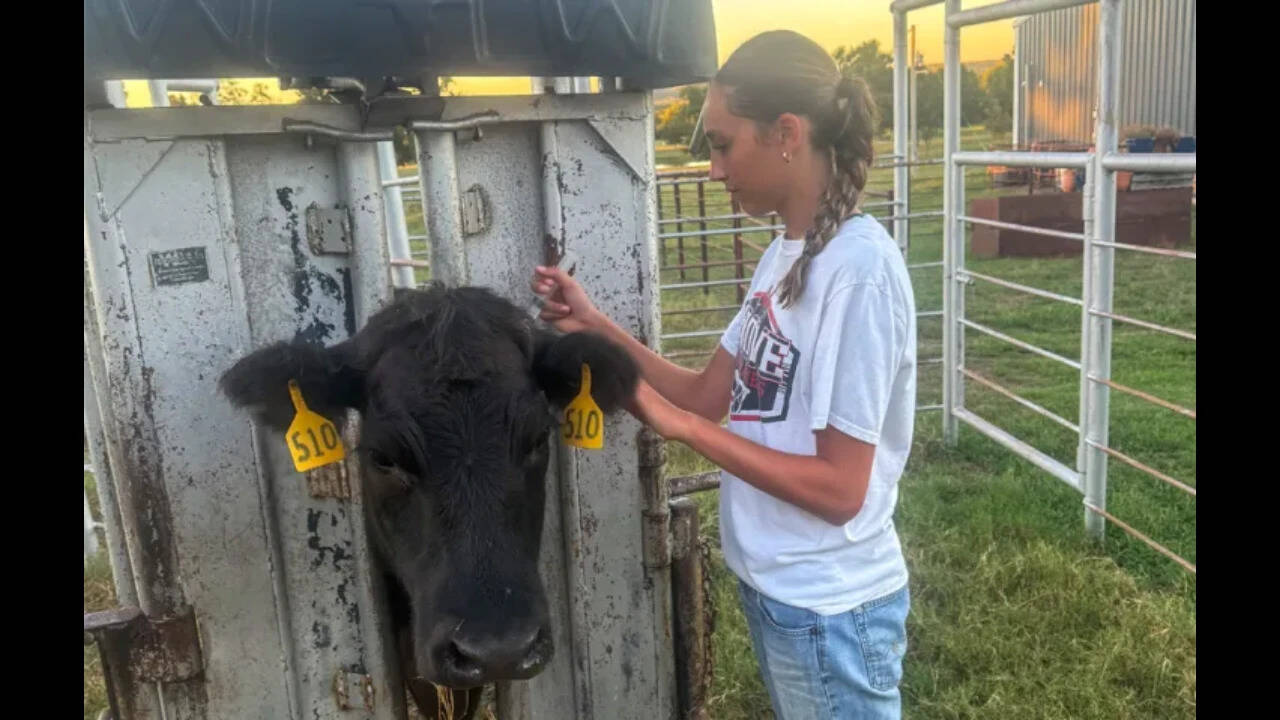
Locklyn Raye Ward, an Oklahoma eighth-grader, worked on a study titled, “A Study of Open Field Plants, Native and Non-Native, and Their Antimicrobial Properties Against Escherichia coli and Staphylococcus epidermidis.” Details about Locklyn’s project and background come from the Society for Science, the nonprofit behind Science News and several student science competitions. It all started with what she thought were weeds.
Locklyn Raye Ward, an Oklahoma eighth-grader, worked on a study titled, “A Study of Open Field Plants, Native and Non-Native, and Their Antimicrobial Properties Against Escherichia coli and Staphylococcus epidermidis.” Details about Locklyn’s project and background come from the
Society for Science, the nonprofit behind Science News and several student science competitions. It all started with what she thought were weeds. One evening, Locklyn was feeding cows on the farm when she and her dad drove past some plants she thought were weeds. He told her it was pokeweed, growing wild. “He said he had always heard it was healthy in many ways,” she says. She was already worried about the overuse of antibiotics. So she started to wonder if other wild plants on the farm might have antibiotic properties and how those would compare with the antibiotics used in medicine. Locklyn picked 24 plants, and 12 of them were native to Oklahoma. She weighed each plant, cut it into one-gram pieces, and boiled it in distilled water to pull out any chemicals inside.
Next, she grew Escherichia coli and Staphylococcus epidermidis on agar plates.
She soaked small paper discs in the plant extracts and dropped them onto the plates. Where an extract held antibiotic compounds, the bacteria around the disc would die. For comparison, she tested discs covered in commercial antibiotics too, and she measured how many bacteria each extract or antibiotic could kill. After 24 hours of incubation, 56 per cent of the plants showed some antibacterial properties. Seven of the native plants were active. None of them worked as well as the commercial antibiotics.
Image credits: US Centre for Disease and Control Prevention
How did she test the plants?
Image credits: Society for Science
Locklyn picked 24 different plants. Twelve were native to Oklahoma, and twelve were not. She weighed the plants, cut them into one-gram pieces, and boiled the pieces in distilled water to pull out any chemicals they might contain.
Next came the bacteria. She grew Escherichia coli and Staphylococcus epidermidis on agar plates. Then she soaked small paper discs in her plant extracts and dropped them onto the plates. The idea was simple: if an extract held antibiotic compounds, the bacteria around its disc would die.
To have something to measure against, Locklyn also got discs covered in commercial antibiotics and tested them alongside the plant extracts. For each extract and each antibiotic, she measured how many bacteria it could kill. Then the plates sat for 24 hours of incubation.
When the time was up, she counted the results. Of the plants she collected, 56 per cent showed some antibacterial properties. Seven of the native plants showed antibiotic activity. None of them, though, were as effective as commercial antibiotics.
What did the results say?
Locklyn began with two questions. Did the wild plants on her farm have any antibiotic properties, and how did those properties compare with antibiotics used in medicine? The plates gave her two answers. More than half of the plants she collected did show some activity, and seven of the 12 native plants were among them. But in every case, the commercial antibiotics did better.
The second answer matters as much as the first. Because she tested the plants next to commercial antibiotics, she could see where they actually stood instead of only noticing that something had happened around a disc. Her dad had always heard that pokeweed was healthy in many ways. Locklyn took that kind of passed-along idea and put it through a measured test, with a clear standard to compare against.
Beyond the project
Image credits: Society for Science
Locklyn is active in her church and enjoys church activities the most. "I attend a very old church in the country. Walking into this building gives me an instant peaceful feeling," she says. "I can gather my thoughts and fears in peace and quiet. After Sunday, I am ready to tackle the problems and issues of the upcoming week."
In the summer, she attends church camps and basketball camps. She has also volunteered at basketball camps with elementary school kids, passing on her skills to younger players. Locklyn helps on her family's farm as well, which is the same place where her project began.
Locklyn's project began with a few plants she mistook for weeds. It ended with 24 plants tested, two kinds of bacteria, a set of commercial antibiotics for comparison and a clear result. Some of the plants growing wild on her family's farm showed antibiotic activity, and none of them beat the medicines. For a student worried about antibiotic overuse, that is a real answer to a real question.