
Politics
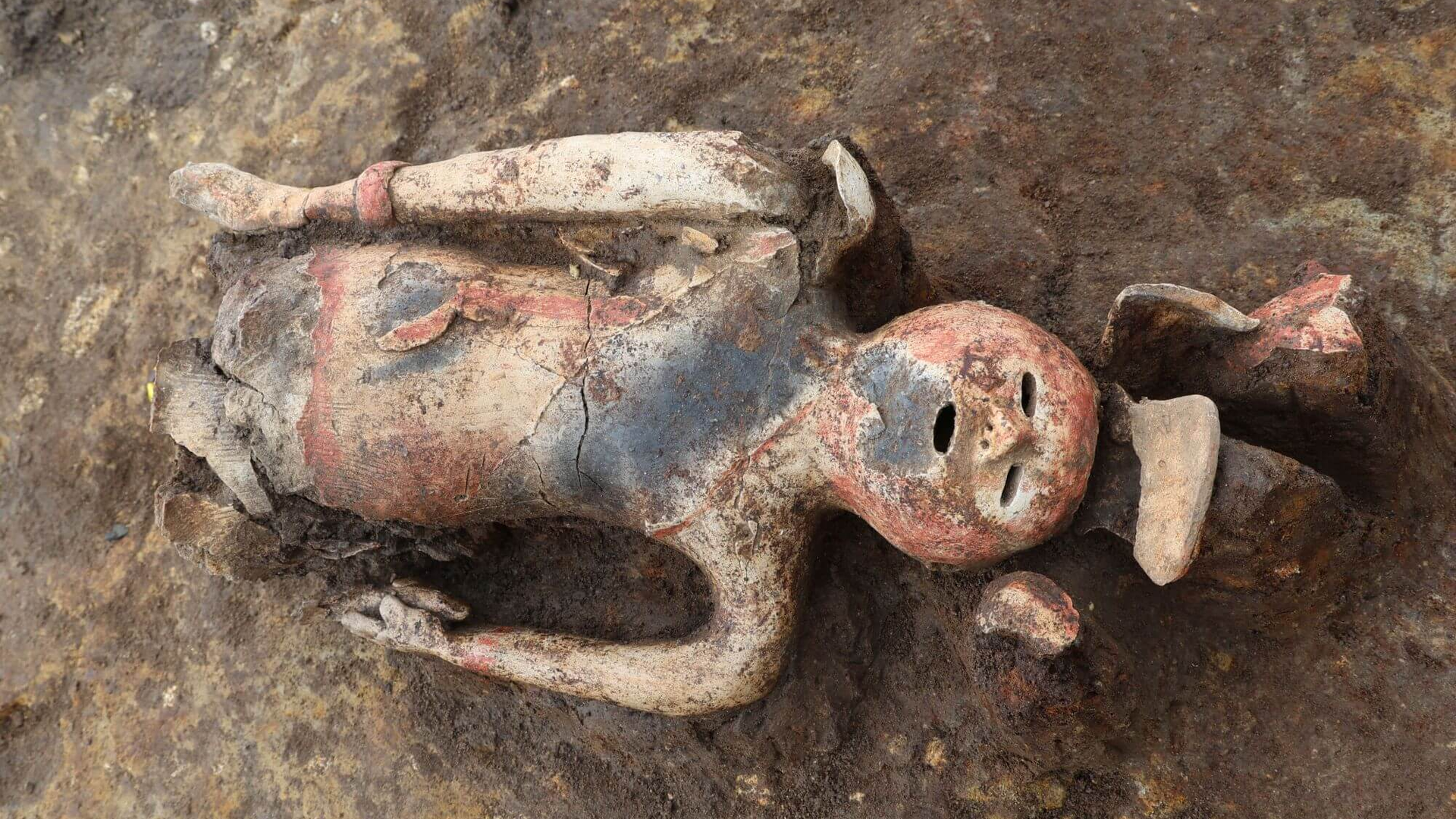
Ghostly statue of 'shrine maiden' discovered at 1,500-year-old burial mound in Japan
Key Points
Ghostly statue of 'shrine maiden' discovered at 1,500-year-old burial mound in Japan Archaeologists have unearthed a human-shaped funeral offering that may represent an ancient Japanese priestess. Archaeologists have discovered a ghostly human-shaped artifact at a fifth-century burial mound in Japan. The clay figurine's appearance suggests it represents a female shaman who once guarded a tomb.
Ghostly statue of 'shrine maiden' discovered at 1,500-year-old burial mound in Japan
Archaeologists have unearthed a human-shaped funeral offering that may represent an ancient Japanese priestess.
Archaeologists have discovered a ghostly human-shaped artifact at a fifth-century burial mound in Japan. The clay figurine's appearance suggests it represents a female shaman who once guarded a tomb.
The artifact was unearthed at the archaeological site of Nishikaminomiya, northwest of Tokyo, according to a translated statement from Japan's Gunma prefectural government. At the site, archaeologists found nearly a dozen burial mounds known as "kofun" dated to the fifth and sixth centuries.
This time period in Japanese history, which lasted from about A.D. 300 to 710, is called the Kofun period. Many tombs in this period had cylindrical clay sculptures called "haniwa" that were used as offerings to the dead and were often thought to contain the souls of the deceased.
The newly unearthed haniwa is about 16 inches (40 centimeters) tall; but only the head and torso remain, so it would have originally been a lot larger. The figurine was discovered in a moat around an enormous burial mound that measured about 145 feet (45 meters) in diameter. It's likely that the haniwa was originally placed near a boat-shaped sarcophagus archaeologists discovered in the mound and that it slipped down the hill over time to land in the moat, according to the statement.
Experts think the haniwa represents a female shaman known as a "miko," or "shrine maiden." These priestesses bridge the gap between the human and spiritual realms in the Shinto religion. During the Kofun period, miko would have performed important funeral rituals and offered spiritual guidance.
RELATED STORIES
The haniwa figurine has a traditional Japanese topknot hairstyle called a "shimada," which indicates that the haniwa represents a miko, according to the statement. Both of the figurine's wrists have bracelets made from clay and red pigment. The haniwa's fingers have been carefully molded, and the figurine has a prominent nose. In addition, she wears a red sash painted on her torso and holds a rod-shaped ritual implement in her left hand.
"These details suggest that considerable care was taken in making the figure, even in features that would not be visible from a distance," representatives of the Gunma prefectural government said in the statement.
Get the world’s most fascinating discoveries delivered straight to your inbox.
Archaeologists discovered the haniwa this year during excavations of the main burial mound at Nishikaminomiya, but they have been working at the site since 2020.
The haniwa is currently on display at the Gunma Prefectural Archaeological Research Center's Excavation Information Museum in the city of Shibukawa.
Kristina Killgrove is a staff writer at Live Science with a focus on archaeology and paleoanthropology news. Her articles have also appeared in venues such as Forbes, Smithsonian, and Mental Floss. Kristina holds a Ph.D. in biological anthropology and an M.A. in classical archaeology from the University of North Carolina, as well as a B.A. in Latin from the University of Virginia, and she was formerly a university professor and researcher. She has received awards from the Society for American Archaeology and the American Anthropological Association for her science writing.
You must confirm your public display name before commenting
Please logout and then login again, you will then be prompted to enter your display name.