
Environment
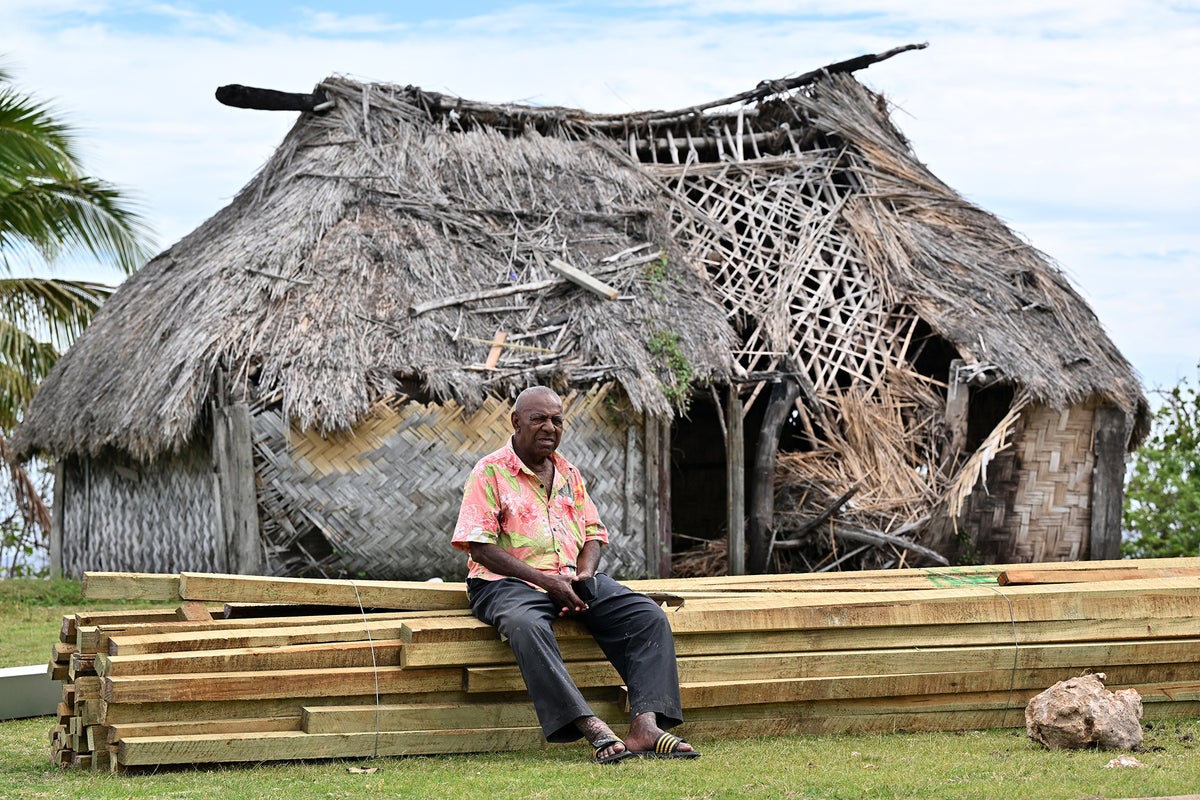
On the brink of ruin due to climate change, Pacific Islanders know who is to blame
Key Points
On the brink of ruin due to climate change, Pacific Islanders know who is to blame Living on the brutal frontline of climate change, locals are urging the world to take urgent action at the upcoming COP31 summit in Antalya - warning that the consequences otherwise will be catastrophic. Alex Croft reports from Fiji - Bookmark - CommentsGo to comments Become an Independent member to bookmark this article Already a member? Log in Pointing at the murky water of the Nadi River, Lessy Rokocoko...
On the brink of ruin due to climate change, Pacific Islanders know who is to blame
Living on the brutal frontline of climate change, locals are urging the world to take urgent action at the upcoming COP31 summit in Antalya - warning that the consequences otherwise will be catastrophic. Alex Croft reports from Fiji
- Bookmark
- CommentsGo to comments
Become an Independent member to bookmark this article
Already a member? Log in
Pointing at the murky water of the Nadi River, Lessy Rokocoko remembers the four homes that her neighbours lost.
“There was a big flood in the village and they were swept away,” the 31-year-old mother of two says, with a weariness in her voice.
This is Yavusania, a small village near the west coast of Fiji that is under constant threat of flooding.
The tranquility, with large mango and coconut trees swaying in the gentle sea breeze, can be deceiving: here lies the frontline of the climate crisis, where communities are fighting for their lives.
Nearby, Lessy’s two-year-old daughter Joanna frolics in the shrubbery. Her mother wonders what kind of future she can give her: “I don’t want her to see or experience what we experienced when we were growing up.
“We always have that feeling that maybe one day the flood will just take away my house. We are scared, but we are always ready.”
As she speaks, Lessy looks me dead in the eye: “In a bigger country like where you are from, you'll never see or feel real climate change compared to our smaller islands.
“In reality, we are really facing climate change right now.”
Flooding is increasingly common in the low-lying coastal areas of Fiji – where 90 per cent of the population live – and across the 13 other Pacific Island nations.
Despite contributing to just 0.02 per cent of global emissions, the Pacific faces the most existential climate threats: rising sea levels could wipe away coastal communities, massive storms can lead to devastating floods and increasing ocean temperatures are destroying local marine ecosystems.
The islands are now urgently calling on the world to take drastic measures to limit global warming ahead of November’s COP31 summit in Antalya.
Looming over the meetings is the UN’s recent warning that the world will significantly overshoot the 1.5C climate target necessary to prevent irreversible climate harm. Under the current trajectory, the world could warm by up to 2.8C by the end of the century.
The islanders say that the funds provided for projects and initiatives to address the impacts of climate change are so far insufficient, with villages left to fend for themselves.
“Not a day goes by when we are just living happily on our own,” Lessy adds.
She ushers me into her home, a pale green wooden structure on stilts just metres from the riverbank with an simply-furnished open-plan living room.
Rich smells fill the room; a traditional Fijian lunch of ota miti - a fresh coconut cream cooked with fern leaf sprouts - is being cooked by Lessy’s 59-year-old mother, Meri. The family, including husband Kelevi, 35, and sister-in-law Maggie, explain the depth of their ties to the land and the devastation losing their home would cause.
Meri moved to Yavusania around 30 years ago when she married Lessy’s father, Apete, who died last year. The home had been in his family since the early 19th century.
For the villagers, the house is so much more than a physical structure: it symbolises vanua, their bond to the land and an unbroken link to their ancestry and identity.
Listening to her speak, the gulf in the threats that climate change poses between Fiji and the UK becomes increasingly apparent. Last summer, Europe suffered its worst-ever wildfire season, burning swathes of France, Spain and Italy to the ground. But Fiji has been dealing with this existential threats for years – with far less attention.
This sense of injustice is summarised by taxi driver Asaeli Moce as he heads to one of the large hotel chains hosting an event for the pre-COP31 climate summit in Nadi, the island’s main international gateway.
The 52-year-old explains that his cousin’s home is frequently cut off from the rest of his village due to flooding, forcing him to wade through water each time he carries out any menial daily task.
"Those countries overseas cause it," he says. "We are victims of it. We put very little into the atmosphere, but we are the ones being affected. We are on the verge of losing our heritage."
All 14 of the island nations that make up the Pacific, including Tuvalu, Kiribati and the Marshall Islands, are under threat.
In Tuvalu, the situation is so critical that four years ago its government created the world’s first ‘digital nation’ to allow it to exist even if its land is lost. This involves a 3D-mapped virtual replica of its physical territory, a living archive of Tuvaluan heritage, language and music, and online governance - including voting and digital ID.
The climate figures are brutal. The Pacific Islands contribute 0.02-0.03 per cent of global emissions with just 0.16 per cent of the world’s population, according to the World Meteorological Association. The US produces between 11 and 13 per cent of emissions, with 4 per cent of the population; while China accounts for around one third of emissions with around 17 per cent population.
Nowhere is this threat of destruction more keenly illustrated than in a small corner of the Sabeto Valley, where a simple home is perched two metres away from a severely eroded riverbank, which lies on a steep three-metre drop down to the river below.
Ben Qoro, the headman of the local village, is urging residents to move, but no one will listen.
“The landslide is eating the areas here,” he says, standing outside one of the threatened homes. “I told them there is no warning. Once [a flood or landslide] comes, whether in a night or day, it will happen. So I told them, please, for the time being, find somewhere safe. Once a slide comes, there is no warning.”
The Sabeto Valley communities all sit at the bottom of the Mountain of the Sleeping Giant, perilously positioned next to mountain streams that lie just two kilometres from the sea. During tropical cyclones, heavy rainfall causes disastrous sudden rises in the level of the river.
The river is both the community’s life source for fishing and agriculture, and its greatest threat – and Ben says the next flood is a matter of when and not if. “Once it comes, all of us will be affected. The river and what we have in the river will no longer be there.”
Ben’s plea to the West is simple: “Please think of us. Think of our communities, of our children and what we will face in the years to come.”
Their threatened homes provide a sharp contrast to the pre-COP conference on Denarau Island, an exclusive resort featuring several major hotel chains catering to honeymooners and wealthy jetsetters. In the middle of the resort sits a large, grey concrete block, where the construction of a brand new resort, the Vatu Talei, is underway.
Denarau Island was once an area containing large mangrove swamps, which serve as a natural defence barrier against severe weather, help to support local fisheries, and store huge amounts of carbon. Scientists estimate the global value of mangroves to the ecosystem is as high as $1.6 billion (£1.2 billion).
Most of the mangroves, many of which were more than 100 years old, were removed as the vast hotels were constructed, because they “interfered with tourists’ access to the sea and did not mesh with the new vision of a highly manicured landscape”, according to the UN’s Disaster Risk Reduction office.
Nonetheless, Pacific Islanders seize the opportunity of the conference to place their voices front and centre of the climate debate.
Rachel Kyte, the UK’s special representative for climate, points out that holding the event in the Pacific means it is impossible for delegates to remain detached from how the climate crisis is impacting livelihoods across the ocean.
Vishal Prasad, the 30-year-old director of the Pacific Islands Students Fighting Climate Change, is one of those leading that bid for change. He is under no illusions about the threat faced by the Pacific as he stands on the shores of Wailoaloa Beach, where coastal erosion and flooding is a permanent risk.
“If we lose the 1.5C target, we are in for a very, very horrific next few decades,” he says. “We need to hold that line.”
Lynda Tabuya, Fiji’s environment minister, goes further: “The 1.5 degrees Celsius is a matter of survival for us. We are under threat. We need large emitters to reduce emissions.”
For Lessy, Ben, and the millions of ordinary Pacific Islanders whose future is linked inextricably to the fight against climate change, the distance between the decision-makers and the reality on the ground can feel vast.
“We are not just small islands, we are also people,” Lessy says.
But as she digs into a rich bowl of home-cooked food in her home, she dares to finally hope that their voices are being heard in the corridors of power.
The reporting trip for this article was funded by Wellcome as part of its work to promote its ’All Rise!’ and ’Birthright!’ campaigns ahead of COP31. Wellcome had no influence over the editorial content or decisions made in producing this article
Join our commenting forum
Join thought-provoking conversations, follow other Independent readers and see their replies
Comments