
Science
California records warmest deep waters in Monterey Bay in nearly 40 years
Key Points
Scientists monitoring the waters off California have recorded an unprecedented rise in ocean temperatures beneath Monterey Bay, with readings reaching 64.72 degrees Fahrenheit (18.18 degrees Celsius) at a depth of approximately 200 feet on October 26, 2026. The measurement surpassed the previous record set during the powerful 1997 El Niño event, marking the highest temperature recorded at that depth in nearly four decades of monitoring. The Monterey Bay Aquarium Research Institute (MBARI)...
Scientists monitoring the waters off California have recorded an unprecedented rise in ocean temperatures beneath Monterey Bay, with readings reaching 64.72 degrees Fahrenheit (18.18 degrees Celsius) at a depth of approximately 200 feet on October 26, 2026. The measurement surpassed the previous record set during the powerful 1997 El Niño event, marking the highest temperature recorded at that depth in nearly four decades of monitoring. The Monterey Bay Aquarium Research Institute (MBARI) announced the findings on October 29, while Phys dot org and Ocean News also reported on the unusual warming and its emerging effects on marine life. The temperature increase is among the clearest indications that the developing 2026-27 El Niño has reached Central California. Researchers have also begun spotting marine creatures normally associated with tropical and warmer southern waters, suggesting that the changing ocean conditions are already influencing the region’s underwater ecosystem.
A nearly 40-year record broken underwater
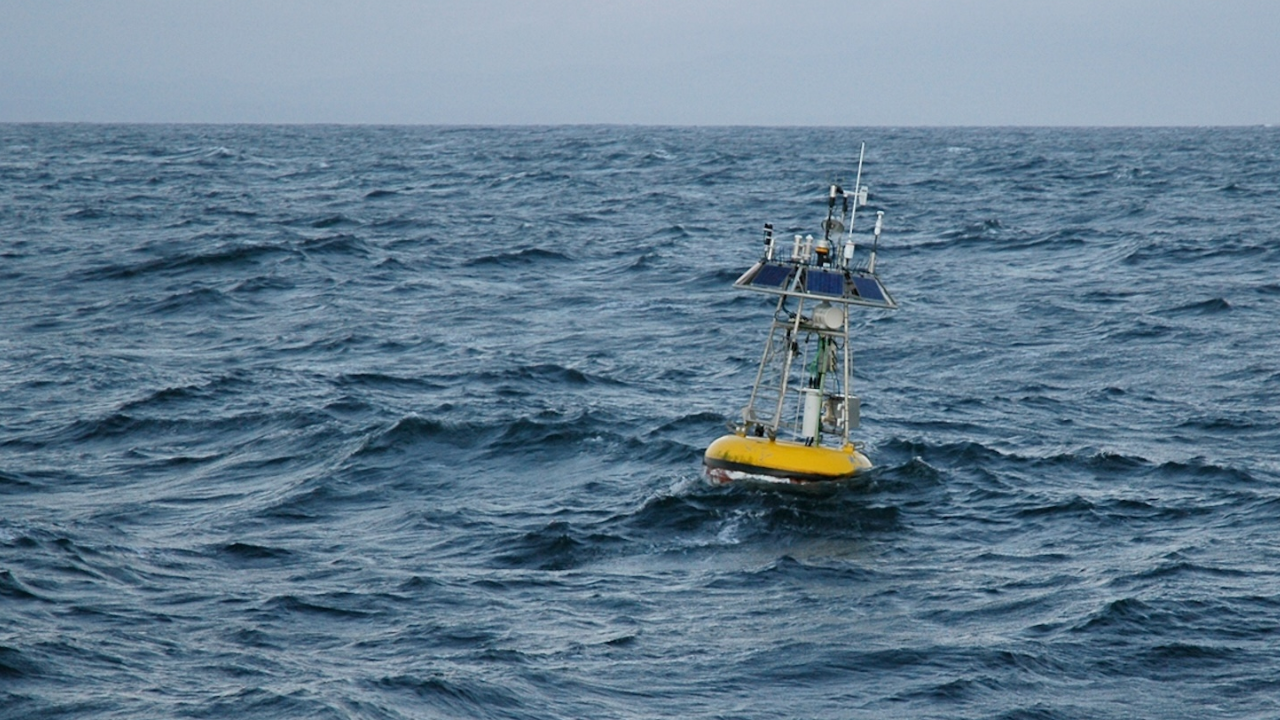
The measurements come from MBARI’s M1 mooring, a scientific monitoring station positioned in the middle of Monterey Bay, near the underwater Monterey Canyon. Its instruments have collected oceanographic and meteorological information since 1989, providing researchers with a long-running record of changes in the Pacific.
The monitoring system includes instruments attached to a buoy and along a cable extending hundreds of metres beneath the surface. They measure several environmental indicators, including temperature, salinity, oxygen levels, chlorophyll and ocean currents. On October 26, the temperature recorded at 60 metres, or approximately 200 feet, reached 18.18 degrees Celsius. This exceeded the previous high recorded on November 19, 1997, during another major El Niño event.
According to MBARI senior scientist Francisco Chavez, the latest readings were more than seven degrees Celsius above the long-term average at that depth. The warming has also contributed to a rise in sea level of approximately 16 centimetres, or 6.25 inches, in the region. Researchers are continuing to examine daily measurements to determine whether temperatures will climb further.
What is driving the unusual warming?
El Niño is a naturally occurring climate phenomenon involving changes in ocean temperatures and atmospheric conditions across the tropical Pacific. It develops when trade winds weaken, allowing warm surface water that normally accumulates in the western Pacific to shift eastwards towards the Americas.
This movement alters ocean circulation, atmospheric patterns and weather systems across different parts of the world. Its effects can include warmer ocean temperatures, changes in rainfall, coastal sea-level fluctuations and disruptions to marine ecosystems. Scientists have been tracking the developing event using a global network of autonomous ocean-monitoring floats through the Global Ocean Biogeochemistry Array (GO-BGC), a programme led by MBARI researchers and supported by the US National Science Foundation.
In late September, measurements from the equatorial Pacific showed rising water temperatures alongside declining nitrate and dissolved carbon dioxide concentrations. Researchers also recorded falling chlorophyll levels, indicating a reduction in phytoplankton biomass. These changes suggest that the normal process of nutrient-rich deep water rising towards the surface is weakening, potentially reducing the productivity of marine ecosystems.
Tropical marine creatures appear in California waters
The changing conditions are also becoming visible through unusual wildlife sightings. During a recent research expedition west of Davidson Seamount, MBARI scientists encountered a winged comb jelly belonging to the Ocyropsis genus and a rose siphonophore, both typically associated with tropical waters.
Researchers also spotted schools of halfmoon fish near the M1 monitoring station. The species is more commonly encountered in Southern California. Further underwater surveys revealed juvenile pelagic red crabs, which are known to move northwards during El Niño events. Although adult specimens have previously been observed in Monterey Bay, researchers had not recorded juveniles this far north.
The team also briefly encountered Humboldt squid, a large predator whose range can expand along the American coastline during particularly strong El Niño conditions. These arrivals could signal broader changes in the composition of Monterey Bay’s marine communities. Warmer-water species moving north can alter existing food webs, while animals adapted to colder conditions may retreat towards higher latitudes.
Effects could reach the deep ocean
The consequences of El Niño are not restricted to the upper layers of the ocean. MBARI researchers have been studying the midwater ecosystem and deep-sea habitats of Monterey Bay for more than three decades. Changes in surface productivity can eventually affect organisms living thousands of metres below. One important source of food for deep-sea communities is marine snow, consisting of sinking organic material such as dead plankton and other biological matter.
When El Niño reduces phytoplankton production near the surface, less organic material may reach deeper ecosystems, potentially affecting the animals that depend on it. Researchers expect some of the strongest biological consequences of the current event to become apparent during spring 2027.
MBARI is continuing to monitor the developing conditions through its underwater instruments, research expeditions and autonomous technology. The findings will also contribute to a wider California ocean-monitoring initiative designed to help scientists, coastal planners and fisheries managers understand the changing marine environment. With tropical species already appearing farther north and underwater temperatures breaking historical records, Monterey Bay is offering researchers an early look at how a powerful El Niño can reshape an entire marine ecosystem.
California (LOCATION)
Monterey Bay (LOCATION)
El Niño (PERSON)
The Monterey Bay Aquarium Research Institute (ORG)
MBARI (ORG)
Ocean News (ORG)
Central California (LOCATION)
Monterey Canyon (LOCATION)
Pacific (LOCATION)
Francisco Chavez (PERSON)
Americas (LOCATION)
the Global Ocean Biogeochemistry Array (LOCATION)