
Health
Worker at UK's oldest amusement park sues for £200k after claims water slide made him pop artery in neck
Key Points
Worker at UK's oldest amusement park sues for £200k after claims water slide made him pop artery in neck Kristian Wright says that he sustained burn injuries to his hands and wrists during an incident on the 100ft water slide - Bookmark - CommentsGo to comments Become an Independent member to bookmark this article Already a member? Log in A worker at the UK's oldest amusement park who says he popped an artery in his neck and suffered a stroke after trying to avoid crashing into a child on a...
Worker at UK's oldest amusement park sues for £200k after claims water slide made him pop artery in neck
Kristian Wright says that he sustained burn injuries to his hands and wrists during an incident on the 100ft water slide
- Bookmark
- CommentsGo to comments
Become an Independent member to bookmark this article
Already a member? Log in
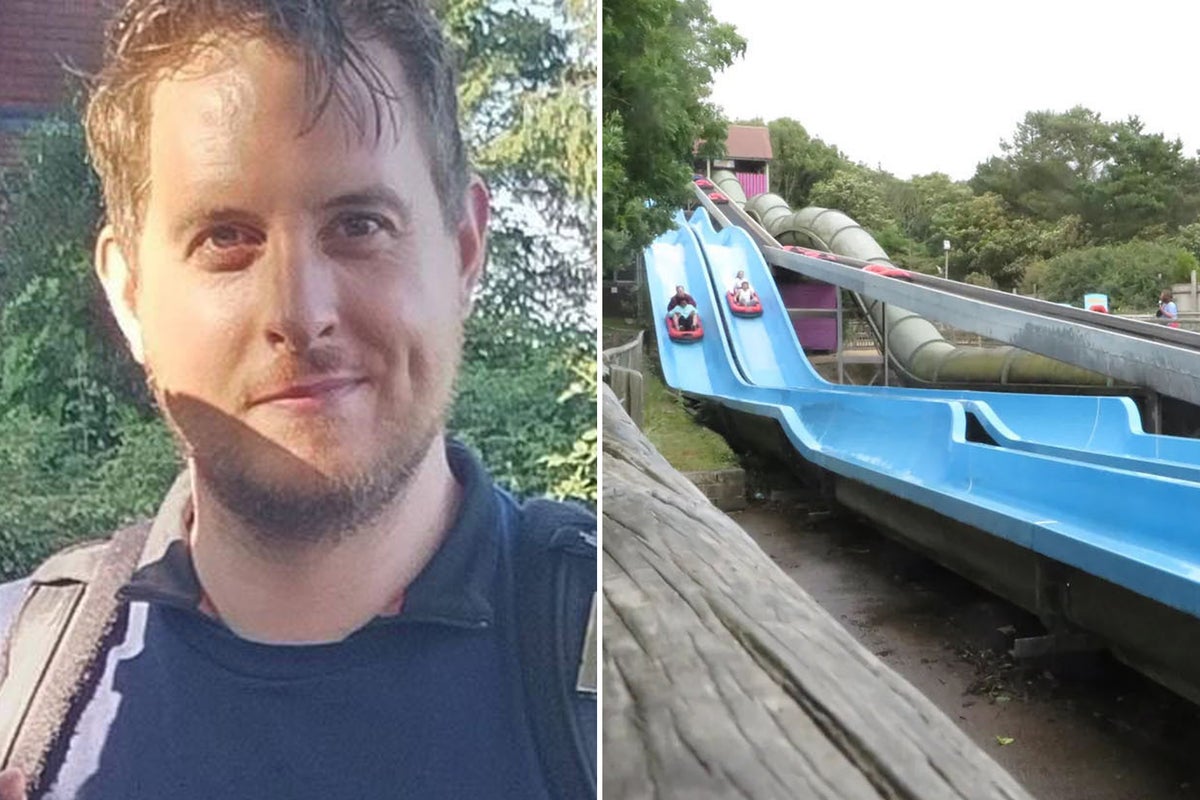
A worker at the UK's oldest amusement park who says he popped an artery in his neck and suffered a stroke after trying to avoid crashing into a child on a 100ft water slide is suing his bosses for more than £200,000.
Kristian Wright, 38, was attempting to descend on a small boat from the top of the "Waterforce" slide at the 183-year-old Blackgang Chine park, on the Isle of Wight, in August 2022 when he realised a child was still at the bottom.
Desperately attempting to slow his descent, he used his hands and feet as makeshift brakes and managed to stop the boat from smashing into the child at the bottom.
But Mr Wright says that during the strenuous process he sustained burn injuries to his hands and wrists, as well as damage to an artery in his neck which resulted in him suffering a stroke.
Now he is suing park operator Vectis Ventures Ltd for more than £200,000 at the High Court saying he was left disabled, unable to drive and with difficulties even climbing stairs.
Mr Wright says an "incompetent" or poorly trained colleague had released the inflatable boat he was perched on without first checking properly that the slide was clear of previous users.
Whilst the amusement park company has admitted primary liability for the accident, it disputes that his stroke was caused by it, and says he was partially to blame for the incident by taking an unsafe route from the top of the slide.
Blackgang Chine opened its doors for the first time in 1843 and is centred around multiple themed areas, including Pirate Cove, Restricted Area 5, Fairy Land and Village, and Cowboy Town.
Its Waterforce slide is billed online as "perfect for families, friends, and all thrill-seekers over 1m tall," and promising "an exhilarating ride like no other."
In documents filed at the court, Mr Wright's barrister Ben Hicks says the attraction, which consists of three parallel slides, is accessed by steps, with users then sliding to the bottom on small boats in running water.
"At around 2pm, the claimant came to the end of his shift on the water slide ride," says the barrister.
"Another member of the defendant’s staff was to take over from him. She climbed up the stairs and arrived at the top of the ride where the claimant was working as intended.
"As was normal practice among the defendant’s staff, the claimant intended to use the boats to descend the slide before making his way to the next ride on which he was to work.
"He therefore collected his belongings and took a boat from the conveyor and placed it on the lifting device of the middle slide before getting into the boat. [The colleague] then launched the boat almost immediately, without having checked to see that the slide in question was clear.
"Almost immediately after being launched, as the boat entered the steeper part of the slide, the changing angle of descent provided the claimant with a view down the slide which revealed that it was not clear, the previous rider not having emerged at the bottom and still being in her boat on the slide.
"In order to avoid hitting her, the claimant therefore used his hands and feet to try and brake the boat before a collision occurred, eventually succeeding in doing so."
He says Mr Wright was "immediately shocked and shaken by the experience," realising he had suffered burns to his hands and wrists and injuries to his arms and legs.
He was taken to hospital for treatment, but it was not until about three weeks later that he suffered an ischaemic stroke.
"The claimant will rely upon medical evidence concluding that on the balance of probabilities this resulted from a dissection of the left carotid artery caused by the index accident," the barrister adds.
Blaming his employer for the accident, Mr Hicks says his bosses had "failed to take any reasonable care to ensure that the claimant was safe whilst in the park."
He had been caused "to work with incompetent and/or inadequately trained colleagues," while CCTV, electronic sensors or other devices should have been in place to ensures slides were clear before riders were launched.
"Despite receiving significant input from a stroke nurse, occupational therapy, physiotherapy, clinical psychology and orthoptists, he remains significantly and substantially disabled and is expected to remain so, the prognosis for the ongoing manifestations of his stroke being for injury to persist permanently," the barrister continues.
"The claimant continues to experience right-sided hemiparesis and hemisensory loss, resulting in impaired right hand and arm function and sensory disturbance - the latter potentially arising from lower brachial plexus injury also consequent upon the index accident, alternatively from the said ischaemic stroke - unable to drive and experiences difficulty in climbing stairs.
"His intended career in social work, for which he was training at the time of the accident, has been completely lost."
In its defence to the claim, the theme park's barrister Oliver Rudd accepts "primary liability" for the accident, but denies it caused the stroke and alleges "contributory negligence" against Mr Wright.
"It is denied that the position from which the boats were launched did not provide a view of the slides, capable of ensuring that they were clear of other riders," he says.
"Radios were provided to the ride operators, which provided a means of communication by which operators of the slides could ensure that the slides were clear before launching riders down, and staff at the bottom of the slides could warn ride supervisors that the slides were not clear.
"In all the circumstances, it is averred that the accident was partially caused and/or contributed to by the negligence of the claimant.
"CCTV footage of the accident shows that the claimant looked down the slide from the top prior to getting into his boat. At this point, he would have seen that there was still a child on the slide, yet he proceeded to get into his boat with his personal belongings and say goodbye to the operative at the top of the slide, implying that the ride was clear and that he was ‘ready to go’.
"The claimant should have continued to watch and ensure the slide was completely clear before proceeding to get into his boat. The claimant should not have said goodbye and implied to the slide operative that he was ready to go until he was sure the slide was clear.
"The claimant failed to look and/or carry out a sufficient check that the slide was clear before getting into the boat and/or before implying to the slide operative that he was ready to go.
"The claimant should have walked down the stairs to get down from the top of the slide. This is the standard procedure.
"The claimant was fully trained and knew how to operate the ride. He should have waited until the slide was clear and in not doing so, he took no sufficient regard for his own safety or the safety of others using the ride."
Mr Wright's claim has been filed at the High Court and will appear in court for a full trial at a later date, unless the parties agree a settlement in the meantime.
Join our commenting forum
Join thought-provoking conversations, follow other Independent readers and see their replies
Comments