
Politics
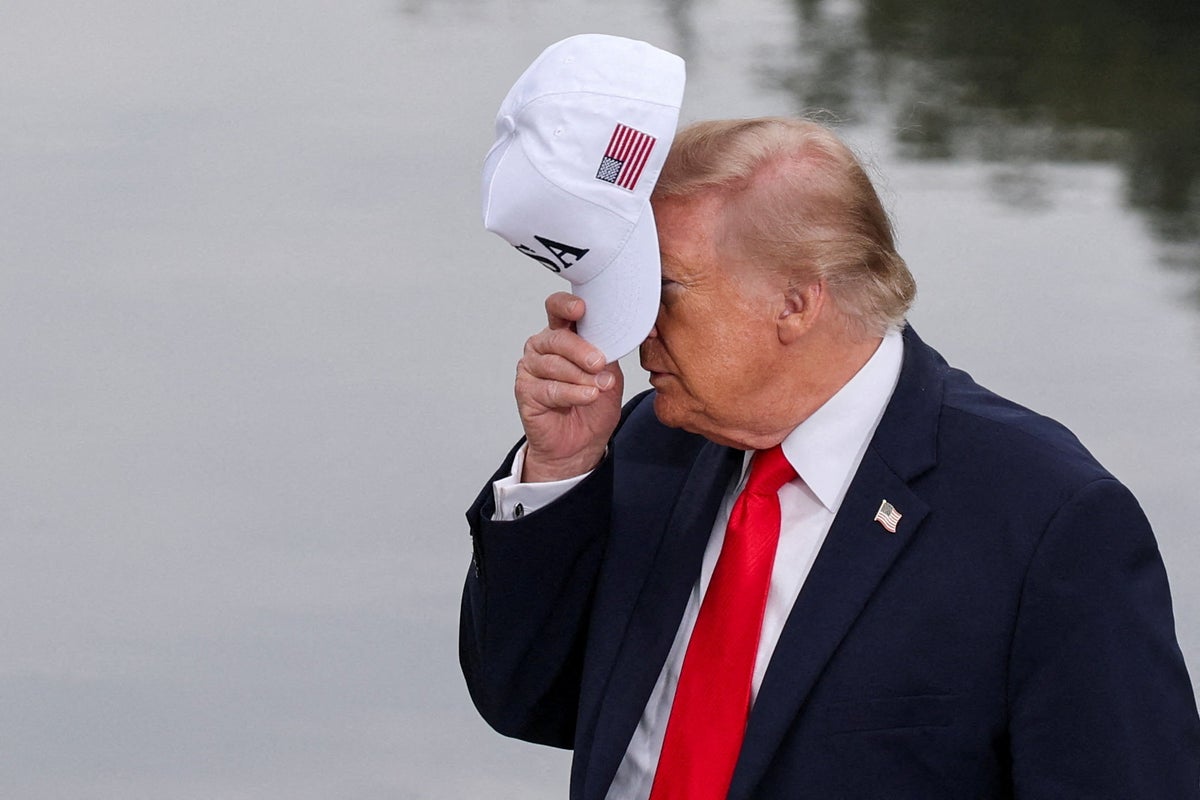
Six graphs that show why Trump is in deep trouble in the midterms
Key Points
Six graphs that show why Trump is in deep trouble in the midterms Two years into his second administration, Trump’s popularity is sliding as the price of gas and food continues to rise. Alex Croft looks at the data driving his slump in the polls - Bookmark - CommentsGo to comments Become an Independent member to bookmark this article Already a member? Log in The Republicans are facing a potentially disastrous set of midterm election results - and the approval figures make for grim reading...
Six graphs that show why Trump is in deep trouble in the midterms
Two years into his second administration, Trump’s popularity is sliding as the price of gas and food continues to rise. Alex Croft looks at the data driving his slump in the polls
- Bookmark
- CommentsGo to comments
Become an Independent member to bookmark this article
Already a member? Log in
The Republicans are facing a potentially disastrous set of midterm election results - and the approval figures make for grim reading for Donald Trump.
The US president is struggling in the polls, including with Republicans, as Americans grow weary over the economic impact of his war on Iran and his aggressive use of tariffs.
Several states that were once solidly Republican could turn blue in the senate this year as a result of widespread voter discontent.
Thirty-five Senate seats are up for re-election this year, and Democrats need to win at least four seats to gain net seats. Most polling indicates that Democrats hold tight leads across most battleground states.
The Independent takes a look at why Americans feel so disillusioned with the Trump administration as cost-of-living pressures increase - and looks at just how unpopular the US president has become.
Inflation rates rising
Consumer Price Index (CPI) inflation has dramatically increased this year as a result of Trump’s war on Iran and the global shock caused to supply chains by the closure of the Strait of Hormuz.
The 12-month percentage increase represents the annual pace of inflation by tracking the changes in what people pay for a basket of everyday goods and services compared to the same month one year ago.
It is an important measure cost-of-living pressures as it removes seasonal swings from the data, to show how household purchasing power has eroded over the previous 12 months.
While inflation was brought from a 12-month percentage increase of 3% in January 2025 down to 2.4% March 2025, it rose dramatically to 4.2% by May 2026. As of September 2026, the 12-month percentage increase was at 3.7%.
Gas and energy shoot up
Gas prices have sharply increased since the war on Iran was launched and the subsequent blockade of the Strait of Hormuz by Iran.
The 12-month percentage increase peaked at 40.5% in May 2026, following two months of war. After falling to the mid-twenties over the summer, it again increased to 34.2% in September.
New research last month put a dollar and cents figure on just how bad the increases have been. U.S. drivers who fill their tanks with unleaded gas now spend an average $66.86 more a month than they did in October 2025, according to national averages Monday.
The average diesel driver is spending $139.32 more a month than last year, according to data from motor club AAA and independent marketplace Electric Choice. Gas and diesel prices are up $1.23 and $2.83 per gallon compared to a year ago, respectively, according to AAA.
The price of energy overall, also including electricity and home heating products, peaked at a 12-month increase of 23.5% in May and recently shot up to 20.4% in September.
Before the war, around one fifth of the world’s daily oil and liquefied natural gas (LNG) supply passed through Hormuz. But Trump’s efforts to pressure Tehran into ending its blockade, both through force and negotiations, have so far failed.
Food prices
The price of all food steadily rose over the first year of Trump’s second administration, having started rising during the final months of the Biden administration in late 2024.
The 12-month percentage increase for all food rose from 2.5% when Trump took office to 3.2% in August 2025, again peaking at 3.2% in April 2026.
Food prices have increased due to a combination of tight labor markets, climate disruption, and trade policies - not least Trump’s aggressive tariff policies.
Eating out is also becoming more expensive for Americans under Trump, having steadily declined in the latter months of the Biden era until he stepped down.
The 12-month percentage increase for ‘food away from home’ sat at 3.4% in January 2025, rising to 4.1% in December 2025. It is now at 3.5%.
Trump struggles in the polls
The US president has struggled in the polls since reassuming office in January 2025, with his disapproval rating steadily increasing.
A Reuters/Ipsos poll last week showed Trump's overall rating at 32% heading into the midterms. The survey showed registered voters favoring Democrats over Republicans on the generic congressional ballot, 47% to 36%, with the lead holding among likely voters at 53% to 44%.
The dismal numbers arrive just weeks before midterm elections that will determine whether Republicans maintain control of Congress.
Approval of the Republican president on the economy overall has slipped to 21%, a new low for Trump’s second administration, according to the Pew Research Center.
US adults are also dismayed with Trump’s handling of the economy, with his economic ratings from Democrats at historic lows while the number of Republicans that approve of his economic actions is declining.
Around 36% of Republicans believe the economy is in a good shape, down from 41% in July.
Two thirds (65%) say Trump’s economic policies have made things worse, while just one in five (19%) say they have made conditions better.
And Americans hold little hope for improvement in the coming year.
Only one quarter (26%) of Americans expect economic conditions to be better in a tear, while 34% say they will be the same and four-in-ten (39%) say they will become worse.
Join our commenting forum
Join thought-provoking conversations, follow other Independent readers and see their replies
Comments