
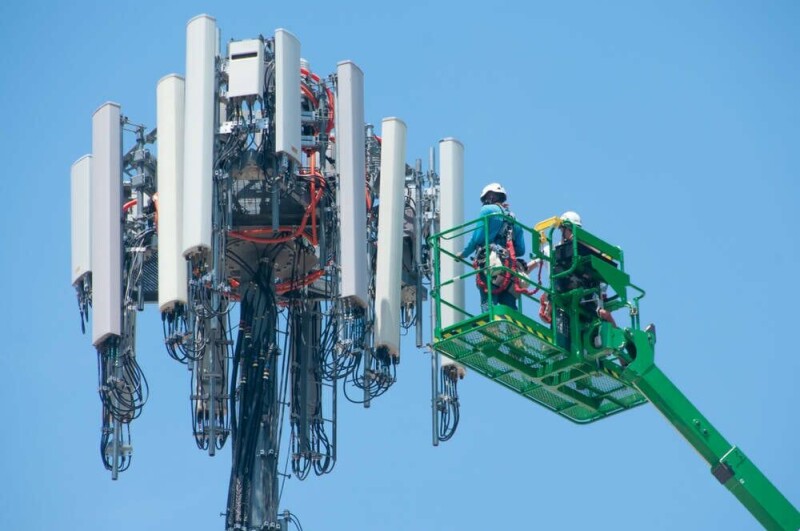
The GSMA wants governments and regulators to work more closely with mobile operators to help protect networks against growing risks from extreme weather.
As the global body representing the mobile network industry, the GSMA claims that severe storms and floods already cost operators $1.7 billion annually to repair damage to cell radio sites, and it believes that figure could nearly double to more than $3 billion a year by 2050, under the climate conditions expected then.
The GSMA sets out its findings in a six-part research series, Futureproofing Connectivity: Climate Risk and Resilience in Telecommunications, alongside a separate document outlining its Policy Principles for Mobile Network Resilience.
The report identifies weather-related risks that can affect telecoms networks, along with the associated restoration costs. Towers, masts, and rooftop sites are particularly exposed to wind and storms or lightning, for example, while ground-level equipment at mobile sites can be inundated in flooding incidents.
High temperatures can cause radio equipment to overheat, while heavy rain can degrade wireless signal strength, and infrastructure in coastal locations may be exposed to storm surges.
However, the report fingers the electricity supply as the biggest vulnerability. If that gets knocked out, the network could go offline once any backup power is exhausted, which may take anywhere from a few hours to considerably longer, depending on the site.
Under current climate conditions, the cost of damage to cell sites is estimated at $1 billion associated with severe storms, while river and coastal floods account for $577 million and $124 million, respectively.
Based on projected mid-century climate conditions, the GSMA expects costs due to severe storms to rise significantly to about $2.37 billion, accounting for three-quarters of all damage.
The report asserts that cell network resilience requires a whole ecosystem approach, pointing out that if severe weather impacts power networks, then that also affects the telecoms infrastructure.
The GSMA says that network firms have traditionally managed the operational risks that may affect network availability, but claims they face barriers in conducting full assessments of those associated with climate change.
Some of these barriers are internal, such as lack of shared information between departments. Other barriers are in the different regulatory reporting frameworks, with infrastructure rules tending to focus on service continuity, while climate disclosure frameworks focus on governance, financial exposure, and reporting for investors and other stakeholders.
The report lists separate recommendations for network firms and for policymakers and regulators.
Operators are advised to embed resilience by design, using modeled projections for severe weather and future risk scenarios. They are also told to plan and test resilience across the wider ecosystem, engaging with others such as public authorities.
When it comes to policymakers and regulators, the report asks for resilience frameworks to be developed through consultation with the operators. It also advises coordination among mobile operators, electricity and fuel providers, and emergency services to help maintain vital communications during major disruptions.
And as if that isn't enough to chew over, the separate policy document sets out five principles for governments and regulators. These include avoiding prescriptive regulations and instead promoting outcome-based policies, encouraging dialog and consultation between governments, regulators, and operators, and developing resilience as a cross-sector responsibility.
“Mobile connectivity is essential infrastructure,” says GSMA Foundation president and chief regulatory officer John Giusti.
“Whether responding to extreme weather, power failures or other major disruptions, people, businesses and emergency services depend heavily on mobile networks,” he added.
“Severe weather is already costing the industry billions of dollars, and those costs are set to rise substantially. Building resilience will require a coordinated effort amongst operators, governments and the wider ecosystem.” ®