
Science
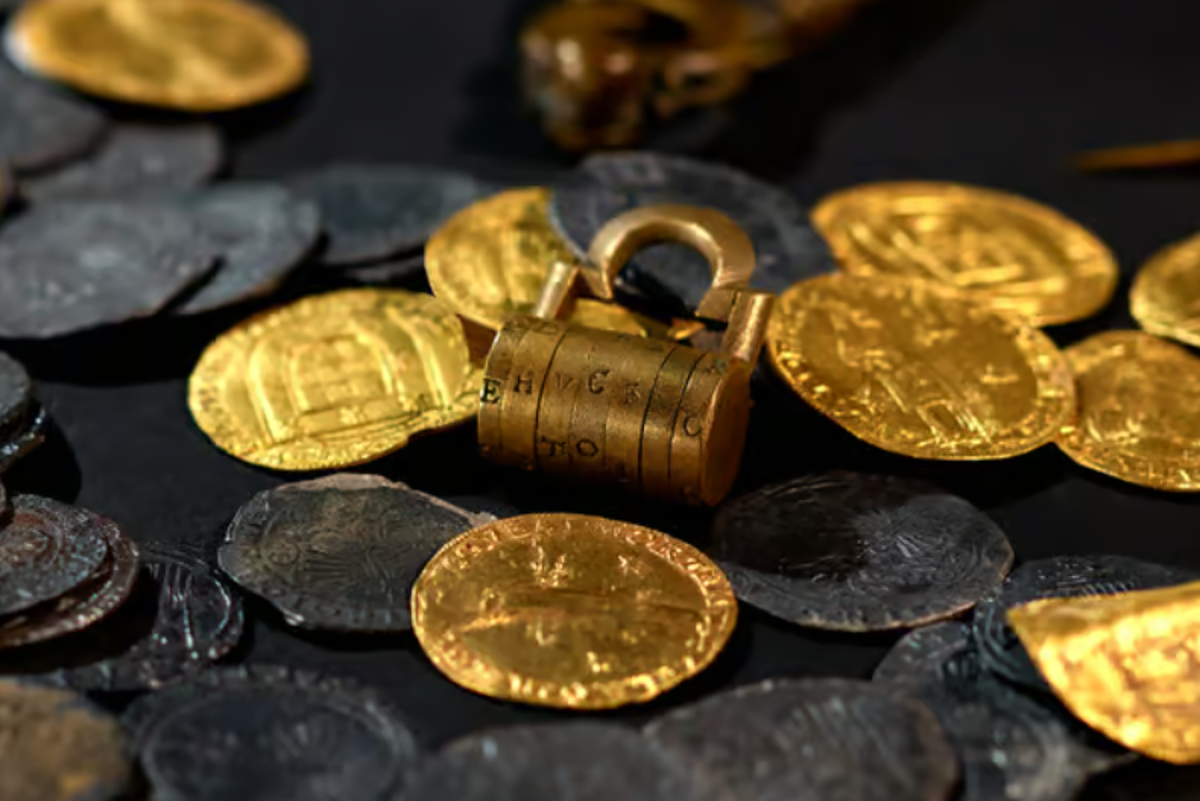
Scientists crack code to 400-year-old padlock from shipwreck
Key Points
Scientists crack code to 400-year-old padlock from shipwreck Researchers find four-letter combination to padlock sealed since 1583 shipwreck - Bookmark - CommentsGo to comments Become an Independent member to bookmark this article Already a member? Log in Scientists have used cutting-edge technology to crack the four-letter code of a brass combination lock from that lay buried on a beach in Wales for more than four centuries. The 16th-century padlock, recovered from the wreckage of the Ann...
Scientists crack code to 400-year-old padlock from shipwreck
Researchers find four-letter combination to padlock sealed since 1583 shipwreck
- Bookmark
- CommentsGo to comments
Become an Independent member to bookmark this article
Already a member? Log in
Scientists have used cutting-edge technology to crack the four-letter code of a brass combination lock from that lay buried on a beach in Wales for more than four centuries.
The 16th-century padlock, recovered from the wreckage of the Ann Francis, had remained firmly sealed since the vessel was wrecked off the South Wales coast in 1583.
Now, a collaborative team from Amgueddfa Cymru – Museum Wales and Cardiff University has used modern-day technology to reveal the historic combination that once secured the cargo: ANCE.
Researchers believe the intricate device guarded a captain's chest containing Spanish silver, high-value textiles, or sensitive maritime correspondence before the ship ran aground in the Bristol Channel.
The breakthrough comes after museum conservators enlisted engineers at Cardiff University's School of Engineering to use micro-computed tomography (CT), a scanning technique normally used to examine bones and other body tissues.
The scans produced 3D images of the lock, which were then used to crack the code.
Dr David Williams, a research associate at Cardiff University's Musculoskeletal Biomechanics Research Facility, explained: “By creating a detailed 3D image of the internal mechanism, I could see how the notches lined up with the letters and identify the exact combination.”
He added: “We normally use this technology to study bones and other biological structures, so investigating a 400-year-old padlock was certainly a first for us.”
After waiting for the museum team to test the code, Dr Williams described receiving confirmation that they had done so was “incredibly satisfying”.
“It's not every day you get to solve a 400-year-old mystery.”
The Ann Francis was returning from a trading voyage to Spain when it was engulfed by a ferocious storm on the evening of 28 December 1583.
Driven off course by high winds, the ship grounded and broke apart on Margam Beach, near Port Talbot.
While Elizabethan combination locks have been recovered in Britain before, experts described this example as uniquely significant because it can be tied directly to a securely dated shipwreck.
The padlock was discovered near a stash of Spanish silver coins and a pair of brass coin-checking weights.
Alastair Willis, Senior Curator for Numismatics and the Welsh Economy at Amgueddfa Cymru, said: “Elizabethan combination locks are known in Britain, but this one is in exceptionally good condition and is associated with a dated wreck, making it a unique find and the code a tantalising mystery to solve.
“Of course, now we’ve solved it, we are left wondering if the code meant something to its owner.”
The padlock forms part of the wider Ann Francis treasure hoard, which was recovered over a 21-year period between 1996 and 2017 by metal detectorist Peter Hughes.
The cracked padlock is now on public display at the National Waterfront Museum in Swansea alongside other recovered treasures, including rare gold coins from the reign of Ferdinand and Isabella of Spain, and an Elizabethan boatswain's whistle.
Join our commenting forum
Join thought-provoking conversations, follow other Independent readers and see their replies
Comments
Independent (ORG)
Log in Scientists (ORG)
Wales (LOCATION)
Ann Francis (PERSON)
South Wales (LOCATION)
Amgueddfa Cymru (PERSON)
Museum Wales (LOCATION)
Cardiff University (ORG)
Spanish (ORG)
the Bristol Channel (ORG)
Cardiff University's (ORG)
School of Engineering (ORG)
David Williams (PERSON)
Musculoskeletal Biomechanics Research Facility (ORG)
Dr Williams (PERSON)