
Politics
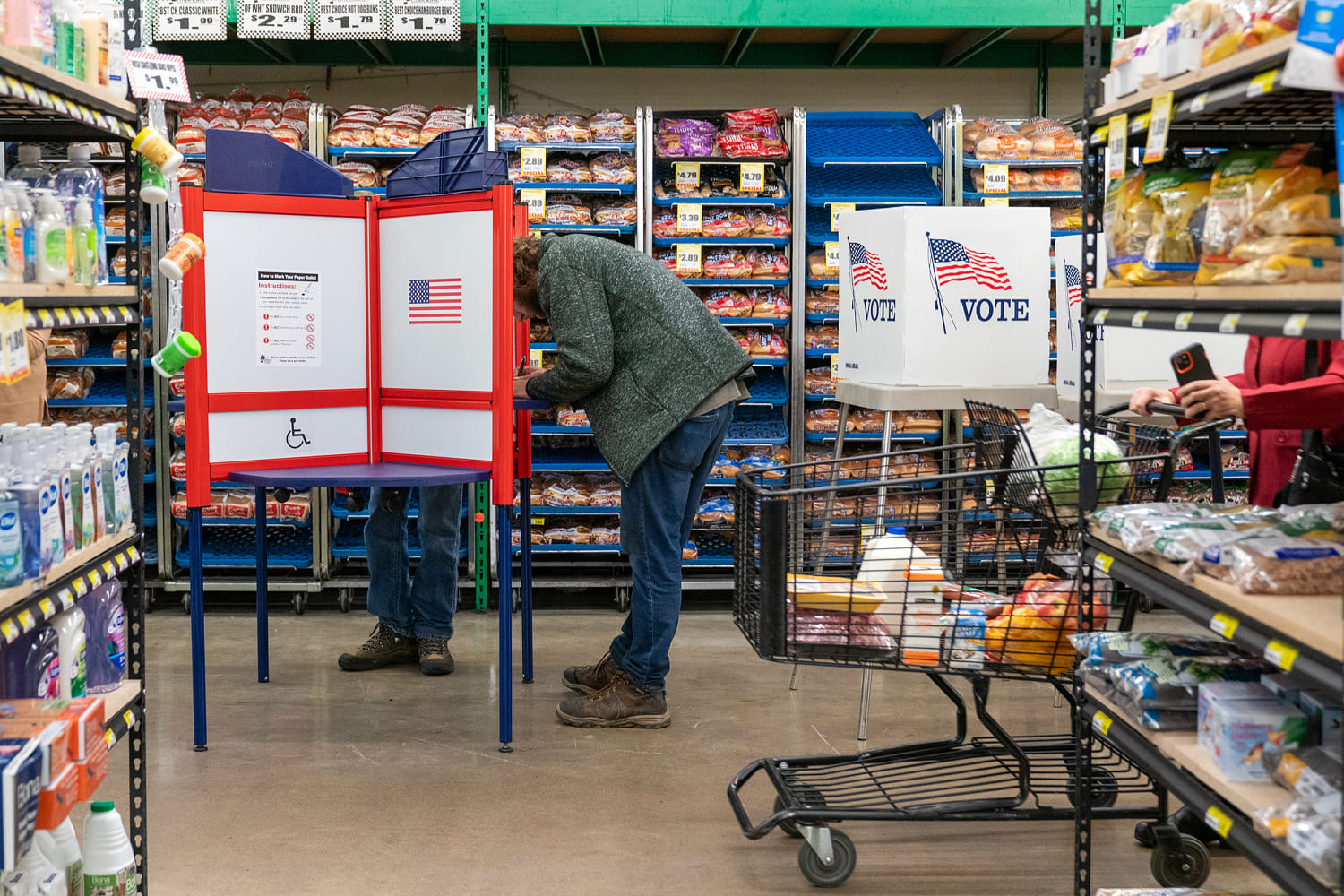
Democrats won on affordability. Whether they can deliver it is a different story.
Key Points
Democrats won historic electoral victories Tuesday night on a pledge to make life more affordable for Americans, an issue that united voters across political and demographic divides. Now comes the hard part. An overwhelming majority of midterm voters had a negative view of the economy, with more than 80% saying they were worried about the price of necessities like gas, groceries and healthcare, according to the NBC News Exit Poll.
Democrats won historic electoral victories Tuesday night on a pledge to make life more affordable for Americans, an issue that united voters across political and demographic divides. Now comes the hard part.
An overwhelming majority of midterm voters had a negative view of the economy, with more than 80% saying they were worried about the price of necessities like gas, groceries and healthcare, according to the NBC News Exit Poll. In a reversal from 2024, voters this year said they trusted Democrats on the economy more than they trusted Republicans.
The stunning electoral results on Tuesday night were the culmination of a monthslong effort by Democrats to make the high cost of living a central campaign issue in races across the country up and down the ballot.
From Kansas to South Carolina to Maine, Democratic candidates uniformly seized on and stuck to the topic of inflation, while Republicans sought to redirect voters’ attention to fears of socialism and crime, often laced with Islamophobia.
In the hours after NBC News projected they would capture full control of Congress on Tuesday night, Democrats continued to hammer their affordability message.
“We are laser-focused on addressing the affordability crisis that has been crushing everyday Americans,” House Democratic leader Rep. Hakeem Jeffries, D-N.Y., said Wednesday morning on NBC’s “TODAY” show.
But tackling affordability in Congress is easier said than done.
How it could actually happen
When Democrats take control of both the House and Senate in January, they have a decent chance of passing legislation that could limit Trump’s tariff authorities, or make it more difficult for him to continue to wage war in Iran. They have also discussed legislation to reinstate Republican cuts to healthcare funding.
Any one of these actions, if fully executed, could push down costs for consumers. But that is a big if.
As president, Trump has the authority to veto any legislation passed by Congress. If he does, Democrats don’t have the two-thirds majorities needed in the House and Senate to override his presidential veto.
Following the Democrats’ wins Tuesday night, however, Trump said he would be willing to work with the opposition party.
The offer was very similar to an olive branch he extended to Democrats during his first term after they won House and Senate majorities in 2018.
Ultimately, that failed to produce any meaningful legislation.
This time around, Democrats made a string of economic promises on the campaign trail.
Jeffries, who is considered a front-runner to become the speaker of the House, has said that if Democrats take back the House they will restore Affordable Care Act health insurance tax credits that expired in 2025 and reverse Medicaid cuts and work requirements in Republicans’ 2025 tax bill.
In the Senate, Ron Wyden, D-Ore., said he would like to see the Senate Finance Committee focus on issues like taxes and rising healthcare costs, while investigating banks allegedly involved in Jeffrey Epstein’s sex trafficking crimes.
The optimistic newcomers
“I think we have a mandate to get stuff done,” said Sen.-elect Abdul El-Sayed, D-Mich. “I ran on getting money out of politics, putting money in pockets, and passing Medicare for All.”
During his campaign, El-Sayed said he would push to make Medicare, the health insurance program for seniors, available for all Americans. He also focused heavily on cost-of-living issues, even as Trump repeatedly attacked his Muslim faith and accused El-Sayed of being a “jihadist.”
Another one of Tuesday night’s big winners, Sen.-elect James Talarico, D-Texas, has proposed eliminating tax cuts that benefit the wealthiest households.
He has also proposed lowering costs for middle-class households by offering free pre-K for all 3- and 4-year-olds and expanding a down payment assistance program for first-time homebuyers.
Economic inequality, a central message of Talarico’s campaign, was an issue that resonated with midterm voters this cycle.
According to the NBC News Exit Poll, 69% of them believed the U.S. economic system favors the wealthy, while only 31% said it is generally fair.
Other Democratic candidates have proposed pushing to end the war in Iran as a way to help lower gas prices, along with a proposal to suspend the federal gas tax.
Another key Democratic campaign pledge was to limit the construction of new data centers to help curb rising electricity costs.
Talarico said Wednesday that he was open to working with Trump on issues on which they can find common ground, like suspending federal taxes on gas and diesel and cutting red tape to make housing more affordable.
“I agree with the president on the need to legalize marijuana and reform this broken criminal justice system,” Talarico said in a Fox News interview.
“These are just some of the issues that I agree full-heartedly with President Trump, and I look forward to working with him for all 31 million Texans.”
Democrats have pledged to take a different approach to lowering prices than Trump did two years ago when he won the 2024 presidential race.
A cautionary tale
Both Democrats and the president notched their historic victories on the same promise: to bring down the high cost of living.
Trump promised voters cheaper groceries, gas below $2 a gallon, and a wave of new manufacturing jobs.
Instead, prices kept rising, wages struggled to keep pace with inflation, and today there are fewer factory workers in America than there were when Trump took office.
While the broader economy has grown at a relatively healthy rate, the gains from that growth have disproportionately flowed to the wealthiest households, leaving most Americans with an increasingly bleak view of their financial situation.
Unemployment has remained low, but there are relatively few new jobs being added outside of a few areas, like healthcare.
Likewise, broader disruptions to global oil markets from the U.S. and Israel’s war on Iran could outlast any temporary pause in active combat.
This is not to say that every element of the U.S. economy today is under Trump’s control. The rapid developments in artificial intelligence, for instance, are the result of organic economic forces more than they are of any single policy choice.
But economists are quick to point to Trump’s own policies as primary drivers of the GOP’s current economic quagmire.
The tariffs he campaigned on have pushed up consumer prices, while the uncertainty around them has weighed on the manufacturing sector he pledged to revive.
The U.S. war with Iran has driven up gas prices and reignited fears around inflation, contributing to higher mortgage rates for homebuyers.
Trump did follow through on his promise to cut taxes, which economists see as a bright spot that is helping to fund corporate investments.
Still, some of those tax savings have already been offset by higher prices, according to an analysis by the Washington-based nonprofit Tax Foundation.
While Trump has touted his tax cuts on the midterm campaign trail, he has simultaneously dismissed voters’ concerns about the cost of living.
He has called affordability a “hoax” and blamed high costs on Democrats.
During a rally last month in Georgia, Trump touted the large profits oil companies were making off high gas prices paid by consumers. “We’re making a freaking fortune,” he said.
At another rally in Montana, Trump announced, “We have very little inflation,” before telling supporters that “prices have come way down.”
That speech took place just hours after the Bureau of Labor Statistics had released new data that showed inflation had jumped in September, to 3.7% annually.