
UK News
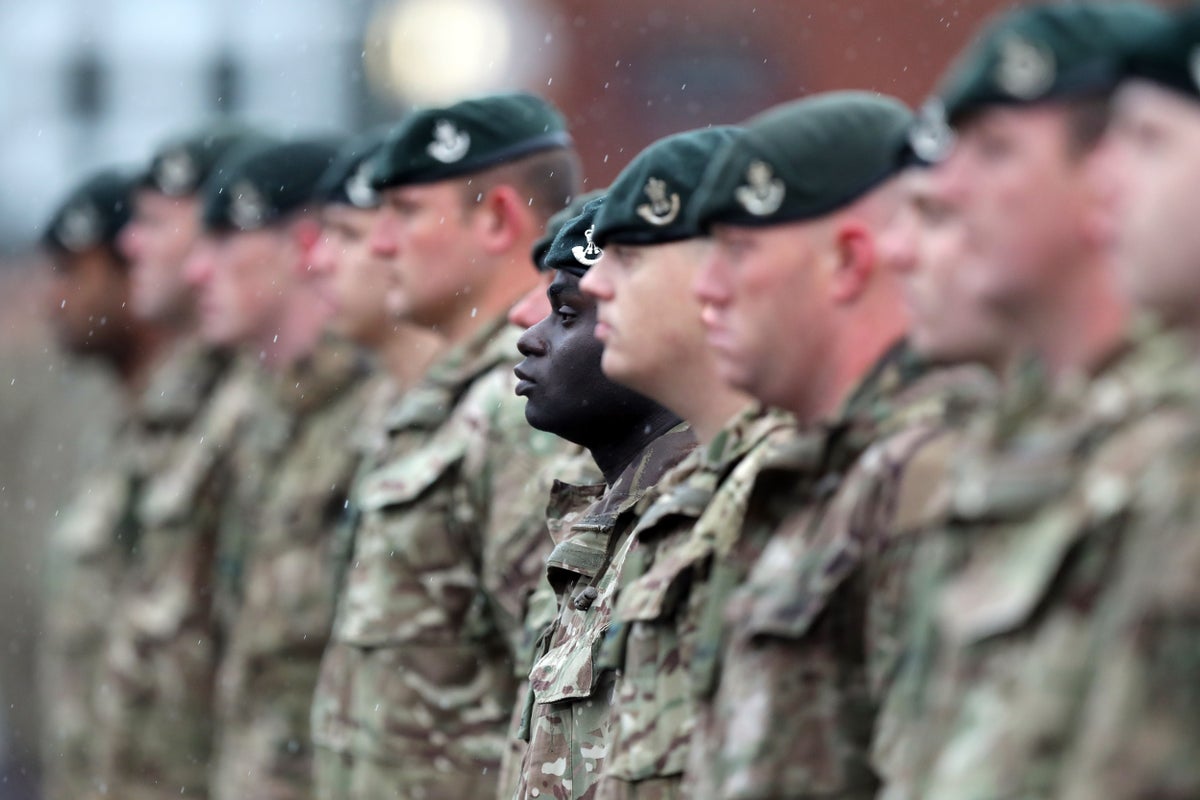
Gen Z won’t fight for Britain in the event of war, new poll finds
Key Points
Gen Z won’t fight for Britain in the event of war, new poll finds Less than a quarter of under-35s believe a willingness ‘to serve in the military at a time of need’ is important - Bookmark - CommentsGo to comments Become an Independent member to bookmark this article Already a member? Log in Young Britons are reluctant to take up arms to defend the UK in a national crisis, Britain’s longest-running survey of social attitudes has revealed. The findings of the British Social Attitudes survey...
Gen Z won’t fight for Britain in the event of war, new poll finds
Less than a quarter of under-35s believe a willingness ‘to serve in the military at a time of need’ is important
- Bookmark
- CommentsGo to comments
Become an Independent member to bookmark this article
Already a member? Log in
Young Britons are reluctant to take up arms to defend the UK in a national crisis, Britain’s longest-running survey of social attitudes has revealed.
The findings of the British Social Attitudes survey expose a stark generational divide, with older Britons more than twice as likely to view military service as a vital civic duty – even as public appetite for higher defence spending hits record levels.
Surveying 4,656 Britons aged over 16, the report revealed that only 22 per cent of Britons aged 16 to 34, spanning Gen Z and young millennials, attached high importance to serving in the armed forces during a time of need.
In sharp contrast, 45 per cent of those aged 55 and over considered taking up arms in defence of the UK to be highly important. Just 8 per cent dismissed military service as unimportant, compared with nearly a fifth of under-35s.
Sophia Gaston, British foreign policy researcher and report author, warned that this reluctance posed a direct challenge to military planners, noting that younger Britons are the very cohort who would be required to fight should active conflict arise.
“The post-Cold War peace that endured for so many years no longer shapes the country’s worldview,” Ms Gaston said, adding that Russia’s invasion of Ukraine, Middle Eastern instability as a result of the war in Iran, and doubts over American leadership have placed national security at the heart of the public consciousness.
The reluctance among younger generations to consider military service is accompanied by polarising views on global dangers.
While Russia was almost universally regarded as a grave risk to world peace at 89 per cent, older Britons remained more suspicious of traditional autocratic adversaries. Some 71 per cent of over-55s identified China as a serious threat, compared with 47 per cent of under-35s.
Younger generations proved significantly more critical of traditional Western allies, with 79 per cent of 18 to 34-year-olds describing the United States as a serious threat and 82 per cent taking that view of Israel.
But while younger Britons recoil from the prospect of frontline service, the wider public is calling for a dramatic expansion of military budgets.
A record 56 per cent of Britons now want the government to spend more on defence, marking the first time in the survey’s four-decade history that an outright majority has supported higher military funding.
Backing for higher spending jumped among Labour voters from 28 per cent in 2024, to 55 per cent this year, while commanding support from 62 per cent of Liberal Democrats, 76 per cent of Conservatives, and 83 per cent of Reform UK supporters.
The shift towards a wartime footing coincides with growing concerns over Washington’s strategic posture following Donald Trump’s return to the presidency.
The proportion of Britons viewing the US as a serious threat to world peace has more than doubled from 35 per cent in 2024 to 74 per cent this spring.
Growing transatlantic unease has also prompted a realignment in strategic priorities, the report indicates.
When asked where the UK’s focus should lie, 42 per cent of people favoured closer links with Western Europe, compared with just 9 per cent choosing the United States and 38 per cent backing both equally.
Support for European ties rose to 53 per cent when the European Union was named specifically.
Ms Gaston said the findings demonstrated that while Britons increasingly value practical European partnerships in a world shaped by conflict, the public ultimately favours “a diversified approach to security alliances; one built on balance, resilience and flexibility”.
Join our commenting forum
Join thought-provoking conversations, follow other Independent readers and see their replies
Comments