
Politics
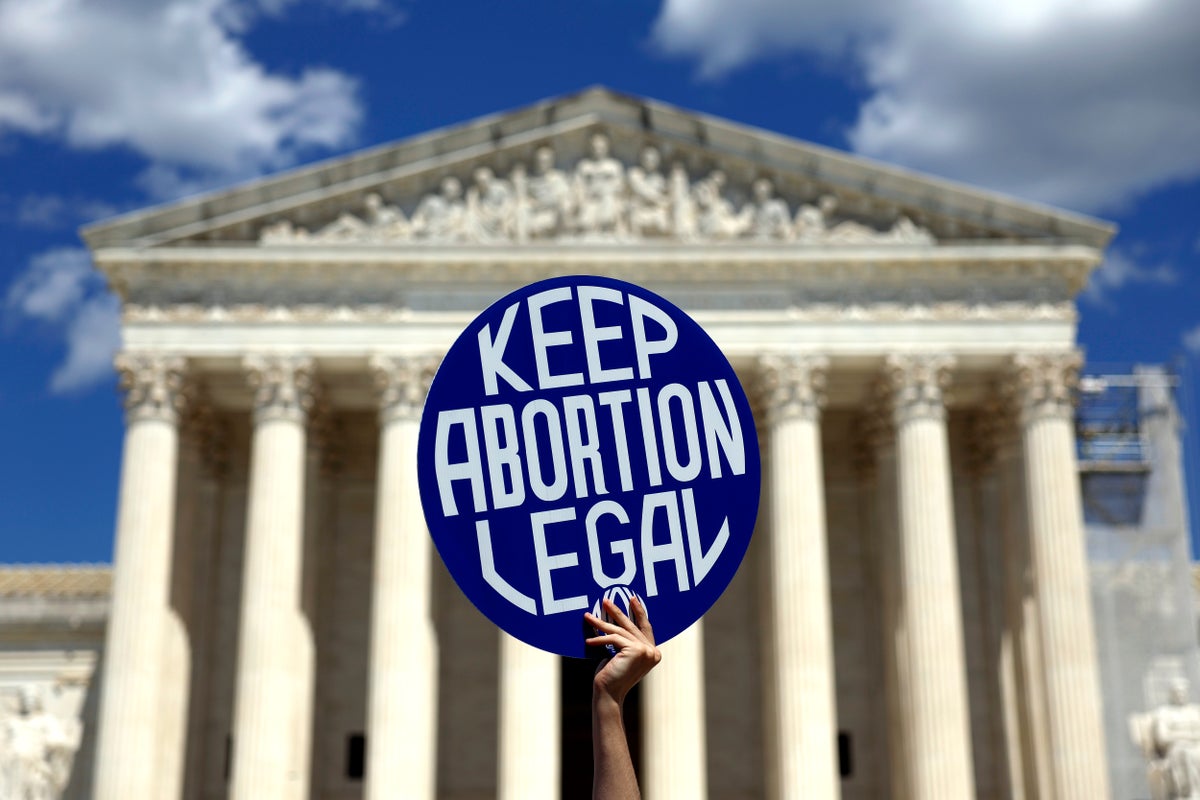
Trump’s DOJ looking at criminal investigation over Supreme Court abortion ruling leak
Key Points
Trump’s DOJ looking at criminal investigation over Supreme Court abortion ruling leak Federal prosecutors have escalated the inquiry in recent weeks, issuing grand jury subpoenas and seeking information from former court personnel - Bookmark - CommentsGo to comments Become an Independent member to bookmark this article Already a member? Log in Federal prosecutors are actively conducting a criminal investigation into the source behind the 2022 leak of the Supreme Court decision that...
Trump’s DOJ looking at criminal investigation over Supreme Court abortion ruling leak
Federal prosecutors have escalated the inquiry in recent weeks, issuing grand jury subpoenas and seeking information from former court personnel
- Bookmark
- CommentsGo to comments
Become an Independent member to bookmark this article
Already a member? Log in
Federal prosecutors are actively conducting a criminal investigation into the source behind the 2022 leak of the Supreme Court decision that overturned federal abortion rights.
The Justice Department has accelerated its inquiry in recent weeks, The New York Times reported. Prosecutors have issued grand jury subpoenas for testimony and requested information from people employed by the high court when the draft opinion was disclosed.
The U.S. Attorney’s Office for the District of Columbia, headed by Trump appointee Jeanine Pirro, is managing the investigation. Pirro, working with career prosecutors, assigned senior prosecutor Carlton Davis to the matter. Davis previously handled local fraud and violence prosecutions, as well as an unsuccessful effort to indict six Democratic lawmakers who had advised military personnel about refusing unlawful orders.
The public identification of the person who leaked Justice Samuel A. Alito Jr.’s draft opinion in Dobbs v. Jackson Women’s Health Organization to Politico in May 2022 — two months before its formal release — has remained elusive.
Following the breach, Chief Justice John G. Roberts Jr. initiated an internal review. Court investigators interviewed 97 personnel, including clerks and staff members who submitted signed affidavits, though justices were consulted without formal interviews.
In January 2023, the court’s top security official issued a report concluding that the culprit could not be identified under a “preponderance” of the evidence standard. The report cited outdated security protocols while noting that online claims targeting liberal law clerks were unproven. Months later, Alito told The Wall Street Journal that he had “a pretty good idea who is responsible” but lacked sufficient evidence to name the person publicly.
Conservative commentators and President Donald Trump have repeatedly urged law enforcement to uncover the source, operating on the theory that a liberal staffer released the document to derail the draft ruling.
“That person should be found,” Trump said in July.
Other observers suggested a conservative may have leaked the draft to prevent justices from departing from the majority opinion, noting that internal efforts to reach a compromise had been underway prior to the publication.
Former F.B.I. official Dan Bongino confirmed in a May 2025 social media post that the administration was continuing to track the leaker. Members of the court have also expressed support for identifying the source.
“We will pursue it till the end,” Justice Elena Kagan told Congress during testimony in July, where Justice Amy Coney Barrett also described leaks of certain court materials as illegal.
Legal experts noted that pursuing criminal charges presents distinct statutory and constitutional hurdles. Unlike national security cases involving classified information, no specific federal statute explicitly criminalizes the unauthorized disclosure of internal Supreme Court drafts.
Prosecutors could potentially explore broader charges, such as theft of government property, unauthorized disclosure of confidential government data or false statements made to investigators during the court’s initial 2023 inquiry. Additionally, some relevant federal statutes carry a five-year statute of limitations that expires in spring 2027.
Any formal steps to subpoena internal court communications or interview personnel could raise constitutional separation-of-powers issues regarding executive branch oversight of the judiciary.
“Once again, the Trump Justice Department has created questions about whether there are precedents when there are no precedents,” Samuel W. Buell, a law professor at Duke University and former federal prosecutor, told The New York Times.
Michael C. Dorf, a constitutional law professor at Cornell, told The New York Times that while the Justice Department could investigate federal crimes occurring on court property, an inquiry lacking an underlying criminal violation risked crossing into “the executive branch harassing members of the judicial branch.”
Several law clerks who served conservative justices at the time of the leak currently hold positions within the executive branch, including T. Elliot Gaiser, a former clerk for Justice Alito who now leads the Justice Department’s Office of Legal Counsel.
Join our commenting forum
Join thought-provoking conversations, follow other Independent readers and see their replies
Comments
[Image text:] KEEP
ABORTION
LEGAL
Trump (ORG)
DOJ (ORG)
Supreme Court (ORG)
Independent (ORG)
The Justice Department (ORG)
The New York Times (ORG)
U.S. (LOCATION)
Office for the District of Columbia (ORG)
Jeanine Pirro (PERSON)
Pirro (ORG)
Carlton Davis (PERSON)
Davis (PERSON)
Democratic (ORG)
Samuel A. Alito Jr. (PERSON)
Dobbs (PERSON)