
Health
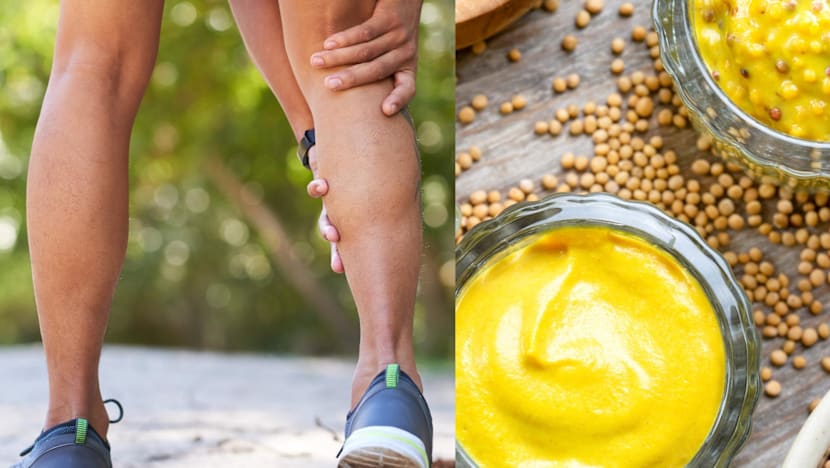
What does eating mustard have to do with stopping muscle cramps during a run? Does it even work?
Key Points
What does eating mustard have to do with stopping muscle cramps during a run? A packet of mustard might be the unlikely answer to painful muscle cramps during a run or even in the middle of the night. But how does it work, which type is best, and can it replace sports drinks and bananas?
What does eating mustard have to do with stopping muscle cramps during a run? Does it even work?
A packet of mustard might be the unlikely answer to painful muscle cramps during a run or even in the middle of the night. But how does it work, which type is best, and can it replace sports drinks and bananas?
When it comes to muscle cramps (it’s always the calves, isn’t it?), you know the drill: stop the activity stat. Sit down, grab your toes and pull your foot towards your shin. While you’re at it, get a sports drink and settle down for a great deal of grimacing. At least, that was my drill back when I was in my marathon phase.
Muscle cramps will cost you the race timing you’ve worked hard for – maybe even make you drop out of the event if they don’t ease off. And sometimes, despite your best efforts to hydrate and pace, that painful, rock-hard sensation in your leg, foot or even abdomen still comes at the most inopportune time.
Bananas, sports drinks, muscle rubs can only do so much. Sometimes, even stretching doesn't seem to help, and you're left wincing for seconds to minutes, waiting for the cramp to subside.
Until I came across something on Instagram. The original poster, who goes by Sammie aka Tsai Yahsin, said that she was at her friend’s half-Ironman event and witnessed something quite unusual. “She cramped up hard on the run and the medical team didn't hand her a banana or electrolytes,” said the Canada-based triathlete and trainer in her Reel. “Instead, they gave her a pack of mustard. Yeah, mustard and she ate it. She ended up running almost four minutes pace. That's crazy.”
HOW DOES MUSTARD WORK?
“Mustard triggers the sensory receptors in your mouth and your throat, (which) send fast signals to your nervous system,” said Sammie in her Instagram Reel. “The cramp releases because your nervous system got interrupted, not because your body got hydrated.”
What about the expert’s take? “Mustard has been known to provide relief from acute cramps due to the aforementioned neural mechanism,” said Dr Ong Joo Haw, a sports physician from Mount Elizabeth Hospital.
There are two compounds in mustard that may let this popular hot-dog condiment work on cramps: acetic acid (vinegar) and isothiocyanates. “Isothiocyanates are pungent compounds that are produced when mustard seeds are crushed and mixed with water,” explained Jaclyn Reutens, a dietitian from Aptima Nutrition.
When eaten, acetic acid and isothiocyanates may stimulate sensory receptors known as transient receptor potential (TRP) channels in the mouth and throat, potentially influencing the nerve activity involved in muscle cramps, said Dr Ong. These channels help to detect and respond to temperature, pain and chemical irritants.
But it’s still unclear as to how exactly that mechanism works. “There is no conclusive evidence shown to make mustard an effective cramp treatment. In fact, the clinical pathways are not certain,” said Reutens.
CAN MUSTARD ALSO HELP WITH LEG CRAMPS AT NIGHT?
Unlike cramps during sports, night calf cramps often have no identifiable cause, although sleeping with the calf muscles in a shortened position may contribute, explained Dr Ong. “Other causes include medications such as diuretics and statins, and conditions such as pregnancy, peripheral vascular disease and diabetes.”
While not scientifically proven, mustard “is a known home remedy for night cramps that might be effective in some people”, said Dr Ong. Reutens also agreed that “mustard might work for nocturnal leg cramps if we follow the plausible neural reflex pathway”.
But you needn’t keep a bottle next to your bed for cramp relief. “This mechanism is still largely unsubstantiated,” said Reutens, adding that mustard should not be your first remedy. “Gentle stretching and massage would be more effective.”
WHICH MUSTARD TYPE WOULD WORK BEST? WOULD OTHER CONDIMENTS WITH STRONG FLAVOURS ALSO WORK?
“The more pungent mustards are likely more effective for this purpose,” said Dr Ong. However, Reutens opined that “while a stronger flavour might suggest greater sensory stimulation, taste intensity is not a validated measure of the effectiveness of cramps relief”.
If you’re keen to give mustard a shot, it may be a good idea to sample the different mustard types beforehand – rather than eating an unfamiliar, pungent condiment for the first time in the middle of a race. “English mustard is the most pungent, Dijon mustard is sharp and tangy, yellow mustard is mild, and honey mustard is sweet,” said Reutens. “Wholegrain mustard varies in pungency, depending on the seed varieties.”
As for trying other strongly flavoured foods, such as mala sauce, wasabi or even intensely sour gummies, Dr Ong said that “wasabi and pickle juice are reported to work similarly to mustard”, although he isn’t sure about the rest. Research shows that pickle juice has some experimental evidence behind it, although the findings have yet to establish its effectiveness for cramps occurring naturally during exercise.
“Do bear in mind that mala sauce is oily, and may be unpleasant to the gastrointestinal tract when you are in pain,” reminded Reutens.
CAN MUSTARD REPLACE WATER, BANANAS AND SPORTS DRINKS?
The yellow condiment “does not correct the underlying causes of cramps in distance running”, highlighted Dr Ong. These are thought to involve factors such as muscular fatigue, overexertion and altered neuromuscular control. While dehydration and electrolyte imbalances may contribute in certain circumstances, they are not established as universal causes.
In a word, mustard does not replace water, bananas and sports drinks. “Cramp relief is not the same as refuelling,” reminded Reutens. “Sensory stimulation does not replace fluid and electrolytes contained in a sports drink or banana. Mustard should remain an optional unproven remedy for cramps rather than a proven sports nutrition remedy.”
If you have no known allergies to mustard, having a packet on long runs may be handy, she said. “But you should also carry electrolyte drinks in your pouch or bottle, too. Most importantly, know how to stretch.”