
Health
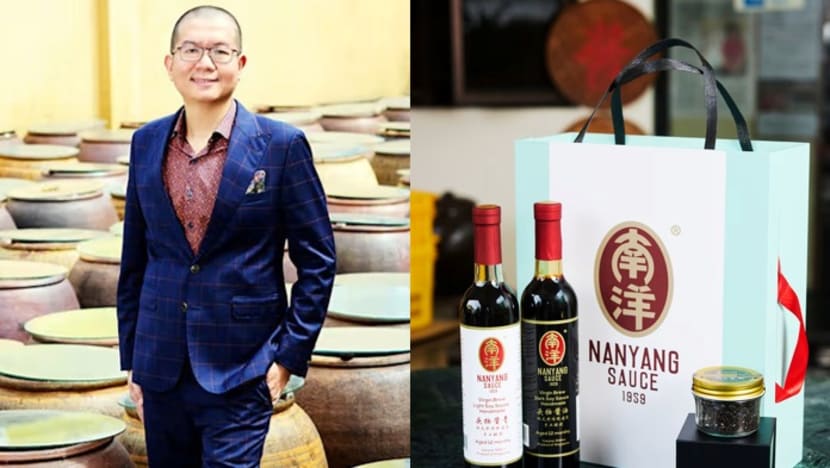
Would you pay S$10,000 for a vat of customised soya sauce? This Singapore maker has a waiting list of over 2 years
Key Points
Would you pay S$10,000 for a vat of customised soya sauce? This Singapore maker has a waiting list of over 2 years Forget whisky casks. At Nanyang Sauce, customers can commission their own vat of soya sauce, customised down to the salt and water used.
Would you pay S$10,000 for a vat of customised soya sauce? This Singapore maker has a waiting list of over 2 years
Forget whisky casks. At Nanyang Sauce, customers can commission their own vat of soya sauce, customised down to the salt and water used.
A private whisky cask is one thing. But your own vat of soya sauce, brewed to your taste and bottled with your family’s name on it?
That’s what homegrown Nanyang Sauce offers through its bespoke service at its Jurong factory. Prices typically range from S$10,000 (US$7,800) to S$15,000 per vat, with more elaborate orders costing up to S$20,000.
Its owner, Ken Koh, 42, is the third-generation family member at the helm of the old-school business founded by his grandfather in 1959. He told 8days.sg that customers can customise everything from the sauce’s flavour and ingredients to the water used to brew it.
CUSTOMERS GOT CREATIVE
The idea came from customers during the pandemic. One woman, whose husband had invested in a whisky cask, asked if Koh could brew a vat of soya sauce bearing her family’s name.
“My customers got very creative,” he recalled. His first reaction? “That sounds crazy.”
Nanyang’s soya sauce is made using traditional sun fermentation, a process that already takes nine months. Developing a personalised version would require even more time and effort, so he turned her down. He gave the same answer when a second customer approached him with a similar request.
It was a third customer, a Hong Kong businesswoman, who finally changed his mind. She understood the financial pressures of running the business: Koh had to pay for ingredients and spend months brewing the sauce before receiving payment from retailers.
“Ma’am, you really understand me,” he recalled telling her.
She offered to pay upfront and collect her sauce once it was ready. The arrangement would ease his cash flow, so Koh agreed. He then approached the first two customers to offer them the service as well.
SPECIAL WATER FROM HAWAII?
Customers begin by rating their preferences across eight taste characteristics, including umami, saltiness and astringency. Koh then uses their ratings to develop a recipe.
They can also choose the soya beans, salt and water used in the brewing process. Requests have included French and Himalayan salt, while one American customer specified a particular type of water sourced from beneath the seabed in Hawaii. Koh clarified that it is fresh water, not seawater.
The team first produces a small trial batch, which customers get to taste after about three to six months. They can request up to three rounds of adjustments before production of the full vat begins, though Koh said customers have so far been satisfied after just one or two rounds.
Even the bottles and labels can be personalised. His clientele includes businesspeople, bankers and celebrities, though he declined to reveal their identities. Some keep the sauce for their own households, while others give it to friends or clients.
FOR A DAUGHTER’S FUTURE WEDDING
One father commissioned a batch for his daughter’s birthday, then asked Koh to continue ageing it, for an additional fee, until her eventual wedding. He plans to give out bottles of the sauce at the celebration.
“I cannot tell my [own] daughter, later she would get jealous,” Koh quipped.
Each vat typically yields 50 to 70 litres of soya sauce, enough to fill approximately 100 to 140 bottles of 500ml each. The final yield depends partly on evaporation and weather conditions.
The choice of ingredients and any additional ageing also affect the price. Despite the five-figure sums customers pay, producing personalised soya sauce remains labour-intensive. As Koh put it: “It’s very hard-earned money.”
He estimates that fewer than 10 per cent of the factory’s roughly 300 earthenware vats are used for bespoke orders. Some of these vessels are more than a century old, including vats salvaged from other sauce makers that have since closed.
The waiting list currently stretches to about two and a half years, said Koh. Rather than collect deposits from everyone on the list, he contacts the next customer only when a vat becomes available.
IF I CAN’T BE THE BIGGEST, I’LL BE THE SLOWEST
The bespoke service is part of Koh’s efforts to breathe new life into the family business. He estimates that he has invested a low six-figure sum in rejuvenating Nanyang over the years.
A tour of 13 sauce factories across Asia helped him recognise what made his business special. At a large factory in China, he was stunned to discover that it produced more sauce in an hour than Nanyang did in an entire year.
“One hour more than my one year, you know?” he recalled.
But when he visited the factory’s museum, he saw displays showing how soya sauce was made centuries ago. The traditional methods looked remarkably similar to those his family was still using in Singapore.
That sparked a revelation: “If I can’t be the biggest, I’ll be the slowest.”
Besides making soya sauce, Koh conducts workshops through Nanyang’s Sauce Academy. He was also a co-owner of the now-closed Big Dot Chicken stall at Chinatown Complex, though Nanyang remained his main focus throughout that venture.
WHY ‘VIRGIN’ SOYA SAUCE COSTS S$26 A BOTTLE
Nanyang’s Virgin Brew light soya sauce (S$26 for 500ml) comes from the first extraction after nine months of fermentation. Koh likened it to the first brew from a pot of tea – richer in umami, with a more concentrated flavour.
After extracting the first batch of sauce, the team adds brine to the remaining beans and ferments them for another two to three months. This second extraction is used for its more affordable Premium range (S$13.90 for 500ml).
According to Koh, Virgin Brew commands a higher price because it comes from the prized first extraction and is produced in more limited quantities.
As for its wine-like glass bottle? That’s simply a packaging choice.
For something more indulgent, Nanyang’s Aged 12 Virgin Brew light soya sauce (S$36.90 for 500ml) undergoes an additional 12 months of ageing after the initial nine-month fermentation.
“It’s more complex, more layered,” said Koh.
He recommends drizzling the sauce over soft-boiled eggs to appreciate its flavour. At home, he uses Premium for braising, Virgin Brew for dipping, steaming and stir-frying, and Aged 12 for special occasions.
S$96 SOYA SALT HE NEVER THOUGHT ANYONE WOULD BUY
Then there’s Nanyang Soy Salt (S$96 for 100g), made up of dark crystals Koh calls “black diamonds”. He said the crystals form as soya sauce evaporates and ages in vats over more than 10 years.
“We have this product, but we never sold it because we never thought anybody would want to buy it,” he explained.
That changed when a Hong Kong customer visited Nanyang’s former East Coast shop specifically looking for soya salt. Koh was surprised not only by the demand but also by how much the customer was willing to pay.
Encouraged by a friend, he launched a Kickstarter campaign in 2019, attracting 439 backers who pledged a total of S$73,964.
He describes the crystals as an “umami bomb” that can be sprinkled sparingly over steak or added to soups. One customer even puts them in hot chocolate.
Nanyang Sauce is located at 18 Chin Bee Ave. Visits by prior appointment only. More info via its website. A limited range is also available at Cold Storage, FairPrice Finest and RedMart.
This story was originally published in 8Days.
For more 8Days stories, visit https://www.8days.sg/.