
World News
Attack drones are becoming the new AK-47s and reshaping global warfare
Key Points
Attack drones are becoming the new AK-47s and reshaping global warfare The AK-47 assault rifle was developed after the Second World War by Soviet soldier Mikhail Kalashnikov in 1947 - Bookmark - CommentsGo to comments Become an Independent member to bookmark this article Already a member? Log in One of the deadliest attacks on Israel in 2024 came not from an Iranian missile or rocket, but from a single Hezbollah drone attack. On October 13, 2024, a drone struck the dining hall of a military...
Attack drones are becoming the new AK-47s and reshaping global warfare
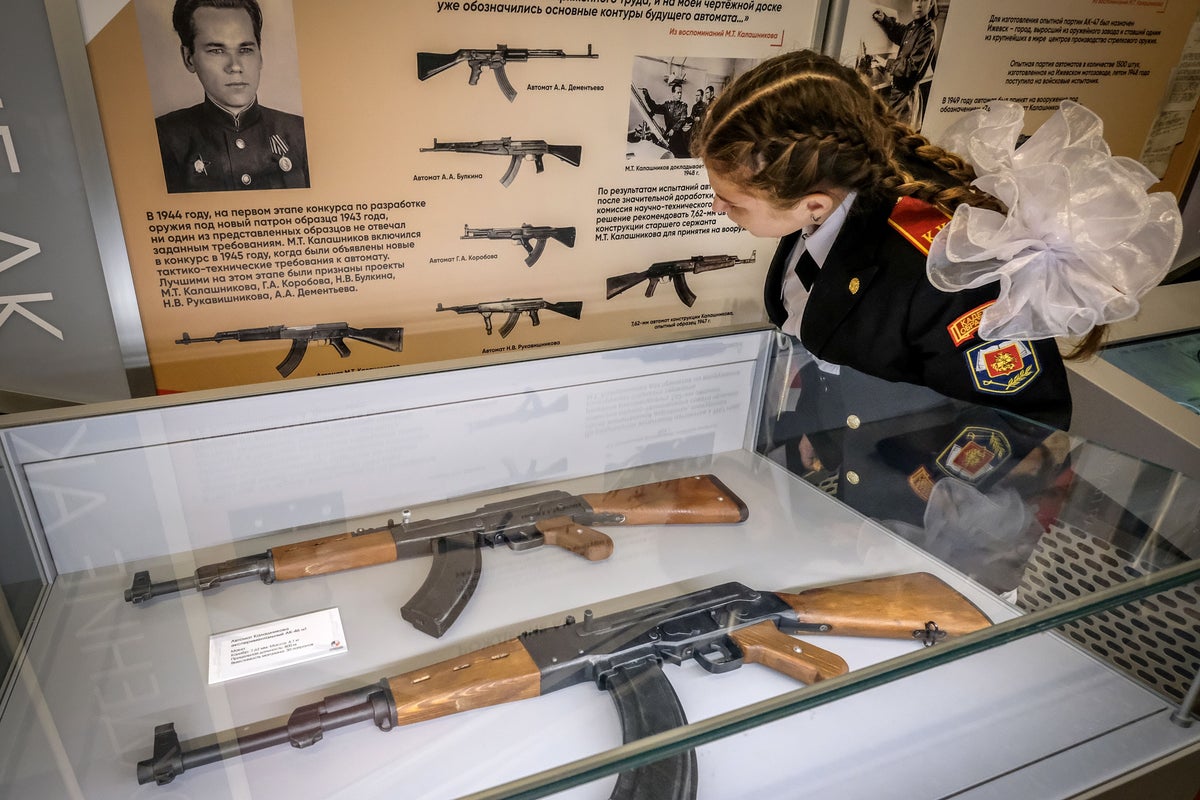
The AK-47 assault rifle was developed after the Second World War by Soviet soldier Mikhail Kalashnikov in 1947
- Bookmark
- CommentsGo to comments
Become an Independent member to bookmark this article
Already a member? Log in
One of the deadliest attacks on Israel in 2024 came not from an Iranian missile or rocket, but from a single Hezbollah drone attack. On October 13, 2024, a drone struck the dining hall of a military base near Binyamina, south of Haifa, as Israeli soldiers were eating. It killed four people and injured 67.
Houthi rebels have been using drones to attack airports and oil facilities in Saudi Arabia, causing havoc in the Gulf kingdom. Israel and Saudi Arabia are two wealthy countries and have powerful militaries and sophisticated air defences. Hezbollah and the Houthis have far fewer resources. But drone attacks have exposed vulnerabilities in their defence.
These attacks suggest that armed drones could follow the AK-47’s path, becoming widely available to non-state armed groups and reshaping the balance of military power.
The AK-47 is claimed to be the deadliest weapon of all time. A report for the World Bank in 2006 found that nearly one in five firearms in circulation worldwide – 100 million – were Kalashnikovs. And 75% of those were AK-47s.
The assault rifle was developed after the Second World War by Soviet soldier Mikhail Kalashnikov. While recovering from wartime injuries, he heard fellow soldiers complain that their rifles were inferior to German weapons and set out to design a better one. In 1947, after several unsuccessful attempts, he developed the Avtomat Kalashnikova (Kalashnikov’s automatic) and named it after himself and the year he designed it.
The AK-47 and its variants became some of the world’s most widely produced firearms, used by armies, guerrilla groups, insurgents and criminal organisations. The rifle’s global popularity came from the fact that they are cheap to produce, easy to operate and maintain, and are reliable in harsh conditions.
The AK-47 spread rapidly, particularly during the cold war, as the Soviet Union supplied its allies and licensed production abroad. Factories in Bulgaria, Poland, East Germany, China and North Korea produced their own versions. During the Vietnam war, Chinese-made variants of the AK-47 helped the Viet Cong forces stay in the fight against well-funded U.S. troops.
Spreading beyond national armies
In the same way, attack drones are enabling less powerful armed groups to withstand better-equipped militaries.
These drones are reshaping modern warfare. In the early weeks of Russia’s 2022 invasion, Ukraine used Turkish-made Bayraktar TB2 drones to stay in the fight and successfully strike Russian forces.
In Myanmar, meanwhile, a coalition of resistance groups has turned commercial drones into what one of the rebel commanders called an “air force” against the well-funded army of Myanmar government. Engineering students and hobbyists who operate this “air force” have learned to produce and modify the drones through apps such as YouTube, Telegram and Discord.
The worst humanitarian crisis in recent times is happening in Sudan, where drones have had a devastating impact on civilians. The United Nations recorded at least 1,000 civilian deaths from drone strikes in the first five months of 2026.
Both the Sudanese army and the Rapid Support Forces (RSF), a paramilitary organisation that formerly operated within Sudan’s security establishment, use drones to terrible effect.
Amnesty International and the UN have found that the United Arab Emirates has supplied drones and other military equipment to Sudan’s Rapid Support Forces.
The UN investigation also reports that Colombian mercenaries operate and maintain the RSF’s drones. The UAE denies providing military support to the group.
Armed groups also deploy drones to support governments. In Haiti, Vectus Global, a mercenary security firm, has been contracted by the government of Haiti to help it defeat armed gangs that have taken over much of the capital, Port-au-Prince. The mercenaries are using drones to support them in their fight against the gangs.
Organised criminal groups have also adopted the technology. Mexico’s Jalisco New Generation cartel uses modified commercial drones for surveillance and for launching explosive attacks against rivals and security forces.
In the footsteps of the Kalashnikov
These attack drones appear to be following in the AK-47’s footsteps when it comes to their global spread and use. Like the rifle, drones can be compact and lightweight, and many are inexpensive and easy to operate, assemble and take apart. Commercial models can be modified to carry explosives and fly further afield. Drones made up of plastics and fabrics are difficult to detect and intercept.
Like the AK-47, which US journalist and military historian Larry Kahaner described in his history of the assault rifle as the “ideal weapon for impoverished, poorly trained mercenaries”, the drone is an instrument of killing that anyone can easily get and use. These capabilities enable less well-funded armed groups and states access to drones and use them to challenge stronger opponents.
But the forces behind their proliferation differ. The AK-47 proliferated through Soviet cold war military assistance, foreign production and surplus stockpiles. Drones are spreading through commercial markets, readily available components and technical knowledge shared online.
Now multiple conflicts around the world are accelerating the development and use of affordable and easy-to-use lethal drones. Like the AK-47 before them, these cheap and easily accessible weapons are becoming the weapons of choice: whether for defending against an aggressor as in Ukraine, or as a means of enforcement for criminal gangs.
Join our commenting forum
Join thought-provoking conversations, follow other Independent readers and see their replies
Comments
[Image text:] 3AHHIM TP
TaKTUKO
yxe O6O3HayNnnCb OCHOBHbIe KOHTypbI 6yAyyero asTOMOTO
MOepTexHO AocKe
MIK
OTA.A.
npoektol