
Education
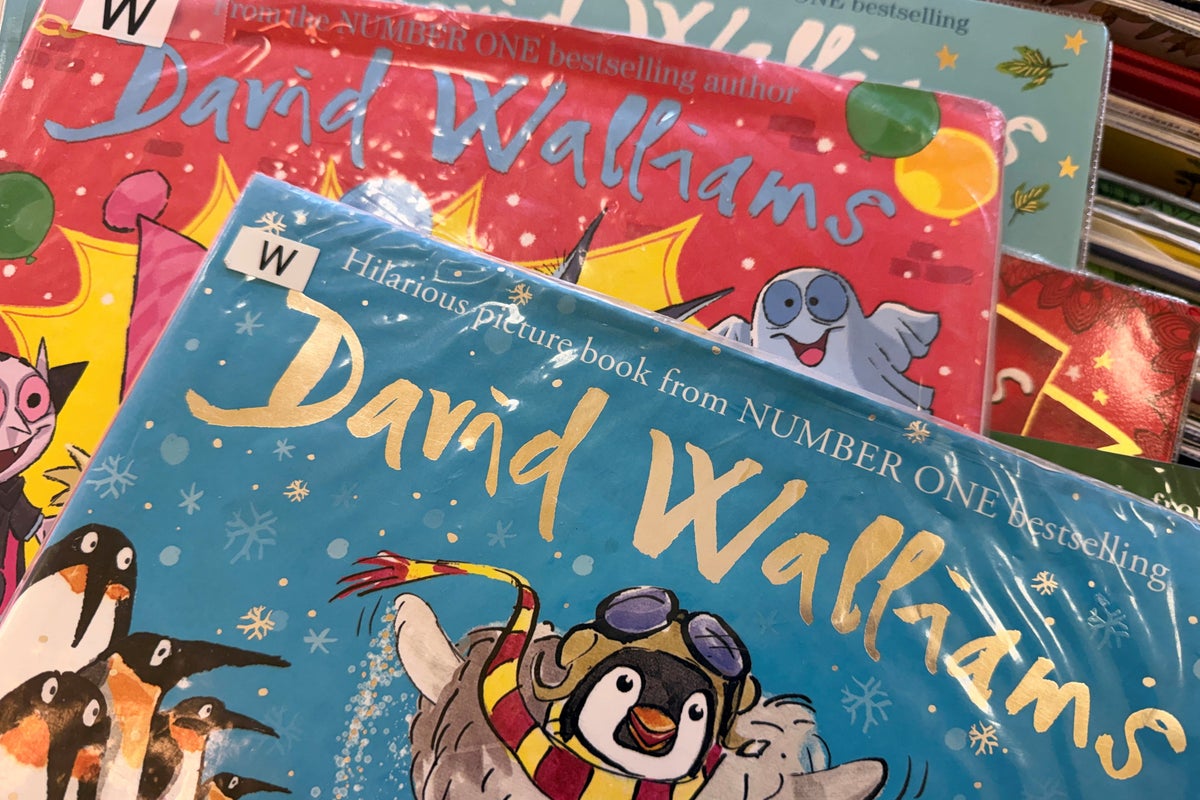
Schools leaders seek government advice over what they should do with David Walliams books in libraries
Key Points
Schools leaders seek government advice over what they should do with David Walliams books in libraries Some schools have already begun withdrawing books by Walliams from library shelves in light of the allegations - Bookmark Become an Independent member to bookmark this article Already a member? Log in School leaders are turning to the government to ask whether books written by David Walliams should be removed from libraries. Walliams was named as part of an investigation by The Guardian and...
Schools leaders seek government advice over what they should do with David Walliams books in libraries
Some schools have already begun withdrawing books by Walliams from library shelves in light of the allegations
- Bookmark
Become an Independent member to bookmark this article
Already a member? Log in
School leaders are turning to the government to ask whether books written by David Walliams should be removed from libraries.
Walliams was named as part of an investigation by The Guardian and ITV News on Tuesday, after he tried to obtain an injunction to prevent the reporting of allegations against him.
One woman described her alleged encounter with Walliams, when she was 15, as a “sexual assault”, while multiple women accused him of “grooming” them when they were teenagers. Walliams denies any wrongdoing.
Some schools have already begun withdrawing books by Walliams from library shelves in light of the allegations.
One academy trust, which runs 59 schools across England, said it has decided to temporarily remove his books from its libraries to “protect” children.
The Association of School and College Leaders (ASCL) is calling on the government to issue guidance to help headteachers decide what to do with Walliams’s books in schools.
Pepe Di’Iasio, general secretary of the ASCL, said: “Schools regularly review the contents of their libraries and this includes ensuring the appropriateness of books available to pupils.
“We’re sure that this is something they will be doing in light of these recent allegations.
“We’ll also be asking the DfE to see if it has any guidance for schools which may be helpful in this process.”
The issue will be raised by the union in a meeting with the DfE on Friday.
Walliams has sold more than 60 million copies of his children’s books globally.
They include The Boy In The Dress, Fing and Gangsta Granny, the latter of which was turned into a one-hour BBC special in 2013, followed by a sequel starring Sheridan Smith in 2022.
Walliams’s publisher HarperCollins dropped him in December 2025 after an investigation into allegations that he had “harassed” young women, which the author denied.
Steve Chalke, founder of the Oasis Charitable Trust, said the academy trust has issued guidance to headteachers in its 59 schools to temporarily remove Wallliams’s books.
He told the Press Association: “Our advice is, for the sake of our children and to protect our children, the right thing to do – because this will traumatise some children without doubt if they read his name or see his face – is to remove books from our libraries temporarily.
“Children will hear this story. They hear it from TV, radio, pictures on the front of a paper. They hear it from their parents and others talking about it, so they know about it.
“For some that will trigger other memories. Children who’ve been in tough situations.”
Academy trust GLF Schools, which runs 43 schools in South and South East England, has also decided to remove Walliams’s books from its school libraries.
But Kent County Council (KCC) said it has “no plans” to remove his titles from its public libraries, adding that council-run schools “make their own decisions” about library stock.
A spokesperson for KCC said: “The starting point is that books should be available to readers unless their content is unlawful.
“Decisions about library stock are not made through blanket bans on individual authors.
“Collections are regularly reviewed and refreshed to reflect factors such as reader demand, condition and relevance of stock.
“Kent’s local authority-maintained schools make their own decisions about library stock and learning resources, taking account of their own policies, professional judgment and the needs of their pupils.”
Libraries Connected, a charity which supports, promotes and represents public libraries, said: “Libraries follow established professional and ethical principles around stock availability – the starting point is that all books should be made available to readers unless the content of those books is illegal.
“But libraries continually refresh their collections in response to what their users want to read.
“In this case, we understand that demand for Walliams’s books has fallen significantly in recent years.
“We would therefore expect the number of copies in circulation to decline naturally as they are replaced by newer and more popular titles – particularly as he is now without a publisher.”
David Walliams (PERSON)
Walliams (ORG)
Independent (ORG)
Guardian (ORG)
ITV News (ORG)
England (LOCATION)
The Association of School and College Leaders (ORG)
Pepe Di’Iasio (PERSON)
ASCL (ORG)
DfE (ORG)
Sheridan Smith (PERSON)
HarperCollins (ORG)
Steve Chalke (PERSON)
the Oasis Charitable Trust (ORG)
the academy trust (ORG)