
Health
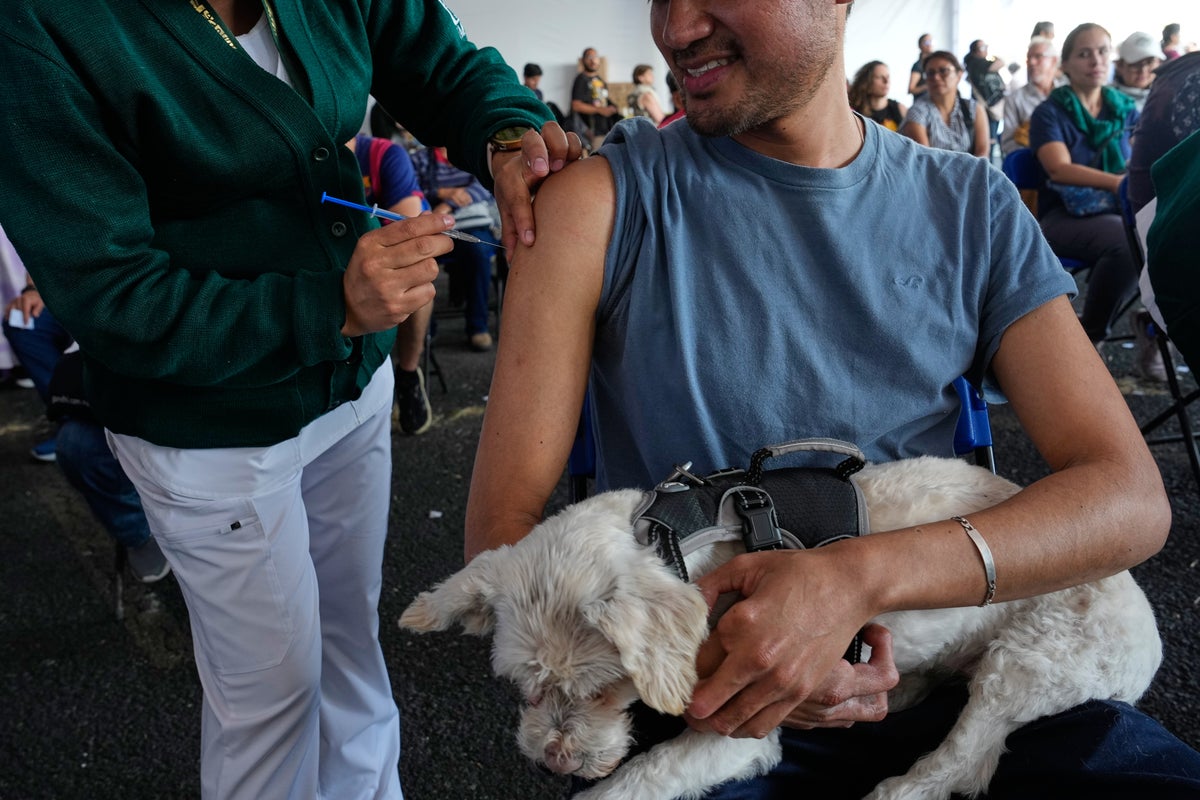
US faces losing measles elimination status next week as experts blame RFK Jr. for muted vaccine response
Key Points
US faces losing measles elimination status next week as experts blame RFK Jr. for muted vaccine response International health experts are meeting to assess whether the U.S. and Mexico have lost their measles elimination status - Bookmark Become an Independent member to bookmark this article Already a member? Log in Health experts meeting this week are expected to confirm that measles has officially returned to the United States and Mexico, ending one of each country's greatest public health...
US faces losing measles elimination status next week as experts blame RFK Jr. for muted vaccine response
International health experts are meeting to assess whether the U.S. and Mexico have lost their measles elimination status
- Bookmark
Become an Independent member to bookmark this article
Already a member? Log in
Health experts meeting this week are expected to confirm that measles has officially returned to the United States and Mexico, ending one of each country's greatest public health victories.
The Pan American Health Organization (PAHO) convened the meeting to examine whether the virus is now spreading continually within the nations' borders. Measles is among the most contagious diseases known to medicine, yet vaccines have safely stopped the virus's spread in the U.S. for 30 years. Over those decades, the disease became a medical rarity in the U.S., with deaths from it virtually unheard of.
The past two years have changed that picture, as large outbreaks have hit multiple states and spawned thousands of illnesses, including about a dozen deaths. “It’s a big deal. The decision represents us moving backward,” said Dr. David Margolius, director of Cleveland's health department and a leader in a coalition of big U.S. city health departments.
The deliberations are taking place behind closed doors, where a PAHO advisory commission is poring over genetic evidence to determine whether the same measles virus has been spreading for at least one year in the outbreaks that have torn through North America since 2024. “It’s solely based on genetics,” said Dr. Amesh Adalja, an infectious disease doctor in the Pittsburgh area and a senior scholar at the Johns Hopkins Center for Health Security.
If the commission finds that it has, it will say the country can no longer be considered to have “eliminated” measles, meaning the virus has returned to sustained circulation. Canada has already lost its own designation, which PAHO stripped last year after the country had held it since 1998. The commission will present its determination to PAHO Director Dr. Jarbas Barbosa, a former Brazilian health official, who makes the final determination.
PAHO officials said they are scheduling an announcement of the findings for next week. Whatever the outcome, the CDC says its approach will not change. A PAHO decision to strip the U.S. of its measles elimination status will not change how federal health officials are addressing outbreaks, CDC Director Erica Schwartz said this week.
“The measles elimination designation is not what protects Americans. Vaccination does. We know where transmission is occurring, and we’re working with state and local health departments to reach those communities. Losing a designation doesn’t mean we abandon an evidence-based approach. It means we remain focused on stopping outbreaks,” she said in the statement.
Many public health experts disagree, arguing that such an occasion demands a stepped-up, full-throated campaign to promote vaccinations and give doctors more guidance. They fault what they say is a politically fraught, muted federal response, and blame U.S. Health Secretary Robert F. Kennedy Jr., who was a leading voice in the anti-vaccine movement before President Donald Trump put him in charge of the nation's health agencies.
Kennedy has moved to downsize the childhood vaccination schedule and reshape a key vaccine advisory board. He has also lauded Trump's executive order calling for spacing out the measles, mumps and rubella vaccine, a move that runs counter to medical groups' recommendations and likely would result in fewer children getting fully vaccinated, experts say.
The stakes are high, because the U.S. is having its worst measles year in decades. The country has now seen eight measles-associated deaths this year, more than any year in more than three decades, and is enduring its worst year for measles illnesses since 1991. This year's more than 5,100 confirmed cases are already double the 2025 tally, driven largely by an outbreak in Pennsylvania that has dwarfed earlier ones.
Measles exploded last year in large outbreaks in Texas, Arizona, Utah and South Carolina. The disease typically begins with a high fever followed by a telltale rash that starts on the face and neck. Most people recover, but measles is one of the leading causes of death among young children, according to the World Health Organization.
Serious complications, including blindness and swelling of the brain, are more common in young children and adults older than 30. The U.S. achieved measles elimination status in 2000, after decades of vaccination campaigns brought childhood measles vaccination rates above 97%. Health experts say a 95% vaccination rate is needed so that when an infected traveler enters a community, enough people are vaccinated to prevent an outbreak.
But U.S. vaccination rates have been slipping for years, in part because of disproven claims that the vaccine can cause autism. Trump claimed earlier this year, without evidence, that the MMR vaccine, which is credited with saving millions of lives globally, is possibly “quite lethal.” Last year, the childhood vaccination rate fell to about 92% nationally, and was much lower in certain states and certain communities.
Mexico's story runs on a different timeline. A measles vaccine did not become available there until years after a measles vaccine was first licensed, in 1963, in the U.S., and the U.S. started giving shots. Mexico did not achieve measles elimination status until 2016. Cases began surging in south of the border early last year.
Researchers think an outbreak in the northern border state of Chihuahua stemmed from an unvaccinated Mennonite child from that Mexican state who traveled to Gaines County, Texas, where an outbreak was occurring, and came back infected. As of this week, more than 20,500 confirmed cases have been reported across the nation.
Fifty measles-related deaths have been reported, most of them children younger than 5 years old. The issue has not been confined to North America. Early this year, the World Health Organization confirmed that Armenia, Austria, Azerbaijan, Spain, the United Kingdom, and Uzbekistan lost their status.
US (LOCATION)
RFK Jr. (PERSON)
U.S. (LOCATION)
Mexico (LOCATION)
Independent (ORG)
the United States (LOCATION)
The Pan American Health Organization (ORG)
David Margolius (PERSON)
Cleveland (LOCATION)
PAHO (ORG)
North America (LOCATION)
Amesh Adalja (PERSON)
Pittsburgh (LOCATION)
the Johns Hopkins Center for Health Security (ORG)
Canada (LOCATION)