
Health
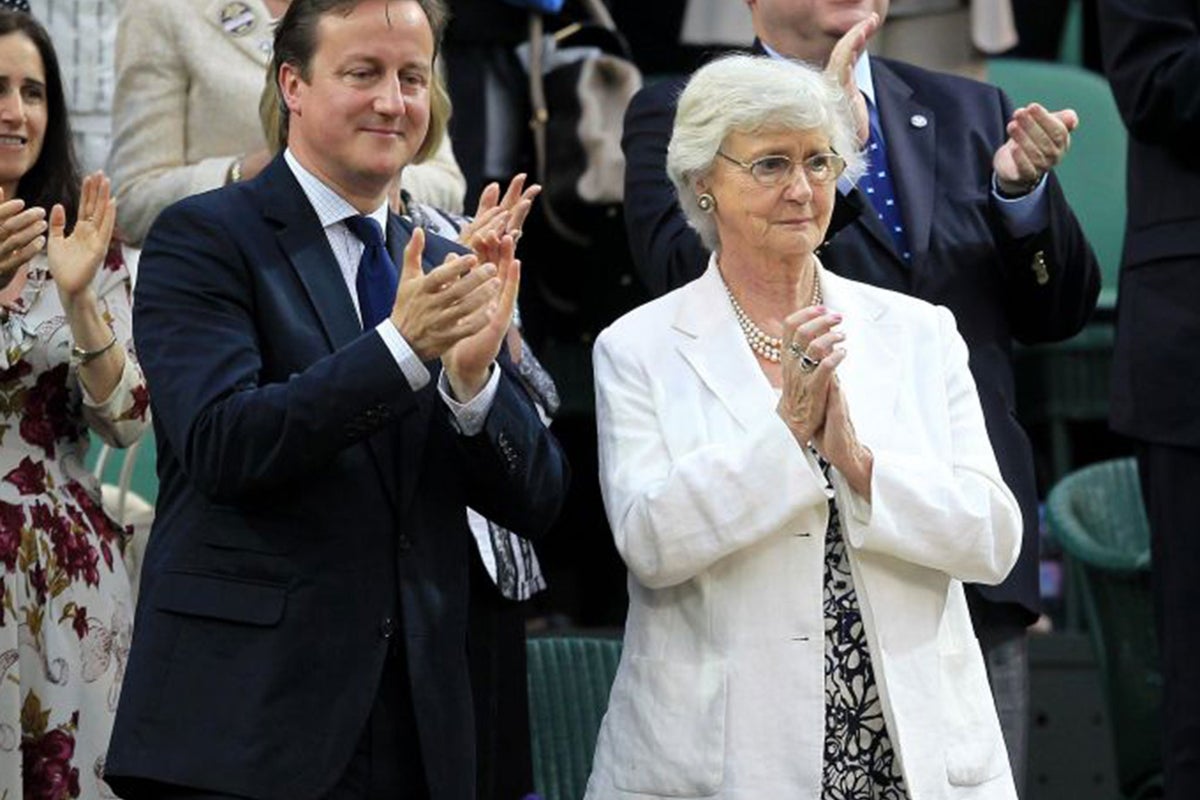
David Cameron reveals Alzheimer’s made his mother beg sister to kill her in heartbreaking NHS drugs plea
Key Points
David Cameron reveals Alzheimer’s made his mother beg sister to kill her in heartbreaking NHS drugs plea The fomer prime minster, who is also president of charity Alzheimer’s Research UK, lost his mother to the disease in 2025 - Bookmark - CommentsGo to comments Become an Independent member to bookmark this article Already a member? Log in Lord David Cameron has appealed to Andy Burnham to make new Alzheimer’s treatments accessible on the NHS, disclosing how his mother repeatedly asked his...
David Cameron reveals Alzheimer’s made his mother beg sister to kill her in heartbreaking NHS drugs plea
The fomer prime minster, who is also president of charity Alzheimer’s Research UK, lost his mother to the disease in 2025
- Bookmark
- CommentsGo to comments
Become an Independent member to bookmark this article
Already a member? Log in
Lord David Cameron has appealed to Andy Burnham to make new Alzheimer’s treatments accessible on the NHS, disclosing how his mother repeatedly asked his sister to kill her as the disease took hold.
The former Conservative prime minister argued that it represents the "perfect time" for government action, with a number of promising treatments on the horizon.
In an interview with the Telegraph, he reflected on his mother Mary Cameron’s last years, describing how she was in a "world of darkness" and "knew she was losing her mind".
He said she would plead with her daughter: "Will you kill me? You know how to do it, Clare. Will you kill me?" His sister recalls replying: "Mum, even if I did know how to kill you, I don’t want to go to prison for murdering my mother."
Lord Cameron has spearheaded calls for drugs which were previously turned down for use on the NHS to gain approval for treating Alzheimer’s.
Although therapies such as lecanemab and donanemab have advanced the field of care, alternative medicines are far cheaper and experts already understand the risk of side-effects for some of these options.
Having been licensed in 2024, they remain unavailable through the NHS outside of clinical trials.
Along with dozens of dementia specialists, Lord Cameron has also called for a maximum 18-week wait for a diagnosis of the disease.
Amid a debate about the future of social care, the peer also expressed regret over his government’s failure to introduce a cap on care costs, and suggested an insurance-based system could help protect families from exceptionally large bills.
“The thing I wish we had looked at more was a sort of insurance-based system, perhaps with the government front-running the insurance, as we did with terrorist damage,” he told the Telegraph.
Pointing to arrangements whereby private insurers provide terrorism cover backed by a government-guaranteed scheme, he said: “You’ve got a row of 10 houses.
“One of them will have the catastrophic costs of long-term care, and the other nine won’t. I haven’t got the exact answer, but I feel that’s where the answer is.”
Lord Cameron, president of charity Alzheimer’s Research UK, lost his mother to the disease in 2025.
Last month, the prime minister backed a trial which could dramatically speed up the discovery of treatments for Alzheimer’s disease – the most common type of dementia, which affects around 600,000 people in the UK.
Experts say the new trial, called Ad-Smart (Alzheimer’s disease Systematic Multi-arm Adaptive Randomised Trial), could more than halve the time it takes to test Alzheimer’s treatments.
Mr Burnham, whose father Roy died with Alzheimer’s in September, said he was proud to support the trial in the hope it could deliver results more quickly than traditional methods.
Decisions on whether to approve treatments for routine use by the NHS are made by the National Institute for Health and Care Excellence (Nice).
The Department of Health and Social Care described Lord Cameron’s account as “deeply moving” and said there was “more to do”.
A spokesperson said: “Decisions on whether to approve treatments for routine use by the NHS are taken independently by the National Institute for Health and Care Excellence, based on an evidence-based assessment of the costs and benefits, and they are currently evaluating these two treatments for Alzheimer’s disease.
“As Lord Cameron’s deeply moving account testifies, Alzheimer’s is a devastating disease, and we are taking action to tackle it through improved research, care and treatment. We recently announced the investment of £33 million through the Dame Barbara Windsor Dementia Goals programme to increase the recruitment of people into clinical studies for new dementia treatments, speeding up clinical trials and bringing promising new drugs to patients at a quicker pace.
“We are also developing the first ever Modern Service Framework for Frailty and Dementia to deliver rapid and significant improvements in quality of care and appointing a national dementia tsar to drive further progress in this area.
“But we know there is more to do, so we are also bringing forward the timetable for Baroness Casey’s commission on reform of the social care system, with support for dementia as one of the central priorities for the new National Care Service, which will drive up standards of care across the country.”
Join our commenting forum
Join thought-provoking conversations, follow other Independent readers and see their replies
Comments