
Science
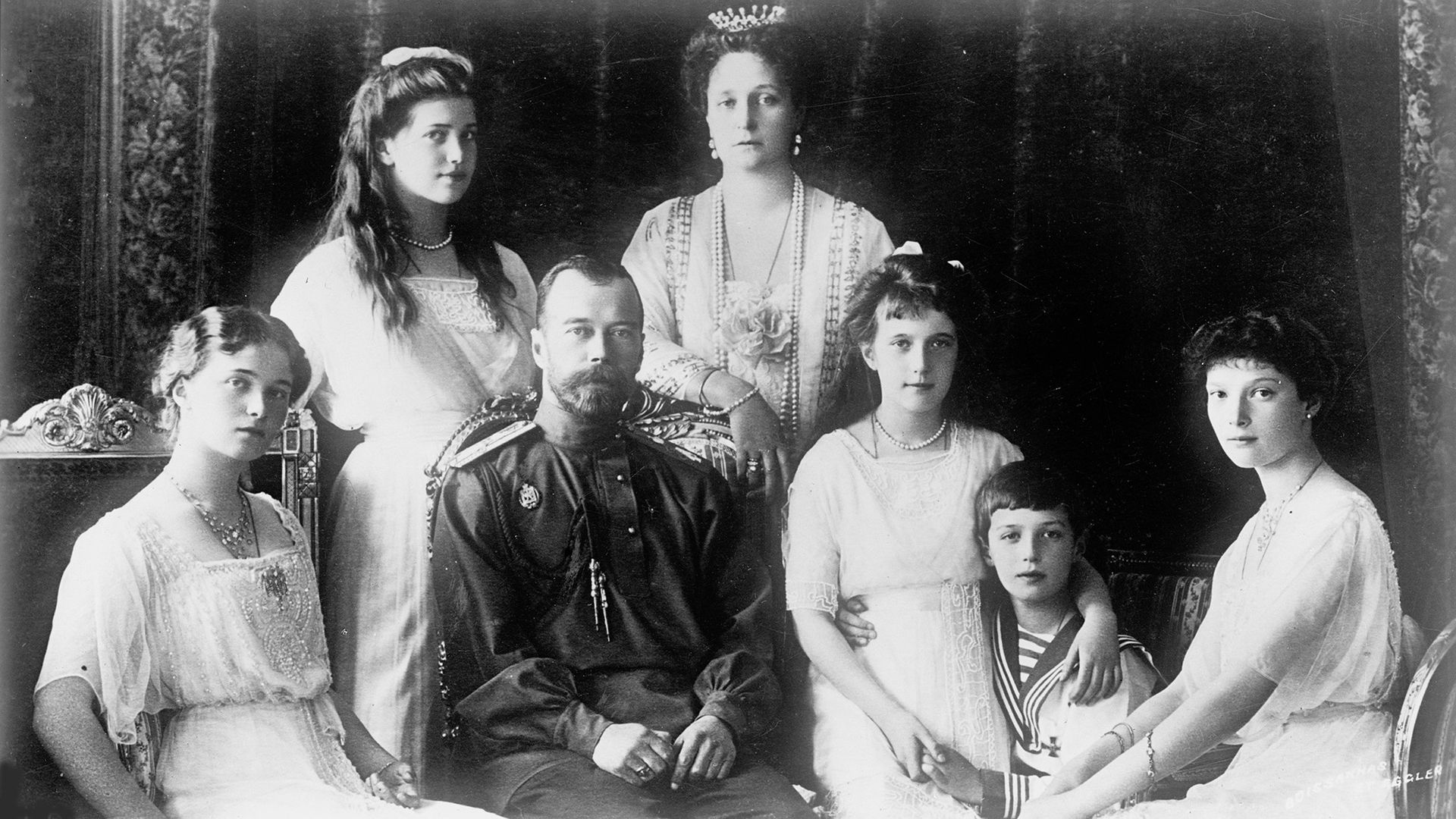
'Links with the British royal family would eventually prove crucial': How DNA solved the 70-year mystery of what happened to the executed members of the last Russian imperial family
Key Points
'Links with the British royal family would eventually prove crucial': How DNA solved the 70-year mystery of what happened to the executed members of the last Russian imperial family In this excerpt from "The Secrets of our DNA," geneticist Turi King examines how DNA was used to reveal the ultimate fate of the last members of the House of Romanov. In 1917, the Russian Revolution was in full swing. Tsar Nicholas II had abdicated, and he and his family were exiled to a remote Siberian town.
'Links with the British royal family would eventually prove crucial': How DNA solved the 70-year mystery of what happened to the executed members of the last Russian imperial family
In this excerpt from "The Secrets of our DNA," geneticist Turi King examines how DNA was used to reveal the ultimate fate of the last members of the House of Romanov.
In 1917, the Russian Revolution was in full swing. Tsar Nicholas II had abdicated, and he and his family were exiled to a remote Siberian town. There were plans to get the family to the U.K., but King George V (Nicholas' first cousin) and the British government withdrew their offer of asylum over concerns of the ramifications.
After the Russian Provisional Government was overthrown by the more extreme Bolsheviks in October 1917, Nicholas, his wife, their children and several members of the family's staff were moved to Ipatiev House in Yekaterinburg, where, in July 1918, they were executed. Their bodies were hidden and remained lost to time for nearly a century — until modern technology, with some help from the British royal family, unraveled the fascinating story of their disappearance.
In this excerpt from "The Secrets of Our DNA: How Genetics Has Changed the World" (Pegasus Books, 2026), author Turi King, director of the Center for Evolution at the University of Bath, looks back at the incredible story of how DNA was used to solve a major mystery of modern history: What happened to the last members of the House of Romanov?
I was sitting in a lecture theatre at Cambridge University in 1994 when one of my lecturers, Erika Hagelberg, spoke about a new study she had just been involved in. It was the first major case to combine both mitochondrial DNA and DNA fingerprinting to identify human remains: those of the Russian imperial family.
But first I need to take you back to Russia in 1917 and the abdication of the tsar following the Russian Revolution.
The Russian royal family, the Romanovs, had been the reigning imperial dynasty since 1617, and three centuries later, Tsar Nicholas II was on the throne. Nicholas was the cousin of George V, king of the United Kingdom, their mothers being sisters, and had married George's cousin Princess Alix (Alexandra) of Hesse, who was apparently Queen Victoria's favourite grandchild. Nicholas and Alix had five children, four daughters (Olga, Tatiana, Maria and Anastasia) and a son, Alexei.
The tsar and his wife were not well liked by the Russian population and political unrest culminated in the revolution of 1917, when Nicholas was forced to abdicate. The family were kept under house arrest and in 1918 they were moved to Ipatiev House in Yekaterinburg with the royal physician, Dr Botkin, and three of their staff. On the night of 16 July, the family, their doctor and staff were herded into the cellar together and executed. Their bodies were then taken to a secret location and placed in a hastily dug communal grave, doused in sulphuric acid in an attempt to disfigure them and hinder identification, and then covered over, the location of the grave being lost for more than 70 years.
Ironically, the new Russian government had wanted to get the Romanovs out of Russia due to the risk of their becoming a rallying point, but a plan to grant asylum to the Romanovs in the U.K. because of their links with the British royal family fell through, owing to a reluctance on the part of George V to grant it. Yet those links with the British royal family would eventually prove crucial in their identification.
Fast-forward to 1991, when several skeletons were found in a shallow grave some 20 miles from Yekaterinburg. Many of the bones were badly damaged but it was possible to determine, based on examination of the skeletal remains, that there were nine individuals — two short of the 11 killed that night. The faces of the skulls were badly damaged in all of the skeletons, all of them showing evidence of violence either in the form of bullet holes or bayonet wounds or both. Before the genetic study, Russian forensic scientists had used numerous techniques alongside historical data to tentatively identify the remains as some of the members of the Russian royal family, their doctor and servants.
These included examining the bones, to determine approximate age and sex, and some of the teeth, the expensive dental work, incorporating gold, platinum and porcelain, indicating that certain remains must belong to members of an aristocratic family. The team worked out that the two missing individuals would have been two of the children, one of the daughters (while it was hard to determine which one it would be, given how close in age they were, it was thought that it was either Maria or Anastasia) and the son, Prince Alexei.
The Russian chief forensic medical examiner then contacted a team in the U.K., which included Erika, to see if genetic evidence could be used to confirm the identification. The U.K. team used the amelogenin genetic sex test, now part of standard forensic DNA testing, which confirmed the sex of the skeletons (four male and five female bodies), while an early form of DNA profiling showed that there was a family group here — two parents and three children — and four unrelated individuals. So far, so good.
Next, they needed to prove that this was the Russian royal family, and they did this using mitochondrial DNA analysis. As you'll remember, mitochondrial DNA is passed down by a mother to all her children, male and female, but only daughters can pass it on — so if female-line family members of Tsar Nicholas and Tsarina Alexandra could be found and would agree to give a DNA test, their mitochondrial DNA should match that of their royal ancestors. It just so happened that the late Prince Philip, husband of the late Queen Elizabeth, was related to the tsarina through the female line: she was his great-aunt, his maternal grandmother being the sister of the tsarina. He kindly gave a DNA sample.
The testing that they did was standard for the time in that they looked at two regions known as hypervariable regions 1 and 2 (HVR1 and HVR2). You'll remember that mitochondrial DNA has 37 rather crucial genes on it where any "typo" that occurs as the DNA is being copied could have serious consequences if the mutation is deleterious. By contrast, in those parts of the mitochondrial genome that don't code for anything, such as these two hypervariable regions, mutations can occur more freely without necessarily causing issues, meaning that these regions contain much more genetic variation. These are the sections of mitochondrial DNA that scientists began analysing for identification purposes. While it's not as precise as DNA profiling because many thousands of people will all have the same mitochondrial DNA type, it can be very helpful in a case such as this.
When the team sequenced these two regions, Prince Philip's mitochondrial DNA was found to match that of the putative remains of the tsarina and her daughters. Next they found two living female-line relatives of the tsar, descended from his maternal grandmother: a great-great-niece, Princess Xenia Cheremeteff Sfiris, and a first cousin twice removed, James Carnegie, 3rd Duke of Fife. The mitochondrial DNA from these two matched each other perfectly, and they, in turn, matched that of the tsar, except at one base where there was both a match and a mismatch.
This is because the tsar had what's known as a heteroplasmy at this position: some of the mitochondrial DNA sequences showed a T and others showed a C, his maternal relatives showing a T. Heteroplasmy is known to take place primarily through mutations occurring when the DNA is copied to make new cells in a person's lifetime, but it can be inherited from a maternal ancestor with heteroplasmy. Extremely rarely, it can come from paternal mitochondrial DNA making it into the cell. So the fact that heteroplasmy existed in the DNA sample didn't negate the match, and the probability that these were the Romanovs was still between 70 to 1 through to 840,000 to 1 in favour. But, it did sow some seeds of doubt. Incidentally, we now know that heteroplasmy is fairly common, with potentially over half of the human population having at least one heteroplasmy, albeit at a low percentage in terms of their mitochondrial DNA carrying it.
- 'It gives us a glimpse of a different kind of Viking life': Archaeologist Neil Price on the sea-kings, sorcerers and Sámi who lived during the Viking Age
- When a battery dies, you replace it — how jumpstarting cells with fresh mitochondria could revolutionize medicine
- Author Lise Barnéoud on the bizarre and provoking world of microchimerism — when cells from one person live in another, genetically distinct individual
So, to be doubly sure, in 1996 the remains of the tsar's brother, Georgij, who had died in 1899, were exhumed and he was found to have exactly the same mitochondrial heteroplasmy. Given the very low chance of two people having this particular heteroplasmy if they weren't related, this pointed to the mitochondrial DNA data the researchers obtained being 130,000,000 times more likely if these were the Romanovs than if they were an unrelated family.
The case was solved in terms of identifying the tsar, tsarina and three of their daughters, but the mystery still remained as to what had happened to the two other children. In the scientific paper reporting the results, the authors conjectured that possibly the two children had been buried separately, or that they could have survived the massacre. Incidentally, there was a woman living in the U.S. who claimed to be Anastasia, saying she had managed to escape being executed, and so the fact that two of the children were missing from the Romanov family group only fuelled the idea that maybe she truly was the missing princess.
Then, in 2007, a group of amateur archaeologists, digging a mere 70 metres away from the previously discovered mass grave, came across more human remains. Skeletal evidence showed that they were the remains of two bodies, a young woman aged 15-19 and a probable male aged 12-15. DNA analysis was brought to bear and again showed that the two individuals were siblings and related to the Romanovs already identified. As an extra DNA test, Y-chromosome testing was carried out, the Y chromosome being passed from father to son, to confirm that the Y chromosome of the newly found male skeleton was indeed male and that it matched the Y chromosome of the tsar. This also then matched male-line relatives — a second cousin once removed of the tsar (third cousin of Alexei) through Tsar Nicholas I. The missing Romanov children had been found.
Adapted from The Secrets of Our DNA: How Genetics Has Changed the World by Turi King. Published by Pegasus Books. Copyright © 2026. All rights reserved.
Help us improve Live Science Pro: We're always trying to make our content better. Leave us feedback about Pro here.
From an award-winning expert on DNA, discover the myth-busting book that opens a dazzling window into the world of modern genetics.
Fascinating, compassionate, and entirely captivating, The Secrets of Our DNA is the essential book that explains how genetics has changed and transformed the world around us.
Turi King is renowned for presenting complex findings on DNA and genetic science in an accessible and compelling way and she has won awards for her public engagement in science. Turi is the director of the Milner Centre for Evolution at the University of Bath. She is an honorary fellow of the British Science Association, a fellow of the Society of Antiquaries of London, a member of the Chartered Society of Forensic Sciences, and a member of the International Society of Forensic Geneticists. She is well known for her academic work leading the identification of Richard III; advising on the case of Mary Jane Kelly (the last victim of Jack the Ripper); leading the project on sequencing Hitler’s genome; as well as her media work co-presenting BBC’s DNA Family Secrets.
- Hannah Osborne Editor
You must confirm your public display name before commenting
Please logout and then login again, you will then be prompted to enter your display name.
British (ORG)
Russian (ORG)
Turi King (PERSON)
the House of Romanov (ORG)
the Russian Revolution (EVENT)
Tsar Nicholas II (PERSON)
Siberian (ORG)
U.K. (LOCATION)
Nicholas (PERSON)
the Russian Provisional Government (ORG)
Bolsheviks (LOCATION)
Ipatiev House (ORG)
Yekaterinburg (LOCATION)
Pegasus Books (ORG)
the Center for Evolution (ORG)