
Science
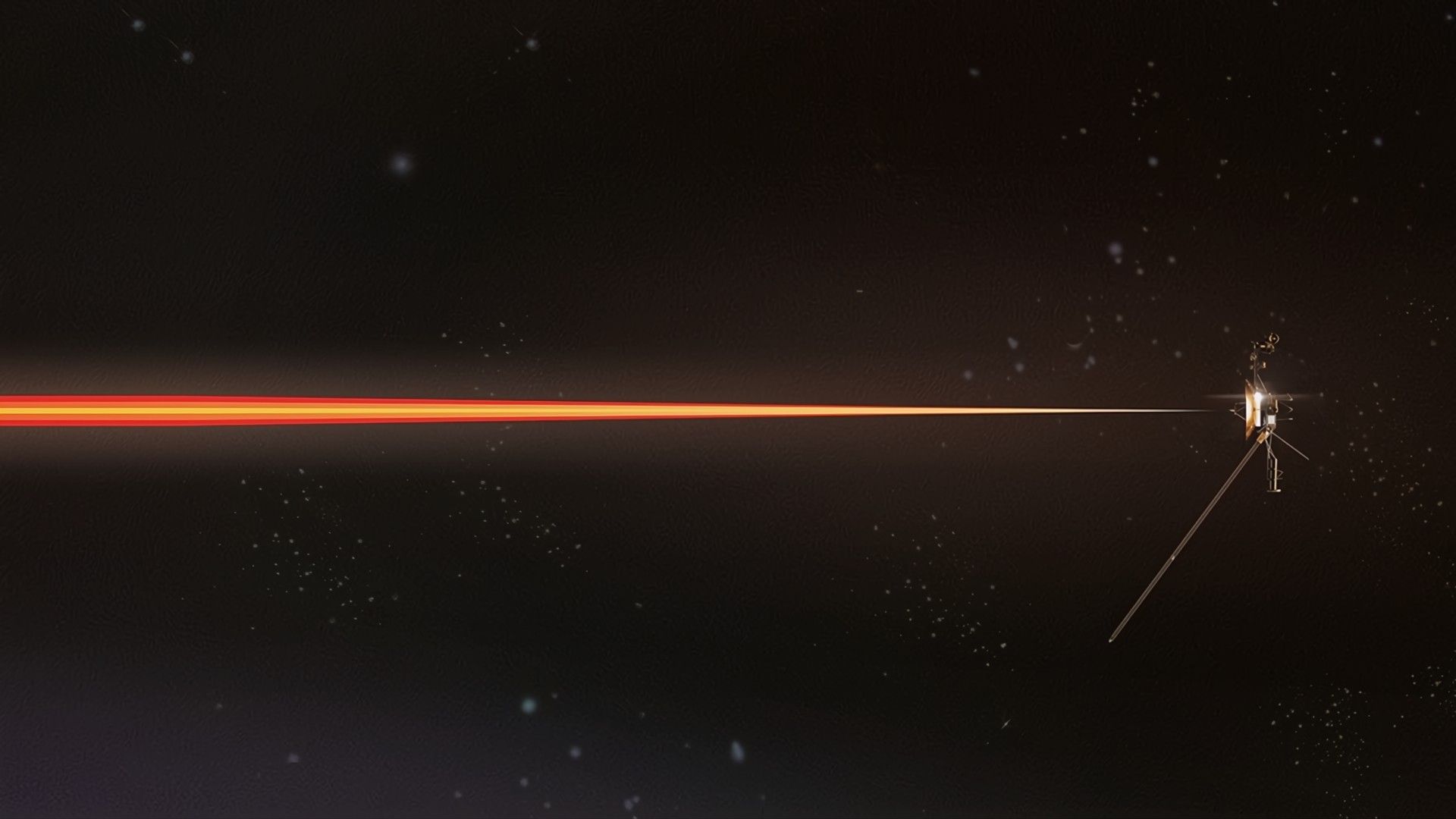
What exactly is a light-day? Here's what Voyager 1's latest milestone means for the interstellar probe
Key Points
What exactly is a light-day? Here's what Voyager 1's latest milestone means for the interstellar probe The record highlights the enormous distances involved in deep-space exploration.
What exactly is a light-day? Here's what Voyager 1's latest milestone means for the interstellar probe
The record highlights the enormous distances involved in deep-space exploration.
After nearly 50 years traveling through space, NASA's Voyager 1 spacecraft is approaching a milestone no human-made object has reached before: a distance of one light-day from Earth.
This milestone — which Voyager 1 is expected to reach on Wednesday, Nov. 18, 2026, at 5:16:07 a.m. EST (1016:07 GMT) — highlights the immense distances Voyager 1 has traveled and the challenges of communicating with spacecraft operating in the outer reaches of the solar system and beyond.
Astronomers use a measurement known as a light-day to describe how far light travels in 24 hours. Light moves at approximately 186,000 miles (300,000 kilometers) per second, meaning one light-day is roughly 16 billion miles (about 26 billion kilometers), according to a statement from NASA.
Although the term light-day might sound like a measurement of time, it is actually a unit of distance, much like a light-year. Astronomers use light-based measurements because conventional miles and kilometers become increasingly difficult to comprehend when describing the enormous distances between objects in space.
For perspective on how far Voyager 1 has travelled, sunlight takes about eight minutes and 20 seconds to reach Earth, meaning our planet is approximately 8.3 light-minutes from the sun. Radio signals traveling between Earth and Mars can take anywhere from three to 22 minutes, depending on the planets' positions in their orbits, according to the statement.
By comparison, when Voyager 1 reaches one light-day from Earth, a radio signal sent from the probe will take a full 24 hours to reach mission controllers on Earth, and a command transmitted from Earth will take another 24 hours to reach the spacecraft.
The communication delay affects how engineers operate spacecraft at such distances. Unlike spacecraft operating closer to Earth, which can receive commands and return data with relatively little delay, communicating with Voyager 1 requires mission controllers to account for the extended signal travel time when planning spacecraft operations, troubleshooting technical issues and evaluating the results of commands sent to the probe.
Voyager 1 has been traveling away from Earth since its launch on Sept. 5, 1977. Now cruising through interstellar space at nearly 38,000 mph (61,000 kph), the spacecraft has spent more than 49 years covering the distance that light can cross in a single day.
Even at that speed, Voyager 1 is moving relatively slowly compared with light itself. Its twin, Voyager 2, which launched in 1977 on a different trajectory, is expected to reach the same one-light-day milestone in November 2035.
As Voyager 1 and, eventually, Voyager 2 continue their journeys through interstellar space, their growing distances from Earth offer a measure of both the reach of human exploration and the communication challenges that come with sending spacecraft ever farther into the cosmos.
Samantha Mathewson joined Space.com as an intern in the summer of 2016. She received a B.A. in Journalism and Environmental Science at the University of New Haven, in Connecticut. Previously, her work has been published in Nature World News. When not writing or reading about science, Samantha enjoys traveling to new places and taking photos! You can follow her on Twitter @Sam_Ashley13.
You must confirm your public display name before commenting
Please logout and then login again, you will then be prompted to enter your display name.