
Technology
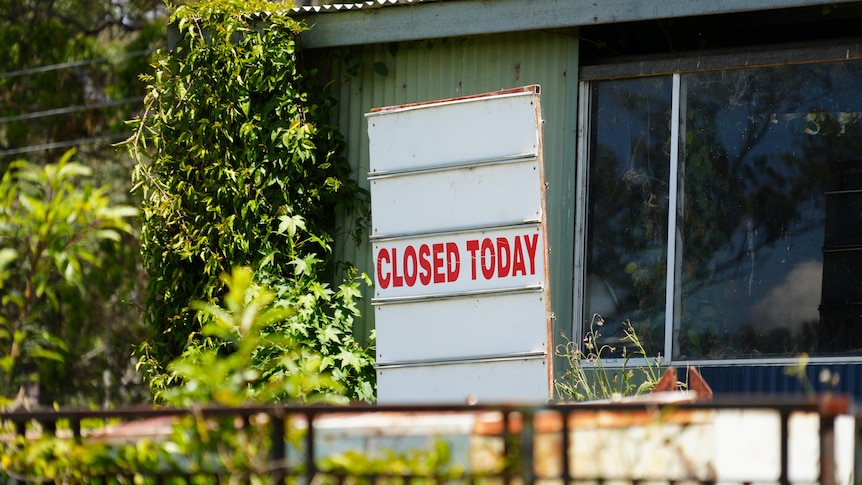
Apple growers fear low wild bee numbers are leaving their trees bare
Key Points
Apple growers fear low wild bee numbers behind small crops In short: Apple growers across New South Wales are reporting lower yields this season. Producers suspect the lack of feral bees, due to the Varroa mite, could be behind the reduced crop. Authorities are carrying out research to determine the cause of the lower yields.
Apple growers fear low wild bee numbers behind small crops
In short:
Apple growers across New South Wales are reporting lower yields this season.
Producers suspect the lack of feral bees, due to the Varroa mite, could be behind the reduced crop.
What's next?
Authorities are carrying out research to determine the cause of the lower yields.
After 55 years on his commercial orchard in the New South Wales Blue Mountains, John Galbraith is questioning whether he will see the fruits of his labour this season.
The Bilpin farmer has 3,500 trees on his property on the Bells Line of Road, which is a popular tourist area on the edge of Sydney.
About 60,000 people visit the region each year, many for fruit picking.
But for the second consecutive season, Mr Galbraith's fruit trees are not bearing many apples.
"It's been a bit of a disaster,"he said.
"We've got 3,500 apple trees, with barely an apple on them, and [we also have] quite a few pear trees, [but] practically no pears on them."
Earlier in the season, Mr Galbraith's trees were in full flower, meaning a large yield was expected.
The same thing happened last year; most of the flowers blossomed on his apple trees but did not turn into fruit.
Hoping to avoid a repeat of the 2025 season, Mr Galbraith brought in double the number of bee hives to help with pollination.
But when he opened the hives, he noticed not many of the insects made a beeline for his trees.
"The bees that should be pollinating our fruit trees are heading out in the bush and pollinating them instead,"Mr Galbraith said.
"We bring the hives in at about 10 per cent blossom … so, [the bees] get used to going to the fruit trees.
"But … they just seemed to head off everywhere."
It is not just growers at Bilpin noticing the lack of bees.
Producers in the major apple growing region of Orange, in the state's Central West, have been concerned by the silence amongst their trees.
"It was very shocking to not have any bees while the flowers were in full bloom. It was silent and very strange," apple grower Paula Charnock said.
"There was not a bee in sight. We have never had a problem in the past."
For the first time, Ms Charnock brought in managed hives which resulted in less, but well developed fruit.
Where are all the bees?
The growers suspect the lack of bees may have something to do with the state's efforts to tackle the Varroa mite.
During the failed attempt to eradicate the pest between 2022 and 2023, hundreds of millions of European honeybees, or feral bees, died.
These wild bees typically pollinate the flowers and fruit found in bushland.
Mr Galbraith said if there were not many feral bees, the bees from introduced hives would naturally gravitate towards native bush flowers and fruits which have more attractive nectar and pollen.
However, the NSW Department of Primary Industries and Regional Development (DPIRD) said it was too early to know if there was a connection.
DPIRD's director of horticulture Alison Anderson said the low fruit set could be due to pollination conditions.
"Varroa mite may be contributing to reduced pollination levels, but it cannot be definitively attributed,"Dr Anderson said.
"There are also other contributing factors to fruit set, such as climatic conditions, varietal differences, chilling requirements, and also thinning practices."
The NSW government set up a $9.5 million research fund last year to try to understand what was causing the lack of fruit.
One of the projects has been looking into understanding pollinator communities, pollinator abundance and diversity, and comparing fruit set in crops with and without managed hives.
Market impact
Back in Bilpin, Mr Galbraith anticipates he will be able to produce about 1 tonne of apples, rather than the 40 to 50 tonnes in a typical season.
He says he will not have enough apples to fill commercial contracts and will be able to offer up to two days of pick-your-own fruit to visitors this season, rather than three days a week over five months.
Fellow Bilpin producer Bill Shields, who has 3,400 apple trees, is facing a similar problem.
He farms 2 kilometres from Mr Galbraith and also brought in extra hives to no avail.
"The expectation was that we'd have a good blossom. That hasn't happened, and in fact we've got less fruit this year than we had last year, and I'm not sure what the answer is," Mr Shields said.
"There's very little commercial value left on the trees."
Ms Charnock said while she expected prices to remain strong this season, it could affect markets if the lower yields persist next year.
"I've never had a problem in the past, so this might be something we will have to manage in the future," she said.
Apple (ORG)
New South Wales (LOCATION)
the New South (LOCATION)
John Galbraith (PERSON)
Bilpin (ORG)
the Bells Line of Road (LOCATION)
Sydney (LOCATION)
Galbraith (PERSON)
disaster,"he (ORG)
Mr Galbraith (PERSON)
bush (PERSON)
Orange (LOCATION)
Central West (LOCATION)
Paula Charnock (PERSON)
Ms Charnock (PERSON)