
Education
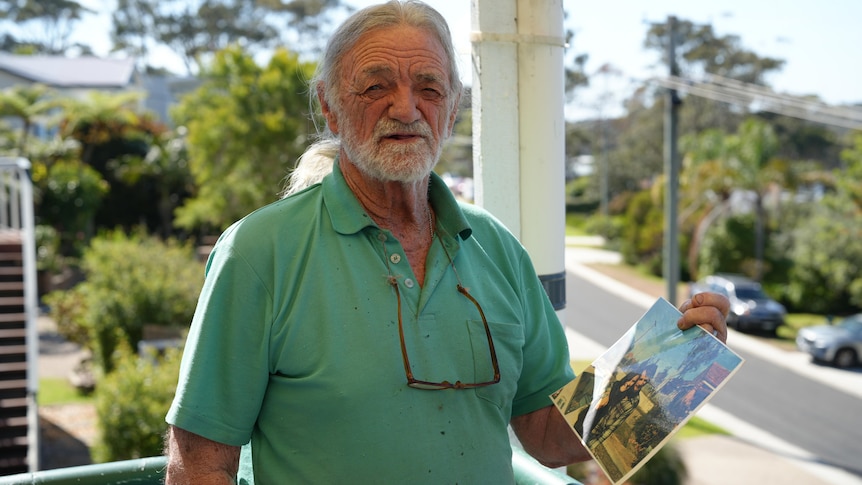
Grieving husband drives body donation changes after wife's wishes not met
Key Points
University rejigs body donation program after grieving husband's advocacy In short: Susan Lewis was unable to have her body donated for scientific research at the University of Wollongong when she died on a weekend. The program's anatomy director says the university has since changed its donation policy. A report reviewing human tissue legislation is due to be tabled in federal parliament next week.
University rejigs body donation program after grieving husband's advocacy
In short:
Susan Lewis was unable to have her body donated for scientific research at the University of Wollongong when she died on a weekend.
The program's anatomy director says the university has since changed its donation policy.
What's next?
A report reviewing human tissue legislation is due to be tabled in federal parliament next week.
Susan Lewis loved studying at university and planned to donate her body to science to help others learn.
"She thought she'd give something back to society," her husband Warren Lewis said.
"That's one of the best charities in the lot, donating yourself."
But when the 79-year-old died in Batemans Bay on the New South Wales South Coast on a weekend in September, her wishes were unable to be carried out.
Miscommunication between the hospital, the funeral service provider and the University of Wollongong meant her body was not embalmed in time.
"On Monday morning, the university rang me to say they hadn't received my wife," Mr Lewis said.
"It really hurts.
"It hurts more than the heart; it really hurts your whole body."
There are 17 anatomy programs tied to universities across Australia that accept whole-body donation.
If a body is accepted, it is either embalmed or frozen, and can then be used for up to eight years in NSW.
Ideally, that process should happen within 48 hours.
"After a certain period, a couple of days, we can't embalm the body sufficiently for us to use that donation, because the body changes after a period of time of death," University of Wollongong anatomy committee chair professor Deirdre McGhee said.
At the time of Ms Lewis's death, the University of Wollongong did not have a body donation coordinator on call over the weekend, on public holidays or during the academic shutdown period.
It has since forged a partnership with Macquarie University to allow weekend donations to be received there.
Professor McGhee said the partnership happened because of Mr Lewis's advocacy.
"I said [to him], 'Well, good on you, because you initiated this,'" she said.
"You've made a change and your wife would be proud of you."
Barriers to body donation
Regardless of their intentions, not everyone can donate their body for scientific research.
Characteristics that can invalidate a donation at the time of death include infectious diseases or skin lesions.
At the University of Wollongong, bodies weighing less than 45 kilograms or more than 95kg are also ruled out.
"If they're too big, then we actually can't fit them in our cool room … and if they're very, very emaciated, then we can't use them for teaching," Professor McGhee said.
University of Sydney research affiliate Rebekah Jenkin said up to 1,500 donated bodies were accepted each year into programs across Australia, but the number of bodies that were not accepted was "quite high".
"Most programs in Australia are at capacity," she said.
"As the majority of bodies are embalmed and that process takes 12 to 18 months, each donor's body is held in the mortuary for that period before it is used for anatomical examination.
"We have many more donors or potential donors in Australia than what we can actually accommodate."
Lab capacity and cost of refrigeration
Macquarie University body donation program director Richard Appleyard said the university's facilities could hold up to 60 embalmed and frozen bodies for its anatomy, surgical skills and orthopaedic research programs.
But he said the capacity and cost of running an anatomy lab placed restraints on how many bodies could be accepted.
"Probably the vast majority of donors that aren't accepted into a program is because of a capacity issue, where there's not enough refrigeration space to hold that person," he said.
"With our capacity, we're in a pretty good place where we have quite a lot of storage for bodies here and we have a higher turnover than perhaps the other universities."
A research paper by Ms Jenkin estimated more than 10,000 clinicians, students, anatomists and researchers accessed tissue from local body donors every year.
Professor McGhee said despite the costs of running an anatomy lab, it was essential for teaching allied health and medicine.
"It's like a mechanic going to fix a car and not knowing what's in the engine," she said.
"How can you fix the body if you don't understand its structure and how it works?"
More public information
An Australian Law Reform Commission report reviewing human tissue legislation, including standardising body donation laws across the country, is due to be tabled in federal parliament by November 25.
Ms Jenkin said she wanted to see more data publicly available on body donation, including a register detailing options for organ donors.
"The Australian community is incredibly supportive of body donation, even though it's something that's not very well known or talked about," she said.
University (ORG)
Susan Lewis (PERSON)
the University of Wollongong (ORG)
Warren Lewis (PERSON)
Batemans Bay (LOCATION)
the New South Wales South Coast (LOCATION)
Lewis (PERSON)
Australia (LOCATION)
NSW (LOCATION)
University of Wollongong (ORG)
Deirdre McGhee (PERSON)
Ms Lewis's (PERSON)
Macquarie University (ORG)
McGhee (PERSON)
Mr Lewis's (PERSON)