
World News
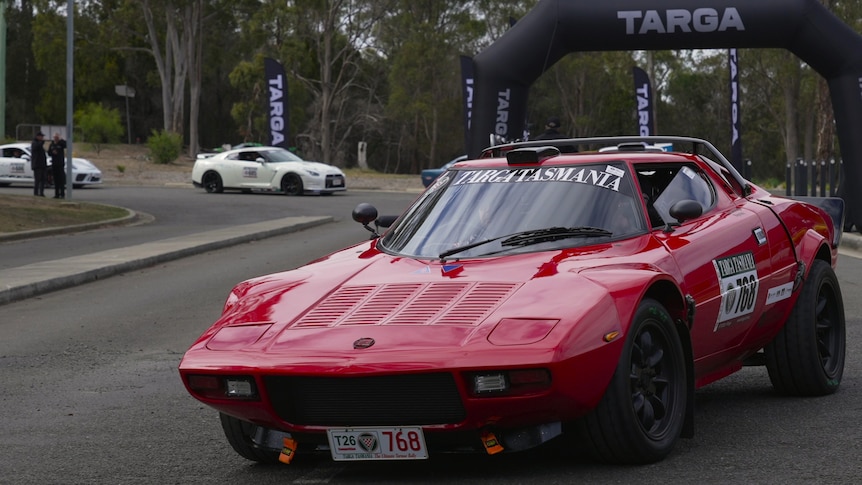
Mixed feelings over safer, slower Targa Tasmania rally
Key Points
Mixed feelings over safety measures put in place after Targa Tasmania driver deaths In short: The Targa Tasmania tarmac rally starts today, with competitors expressing mixed reactions to the continued implementation of extra safety regulations following the deaths of four drivers in 2021 and 2022. The new regulations include speed limits, changes to roll cage requirements, and revisions to the course. The race finishes on November 22.
Mixed feelings over safety measures put in place after Targa Tasmania driver deaths
In short:
The Targa Tasmania tarmac rally starts today, with competitors expressing mixed reactions to the continued implementation of extra safety regulations following the deaths of four drivers in 2021 and 2022.
The new regulations include speed limits, changes to roll cage requirements, and revisions to the course.
What's next?
The race finishes on November 22.
Competitors at the Targa Tasmania tarmac rally have expressed mixed reactions to safety measures introduced in the wake of numerous deaths, with one veteran driver saying the changes make the race less competitive.
The annual five-day race from Launceston to Hobart, which began today, stretches across nearly 1,600 kilometres of closed public roads.
Organisers say 40 cars are competing in this year's race and 100 cars in the non-competitive touring event.
Last year, the Targa introduced a series of additional safety restrictions following a coronial inquest into the deaths of four competitors in the 2021 and 2022 races, and this year more have been introduced.
The changes included maximum speed limits for cars in both the race and the tour, changes to the racecourse, and extra rollover protection technology.
While some say the restrictions have undermined the competitive aspect of the race, others say they are necessary to ensure safety.
Deaths prompt change
First held in 1992, Targa Tasmania has long been a popular event attracting local and interstate drivers to the state, which organisers have said injects around $8 million into the local economy.
But over the years it has changed.
The deaths of three competitors in the 2021 event, followed by the death of another competitor in the 2022 event prompted its cancellation for three years.
Last year, the tarmac rally returned after its hiatus, bringing with it a series of new safety regulations.
Stuart Benson, who manages and oversees the course, said the event had received "really strong" positive feedback since introducing the additional safety requirements last year, which have been continued and enhanced this year.
Under the changes introduced last year, each vehicle is given a maximum speed limit based on the category it is racing in, and is fitted with a GPS tracker to monitor the speed.
"If somebody exceeds the acceptable limits that apply to both the touring and competition categories, we become aware of that in real time and penalties can be applied, as well as policing and compliance of that," Mr Benson said.
"[This] could range from time penalties to exclusion from the event depending on the level of the offence."
The race course has also been reconfigured since last year, with 10 of the 41 stages of the race new and 12 of them revised.
Changes to the size requirements of the roll cages — the metal structures inside the car which protect the driver if the car rolls over — have also been implemented.
Safety regulations hamper competition, one driver says
Perth driver Peter Rullo first raced in Targa in 2011, and has competed ever since, last year placing second.
He understands why the safety measures were brought in, but said they caused "hiccups" last year, which he hopes have since been smoothed out.
"There was less competition, so a lot of the stages were very easy to achieve the base time which meant there wasn't competition between the cars,"he said.
Mr Rullo said the field of competitors at the rally had become "quite small".
"When I first started coming to Targa, this whole venue would have been full of cars, and there would have been cars outside," he said.
He said certain "fast parts" of stages had been removed, such as one through Cethana in the state's north-west.
"There's a fast long straight section, so that section we're restricted to 80 kilometres per hour now, where previously we could get close to 200 kilometres an hour,"Mr Rullo said.
Other drivers praise changes
Launceston driver Crichton Lewis does not agree the safety precautions have impacted competition.
"Roll cage changes don't really affect the race at all. Speed limiting, good idea," he said.
Like Mr Rullo, Glenn Ridge is also a long-time participant, having competed in every Targa since 1993 except last year's.
He said the sport's had a "tumultuous" last couple of years, which he believes had "taken its toll".
"[Targa isn't] quite like it was with the numbers we had 10 years ago where there were 300 cars going around. But I think it will build up,"he said.
Mr Ridge said after the deaths, it was clear "things needed to change" and he said most people were understanding.
"There are a lot of people who are pushing the barriers, I guess."
"There's a lot of talk out there and everyone's trying to scaremonger things … but at the end of the day, everyone in this building here knows the reasons they're put into play."
The race will conclude on November 22.
[Image text:] RG
26
768
TARGA
CMA