
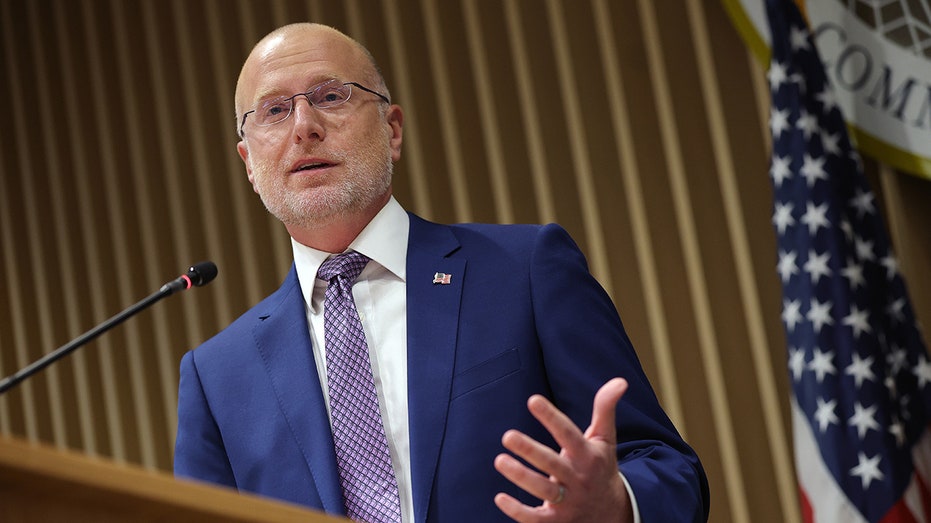
When tornado sirens sound, high school and college basketball games tip off or farmers need the latest crop and weather report, Americans still turn to local radio. Yet Washington keeps imposing last-century rules on the stations that provide it. FCC Chairman Brendan Carr now has a chance to deliver real reform, not for a favored industry but for the communities that depend on radio.
Congress set these ownership caps in 1996. This was when dial-up internet was cutting-edge, CDs were king, the iPod did not exist, and satellite radio had not yet launched.
CDs are dead. The iPod is gone. A hometown station now battles Spotify, SiriusXM, YouTube, podcasts, social media and the largest technology companies on earth. Those national giants reach nearly every American with a smartphone, and no federal rule caps their presence in any single town.
DAVID MARCUS: CONGRESS SET TO PROTECT AM RADIO AND AMERICAN DISCOURSE
The station down the road — warning where the storm is headed, carrying the high school game and reporting livestock and grain prices — faces tighter federal limits under rules from a bygone era.
Carr is right to call this regulatory nostalgia. The question is simple: Will Washington let small stations build the scale to survive, or protect bureaucratic boxes while listeners lose the service they count on?
STEVE FORBES: REGULATORS RISK DESTROYING LOCAL TV BY BLOCKING KEY MEDIA MERGER
The current framework uses a sliding scale. Even in the largest markets, one company generally may own no more than eight stations and no more than five in either AM or FM. Smaller markets face stricter caps still.
The rule pretends radio lives in a sealed-off world that online platforms and endless digital choices never touch. Today's FCC should recognize those Big Tech competitors and scrap this relic.
Nobody in the school pickup line or tractor cab cares about federal categories. They choose between a local morning show, a podcast, satellite radio and a streaming playlist, often within the same commute. That is one marketplace, and every competitor in it fights for the same listeners and advertising dollars.
CARS FLIPPED, SCHOOL DEVASTATED AS VIOLENT TWISTER RIPS THROUGH POPULAR CITY
These caps threaten the local service they claim to protect. Newsrooms, towers, backup generators, engineers and on-air talent cost serious money, and a standalone station often cannot shoulder that burden by itself. Sharing those costs across stations can keep emergency alerts live, ballgames on the dial and agricultural reports reaching the people who need them. Deny that scale, and Washington risks shutting down a vital source of news for rural and small-town America.
When twisters strike, floods rise, wildfires spread or cellular networks fail, free over-the-air radio becomes the lifeline. If the power goes out, a battery-powered receiver still works when nothing else does. Broadcasters on the ground know the roads, schools, shelters and hospitals. Obsolete rules should not push those voices toward silence.
BIPARTISAN LAWMAKERS WANT TO STRIP BIG TECH'S LEGAL IMMUNITY THAT CAN SHIELD SOCIAL MEDIA COMPANIES
Critics will shout "monopoly," but they aim at the wrong target. Ending arbitrary caps would not eliminate FCC review of station purchases or block action against actual competitive harm, and the Justice Department would keep its antitrust authority over radio deals. Reform would stop the government from treating another locally operated station as more dangerous than a nationwide platform with enormous reach.
Conservatives cannot trust federal bureaucrats to manufacture "viewpoint diversity" by counting how many microphones a private company may own. Genuine diversity comes from voices with deep roots in their communities — voices that know the county fair, the homecoming rivalry, the weekend forecast and the needs of family farms and small businesses. The First Amendment is safer in the hands of listeners than regulators.
Chairman Carr should follow the evidence and eliminate local ownership caps. Let broadcasters invest, compete and keep homegrown voices on the air for another generation. Washington must stop strangling radio before another town loses its local voice, its last dependable source of information.